
Guardsman Air Duct Cleaning in Port Richmond: A Homeowner’s Guide
Most homeowners searching “Guardsman air duct cleaning” don’t realize they’re searching for a method, not just a company name. Guardsman refers to a line of contact-agitation cleaning equipment and protective treatments, and confusing the method with a brand label is how people end up hiring a crew that waves the name around without owning the gear. This guide is about matching the right equipment to the debris actually sitting in your ducts.
If you’d rather not sort through the equipment details yourself, call (877) 792-6601 and we’ll walk you through what your home needs.
What Is Guardsman Air Duct Cleaning, Really?
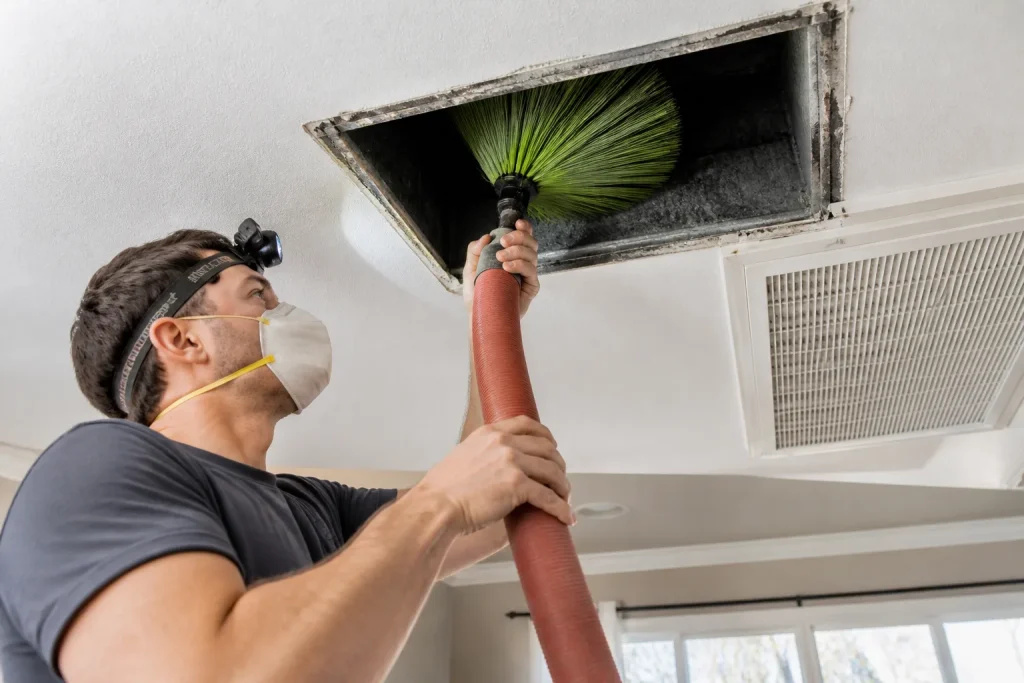
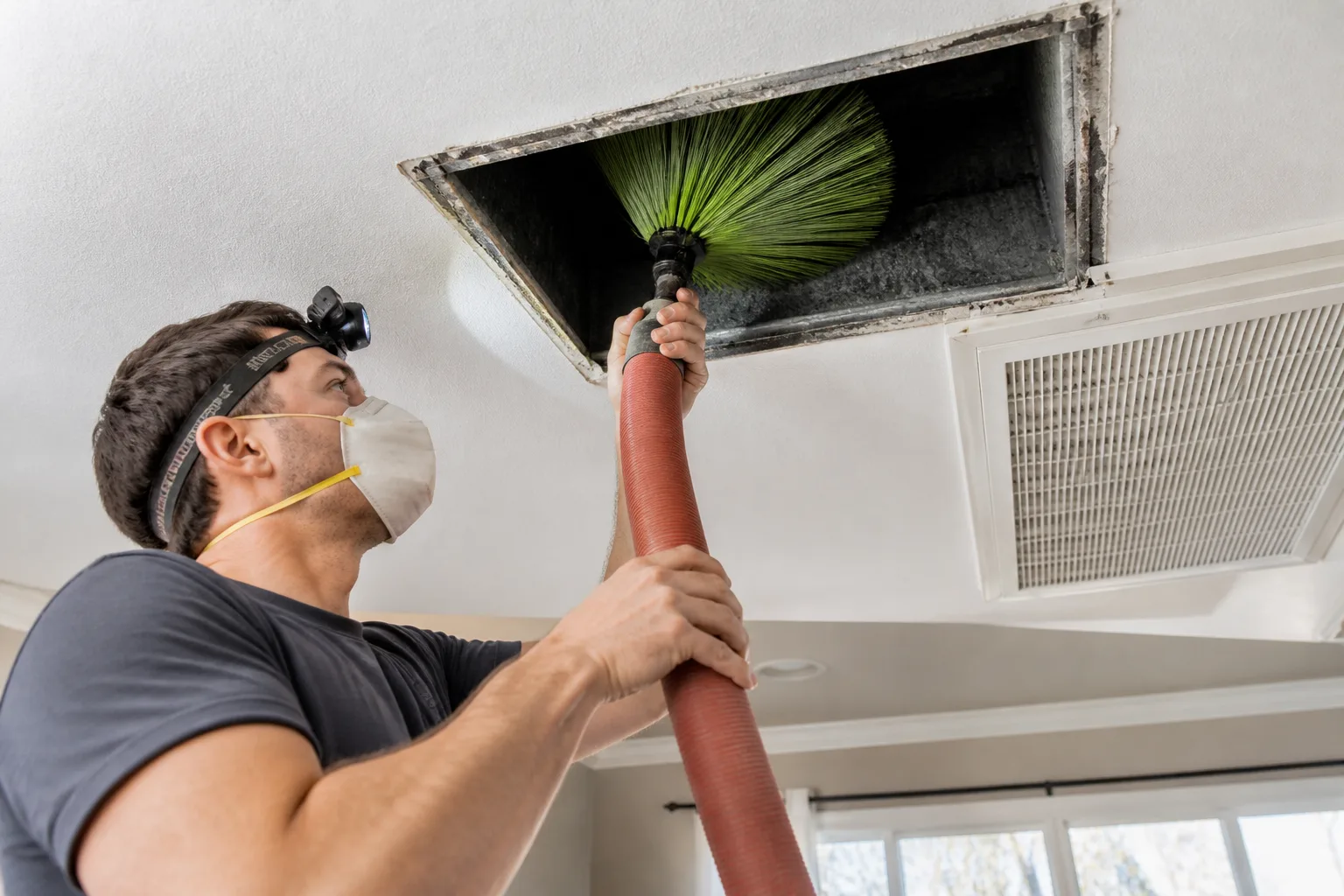
Guardsman air duct cleaning is a contact-based approach: the tools physically touch and loosen debris from the duct walls while negative pressure pulls it away. It is not an air-sweep system that relies on blasting compressed air through the ducts and hoping the loosened material finds its way to a collection point. The distinction matters because air-sweep methods can redistribute fine particulate into living spaces if the containment isn’t right. Guardsman-style equipment works the surface directly, which is why we treat it as one tool in a kit, not a magic wand.
In our experience around Port Richmond, the homes that benefit most from contact agitation are the ones with visible dust streaking near the supply registers and a fine gray film on the return grilles. That film is a sign debris has bonded to the duct surface rather than floating freely, and bonded debris doesn’t come off with air alone.
- Air-sweep systems: compressed air loosens debris; relies heavily on vacuum capture.
- Rotary brush systems like Rotobrush: mechanical agitation with simultaneous vacuum extraction.
- Guardsman contact-agitation tools: direct surface contact to lift bonded debris, paired with HEPA-filtered negative pressure.
The bottom line: Guardsman is the method. The capture system behind it is what keeps the debris out of your air.
How Guardsman Contact Agitation Differs from Rotary Brush and Air-Sweep
All three methods move debris. They differ in how much force they apply and how much control they give the technician over where that debris goes. Contact agitation is the most controlled. Air sweep is the least. Rotary brush sits in the middle and does its best work on flat sheet-metal runs where the brush can travel freely.
Here’s the practical difference in a Port Richmond home. A rotary brush works beautifully in a straight galvanized trunk line. Put that same brush into a flex duct with a tight elbow and it can bind, twist, or damage the liner. A Guardsman-style contact tool lets a technician work the surface without forcing a spinning head through a run that wasn’t built for it. Air sweep is fine for light, loose dust but is the wrong tool for anything that has caked onto the walls.
- Step one: a technician inspects the ductwork to identify material type and contamination profile.
- Step two: negative pressure is established using HEPA-filtered equipment before any agitation begins.
- Step three: the appropriate contact tool is selected for each run.
- Step four: debris is captured at the point of agitation, not pushed downstream.
That sequence is what separates a method from a marketing term. If a company can’t explain why it chose one tool over another for your ducts, ask why.
Which Contamination Profiles Guardsman Equipment Addresses Best in Port Richmond Homes
Port Richmond’s housing stock includes a lot of older homes with original or partially updated ductwork, and that history shows up in the debris profile. Two contamination types come up again and again, and they call for different tools.
Fine particulate is the first. Think construction dust from past renovations, drywall residue, and the general silt that settles in a return system over years. Fine particulate responds well to contact agitation paired with strong negative pressure, because the goal is to lift it and capture it before it goes airborne inside the house. Guardsman-style tools excel here when the containment is solid.
Fibrous buildup is the second. Pet hair, lint, and degraded insulation fibers mat together on duct walls and don’t respond to air sweep at all. Contact agitation breaks that mat apart so it can be captured. This is where a Guardsman approach earns its keep in a Port Richmond bungalow with a long return run and a shedding dog.
Where Guardsman-style equipment is not the right call is fiberglass-lined ductboard that has begun to fray. Aggressive contact can damage the liner. A competent technician recognizes that and switches methods, sometimes recommending HVAC cleaning or duct repair and sealing instead of pushing ahead.
Why Duct Material Determines Whether Guardsman Equipment Is Safe to Use
Duct material is the deciding factor in equipment selection, and it’s the step most homeowners never hear about. Flex duct, sheet metal, and fiberglass-lined ductboard each tolerate a different level of contact force. Using the wrong tool on the wrong material is how a cleaning job turns into a repair job.
- Sheet metal: the most forgiving. Rotary brush and contact agitation both work well on straight runs.
- Flex duct: requires gentler contact and care at the elbows, where the inner liner can tear.
- Fiberglass-lined ductboard: the most delicate. Aggressive agitation can break down the liner and release fibers into the airstream, which is the opposite of what you hired a cleaner for.
Before any equipment goes into a Port Richmond duct system, a technician should scope it and confirm the material. That’s also when we look for leaks and disconnected joints, because a system with gaps won’t hold negative pressure no matter how good the cleaning tool is. Duct repair and sealing is part of the job, not an upsell tacked on afterward. Sealed and tested means the leaks are located, repaired, and confirmed before the system goes back into normal service.
What a Proper Guardsman Service Job Looks Like, Start to Finish
A proper job follows a sequence, and you can use that sequence to judge whether the crew you hired actually knows what it’s doing. It starts with access and containment, not with the vacuum.
- Access: the technician opens registers and creates access points as needed, sealing each one against the containment setup.
- Containment: Abatement Technologies containment equipment is put in place to keep dislodged debris from escaping into living areas. This is source-removal methodology in practice.
- Negative pressure: a Nikro HEPA-filtered vacuum establishes and holds negative pressure on the system. Debris flows toward the capture point, not into your kitchen.
- Agitation: the appropriate contact tool works each run, lifting bonded debris from the walls.
- Verification: the technician checks that negative pressure held throughout and that the visible debris load is gone before closing access points.
- Post-cleaning options: if the home needs filtration or humidity hardware, Honeywell and Aprilaire products are installed as part of the air quality tier. Guardsman-line protective treatments fit the sanitizing step.
None of this is fast. A thorough job takes the time it takes. When a crew finishes in forty-five minutes on a large Port Richmond home, something got skipped.
Related services in Port Richmond: if your dryer is taking two cycles to dry a load, that’s a different problem from your supply ducts, and dryer vent cleaning is the fix. For the full picture on how we handle ductwork generally, see our air duct cleaning service page, and start at our Air Duct Cleaning Port Richmond home base if you’re new to us.
Red Flags That a Technician Is Misusing the Guardsman Name
A lot of companies use equipment brand names as marketing labels without owning the actual equipment. In our experience, the tell is usually in what the technician says and what they show up with. A crew that can name a method but can’t explain it is a crew that bought a truck and a vacuum, not a system.
Watch for these signs:
- The technician can’t tell you what negative pressure means or why containment matters.
- No HEPA-filtered vacuum on site, or a shop-vac-style setup instead.
- No containment equipment placed before agitation begins.
- The crew starts in the living room with a spinning brush before scoping anything.
- Guardsman, Rotobrush, and Nikro are all named in the sales pitch but none appear on the truck.
Ask to see the equipment. Ask which tool they’ll use on which run and why. A straight answer tells you you’re dealing with someone who understands the work. A dodge tells you the brand name was a paragraph on a website.
When to call a pro
If you’re seeing dust streaks at the registers, a musty smell on HVAC startup, or allergy symptoms that spike when the system runs, it’s time. We answer 24/7. Fast dispatch from 7am to 7pm, Sunday through Friday.
Frequently Asked Questions
Yes. Guardsman-style cleaning uses contact agitation to lift debris from duct walls, while rotary brush systems use a spinning brush on a flexible shaft. Both work, but rotary brush is best suited to straight sheet-metal runs, and contact tools give more control in flex duct and delicate ductwork. A good technician picks the tool that matches your duct material rather than running one method everywhere.
Not when it’s used on the right material. The risk comes from applying aggressive agitation to fiberglass-lined ductboard or flex duct with a fragile inner liner. A technician should scope your ducts first and confirm the material before choosing a tool. If the liner is already degrading, repair or replacement may be the right answer instead of cleaning. Call (877) 792-6601 for an exact quote – estimates are free.
Most homes in Port Richmond don’t need annual cleaning. Every few years is usually sensible for a typical household, and more often if you’ve had major renovations, have pets that shed heavily, or notice dust returning quickly after cleaning. The right interval depends on your contamination profile, not on a sales schedule. Call (877) 792-6601 for an exact quote – estimates are free.
Cheaper quotes usually leave out containment, HEPA filtration, and time on the job, which is where the real work happens. A fast, low-priced visit can end up redepositing debris into your living space. A fair price reflects the equipment, the containment, and the verification that pressure held throughout. Call (877) 792-6601 for an exact quote – estimates are free.
Ask for before-and-after photos of your own ducts, and ask the technician to confirm that negative pressure held for the duration of the job. A crew that documents its work is a crew that expects to be checked. If they can’t show you, that’s your answer.
The Bottom Line
Guardsman is a cleaning method, not a badge you can stick on any van. What matters in a Port Richmond home is whether the technician scoped your ducts, matched the tool to the material, set up containment before agitation, and verified negative pressure throughout. Get those four steps right and the brand name becomes secondary. Get them wrong and no amount of marketing will save the job.
Our technicians have up to 14 years of experience, and we run professional-grade equipment: Rotobrush for rotary agitation, Nikro for HEPA-filtered capture, and Abatement Technologies for containment. Honeywell and Aprilaire products are part of the air quality tier when filtration or humidity control is the next step.
If you’re in Port Richmond and need help, Air Duct Cleaning Port Richmond offers free estimates – call (877) 792-6601. We answer 24/7. Fast dispatch from 7am to 7pm, Sunday through Friday.
Written by the team at Air Duct Cleaning Port Richmond.
Need Air Duct Cleaning Help?
Call Air Duct Cleaning Port Richmond - the local pro we connect you with is licensed and insured, here with fast help in Port Richmond.
(877) 792-6601