
Air Duct Cleaning: Repair or Replace? How Port Richmond Homeowners Decide
The honest answer: duct cleaning restores airflow and air quality in a system that’s structurally sound, but it can’t fix crushed flex runs, torn liner, or leaking joints, and cleaning a compromised system just moves the problem around. The decision comes down to duct condition, not how dirty the ducts look. If you’d rather have trained eyes on it than guess, call (877) 792-6601 for a free estimate.
Why Cleaning Alone Doesn’t Always Solve the Problem
A frequent source of confusion in Port Richmond is treating duct cleaning as a cure-all. It isn’t. Cleaning addresses what’s coating the inside surfaces of your ducts. It does nothing for ducts that are physically crushed, disconnected, or leaking at the seams. Those are structural problems, and they need structural answers.
Here’s the practical distinction. If your ducts are intact and the complaint is dust, musty odor, or allergy flare-ups, cleaning is the right move. If your complaint is uneven room temperatures, a system that runs constantly, or rooms that never quite heat or cool, the problem is often leakage or restriction, not surface contamination. Cleaning those ducts makes them cleaner and still leaves the energy waste and pressure imbalance untouched.
That’s the part most quick-quote operations skip. They clean, they leave, and the underlying issue stays right where it was. In our experience, the homes that need repair most are the ones where cleaning was sold as the fix.
The Inspection Findings That Change the Answer
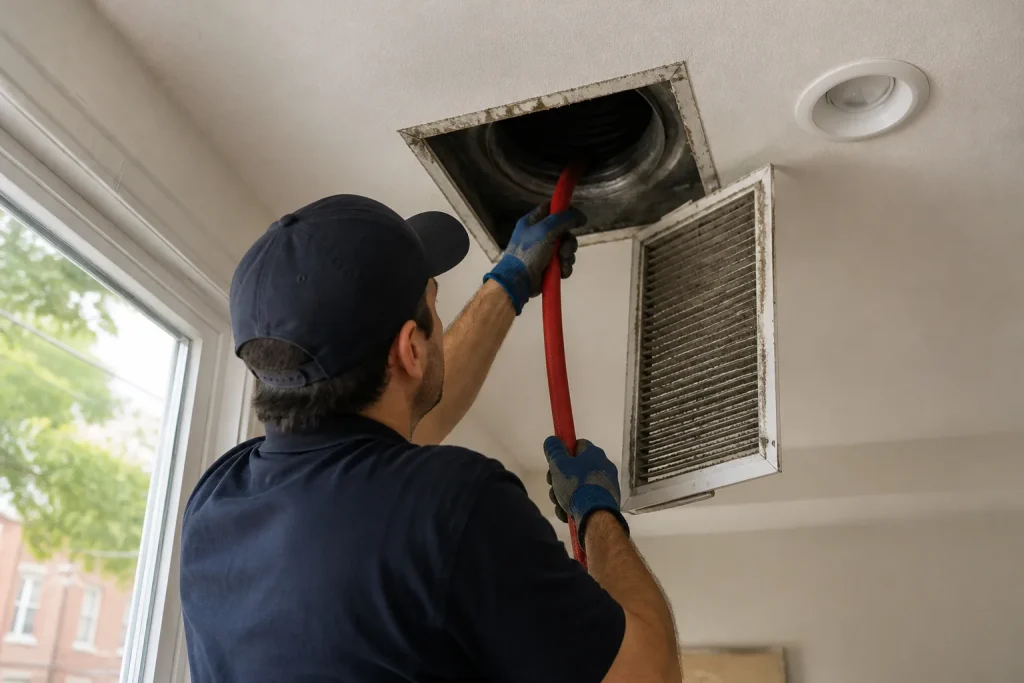
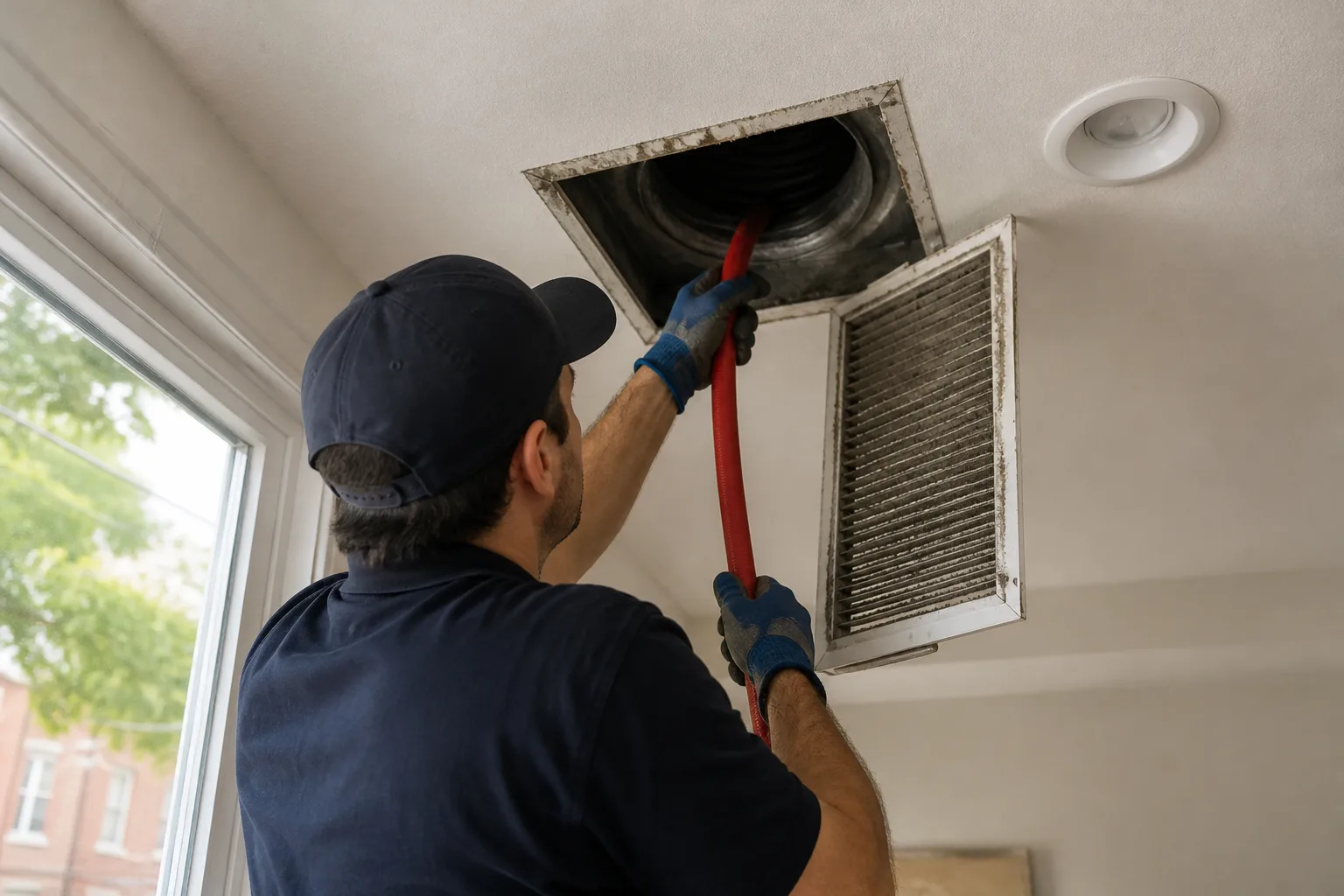
Before we recommend anything, we look at the ducts themselves. A handful of specific findings push the conversation from cleaning toward repair or replacement. You can’t assess any of this from the register grille, which is exactly why a proper inspection matters.
- Crushed or collapsed flex duct. Flexible duct that’s been stepped on, kinked, or compressed in an attic or crawl space chokes airflow to that run. Cleaning doesn’t un-crush it. The run gets replaced.
- Delaminated liner. The internal lining of insulated flex duct can peel away and start shedding into the airstream. Once that liner fails, cleaning it is a losing battle and the section gets replaced.
- Failed connections. Ducts that have pulled apart at joints, collars, or boots leak heavily. Those need to be reconnected and sealed, not just vacuumed.
- Significant leakage at joints and seams. Even ducts that look fine from outside can leak a large share of conditioned air through gaps at every fitting. Sealing is the fix.
- Contamination beyond the surface. Pests, moisture, or microbial growth inside the ductwork usually mean the affected section has to come out rather than be cleaned in place.
When you see two or three of these on the same system, cleaning becomes step two, not step one. Our air duct cleaning work starts with that inspection so the recommendation matches what’s actually there.
How to Read a Duct Leakage Test
A duct leakage test measures how much air escapes the system before it reaches your registers. It’s the single most useful number for deciding repair versus replace, and it’s the test most cleaning-only companies never run.
The number that matters is the percentage of total system airflow lost to leakage. A small amount of leakage is normal in any system. When a meaningful share of your conditioned air is escaping before it ever reaches a room, sealing becomes the priority. A large leak is a repair signal even if the ducts are spotless inside.
What you’re watching for in the result:
- Low leakage plus visible dust. Clean the ducts and move on. Repair isn’t warranted.
- Moderate leakage at accessible joints. Seal the leaks, then clean. The order matters here.
- High leakage across the whole system. This is where a repair-versus-replace conversation is fair, especially in older Port Richmond housing stock.
Testing tells you which of those three you’re in. Guessing doesn’t. If a company quotes you a cleaning before measuring anything, you’ve learned something about them.
Age and Material: When Port Richmond Ducts Cross Into Replacement Territory
Port Richmond has a good deal of older housing, and the ducts inside those homes tell the story. Different materials age differently, and some hit the end of their useful life regardless of how clean they are.
Galvanized steel is the most durable of the common materials. If it’s sound, sealed, and not rusted through, steel can be cleaned indefinitely. It crosses into replacement territory when it’s rusted, pitted, or losing integrity at the seams.
Original flex duct has a shorter lifespan. Flex that’s been in place through many hot-and-cold cycles can sag, compress, and lose its liner. Once the liner fails or the run is crushed, replacing that section is more reliable than cleaning it.
Fiberglass duct board is the trickiest. Its interior can trap debris and moisture, and once it’s damaged or saturated, cleaning doesn’t restore it. Failed duct board comes out.
The rule of thumb: cleanliness is a maintenance question, but material condition is a lifespan question. We’re glad to inspect and tell you which one you’re dealing with.
Why Repair and Sealing Come Before Cleaning
The sequence is the part most people get backwards. If your system needs both repair and cleaning, sealing should happen first, not after.
Here’s why. When a duct is leaking at a joint, contamination has had an open door into the space around it. Seal that leak first, then clean the now-sealed system, and you’re not reintroducing debris into gaps you just closed. Clean first, and you risk pushing debris into the very seams that still need work.
This is where the equipment matters. Professional-grade tools matter less than method, and the method we use is source removal: we agitate the debris with a rotary brush system like our Rotobrush equipment and capture it under negative pressure with a HEPA-filtered Nikro vacuum, so it’s pulled out rather than pushed into the house. For heavier work, containment equipment from Abatement Technologies keeps the dislodged material where it belongs.
Duct repair and sealing is a core part of what we do, which means our HVAC cleaning starts from a system that’s actually holding its air. Sealed and tested, not just patched over.
Cleaning vs. Sealing vs. Partial vs. Full Replacement: A Cost Framework
Costs vary with home size, duct layout, and how much of the system is affected, so treat these as typical ranges rather than fixed prices. The point is understanding how the options stack up against each other so you’re comparing apples to apples.
- Cleaning only. The lowest-tier option, appropriate when the system is sound and the issue is contamination. Right when the ducts are clean-able and intact.
- Sealing. Targets leakage at joints and connections. Often the single biggest energy-payback step, and frequently the fix a homeowner didn’t know they needed.
- Partial replacement. Replacing failed or crushed runs while keeping the sound sections. Common in older Port Richmond homes where one or two runs have failed but the rest is fine.
- Full system replacement. Reserved for systems where multiple materials have failed or leakage is severe throughout. The last resort, not the first recommendation.
Notice what’s missing from that list: a cleaning that claims to solve a leak. It doesn’t. Anyone who tells you otherwise is either guessing or selling.
When to call a pro
If you’ve noticed uneven temperatures, musty smells that return after cleaning, or a system that works harder than it should, that’s the moment to call. A proper inspection and leakage test will tell you which of those four options actually fits your home. We’re happy to walk you through it.
Related services in Port Richmond: If the system also has a dryer exhaust or air quality concern, those are often addressed in the same visit. Our dryer vent cleaning clears lint and improves safety, and if filtration upgrades are on your list, Honeywell and Aprilaire products are part of our air quality tier.
The Bottom Line
Duct cleaning extends the life of a healthy system. It can’t rescue a structurally compromised one. Before you book a cleaning, ask three questions: what’s the condition of the ductwork, what does a leakage test show, and does the recommendation match the findings? If the answers line up, you’ve found the right provider.
In our view, a proper air duct cleaning Port Richmond job starts with inspection, not a vacuum. Our technicians have up to 14 years of experience reading what the ducts actually need.
If you’re in Port Richmond and need help, Air Duct Cleaning Port Richmond offers free estimates. Call (877) 792-6601. We answer 24/7, with fast dispatch from 7am to 7pm, Sunday through Friday.
Frequently Asked Questions
Most homes fall into typical ranges based on system size and accessibility, and cleaning, sealing, and replacement sit at different tiers. The written estimate sets the final price after inspection. Call (877) 792-6601 for an exact quote. Estimates are free.
Cheap quotes usually skip the inspection, the leakage test, and professional containment, so they clean surface dust without fixing the reason it came back. You’re paying for capability, not a coupon. Call (877) 792-6601 to compare a proper estimate.
Ask for the inspection findings, containment method, and confirmation that leaks were sealed and tested. Reputable work can be shown, not just claimed. Call (877) 792-6601 if you’d like to talk it through.
It depends on the home, not a fixed calendar. Homes with pets, recent renovation, or persistent moisture benefit from more frequent attention, while a sound system with no contamination signals can wait longer. Call (877) 792-6601 for a free assessment.
Written by the team at Air Duct Cleaning Port Richmond.
Need Air Duct Cleaning Help?
Call Air Duct Cleaning Port Richmond - the local pro we connect you with is licensed and insured, here with fast help in Port Richmond.
(877) 792-6601