
Top Signs You Need Air Duct Cleaning Service – Don’t Ignore These
Dust settling back onto your furniture within 48 hours of wiping it down is the most reliable early sign of duct contamination in Port Richmond. Not because the dust is new, but because the duct system is continuously re-seeding your living space from a reservoir you can’t reach with a cloth. That’s the core of the problem: ducts are a hidden system, and when something goes wrong inside them, the signals show up on surfaces, in your sinuses, and on your energy bill – not in the ducts themselves. If you’d rather not spend weeks diagnosing it yourself, call (877) 792-6601.
Why Dust Comes Back 48 Hours After You Clean
Normal household dust settles slowly and evenly. Duct-sourced dust behaves differently. It returns fast, it lands in patterns, and it’s concentrated near registers. Here’s how to read the difference without pulling apart your ductwork.
The 48-hour surface test. Wipe a clean, flat surface with a damp cloth – a coffee table, a dresser top, a windowsill. Note the time and date. If a visible film of dust reappears within two days, the source is active and continuous, and the most likely source inside a closed home is the supply air. Ordinary settling takes closer to a week on a clean surface in a sealed room.
The register proximity check. Look at surfaces directly in the air path of a supply register. If the dust is heaviest within a few feet of the vent and thins out further away, that points to air-carried debris leaving the ducts. If dust is evenly distributed throughout the room, it’s more likely normal infiltration or fabric shedding.
In Port Richmond, where many homes are older and have had duct systems modified or extended over the years, we see both patterns mixed together. A short 48-hour test in two or three rooms tells you which one dominates.
- Dark streaks on ceilings or walls near registers – air pushing out with debris in it
- Visible dust puffs when the system first kicks on
- Dust on the return grille face that darkens again after cleaning
- Dust patterns starting at a register and fading as they spread across a surface
Uneven Room Temperatures: Restriction or Mechanical Failure?
An upstairs bedroom that stays five degrees warmer than the living room is more often a duct restriction than a failing HVAC system. Air has to travel through the duct path, and when a run is crushed, disconnected, or packed with debris, that room simply receives less conditioned air. Homeowners often call for a new furnace when the real problem is a leak they can’t see.
How to tell the difference, roughly in order of confidence:
- Check airflow at the register. Hold a tissue or your hand near the supply vent in the problem room. Weak airflow compared to other rooms points to a restriction, not a mechanical failure.
- Note whether the whole house or one zone is affected. A single cold or hot room usually means a duct path problem. Every room struggling points more toward the equipment.
- Listen for a hiss or whistle. A loose joint or disconnected duct leaks air into a wall cavity instead of the room – the noise is a giveaway.
- Look at the return. A blocked or undersized return starves the whole system. It can mimic a failing blower.
When we clean a duct system in Port Richmond, our technicians – with up to 14 years of experience between them – use the HVAC cleaning visit to look for these leaks, not just move debris. Confirming the cause before changing equipment saves real money. Our air duct cleaning process also includes the return side, which is where many airflow restrictions actually live.
The Three Odors That Point in Different Directions
A musty smell in the supply air tells you something biological is growing inside the system. But three distinct odor profiles point to three different problems, and they need different remediation.
- Musty, damp, cellar-like smell. Biological growth. Fungal spores and mold thrive where condensation forms on duct interiors or where a run passes through damp space. The fix involves sanitizing, addressing the moisture source, and often improving filtration.
- Sharp, ammonia-like or stale-urine smell. Rodent or pest intrusion. Animals find their way into duct runs, leave droppings, and the odor pushes through registers. This calls for containment-level cleaning, not a standard vacuum pass.
- Burning, dusty, “first heat of the season” smell. Debris burning off or accumulated dust heating on a furnace component or resting inside the supply plenum. Some of this smell at seasonal startup is normal. A burn-off odor that lingers for weeks or returns through the year is not.
If you can’t pin down which of the three you’re smelling, don’t guess. A trained technician can trace the odor to its source. Our Air Duct Cleaning Port Richmond service includes air sanitizing as a separate step when the smell tells us biological growth is present, so cleaning and odor removal happen in the same visit.
Allergy Symptoms That Follow the HVAC Cycle
Pay attention to timing. Allergy symptoms that flare up in sync with your HVAC system’s startup pattern point to duct-sourced triggers. Symptoms that stay roughly constant all year point to other indoor air quality factors.
Seasonal-timed symptoms. Sneezing, congestion, or itchy eyes that spike when the heat or AC first turns on and settle after a few days. That pattern matches a burst of contaminants loosened and pushed into the supply air when the system restarts. It follows humidity shifts and seasonal changeovers – both of which stir up the duct reservoir.
Year-round symptoms. Constant morning congestion, symptoms that worsen in certain rooms, or a sense they never fully clear. These can have many causes, and duct contamination is only one possible contributor. Filters, ventilation, humidity, and pest activity all play a part.
The combination signal. Here’s what pushes the diagnosis toward the duct system: dust returning within days and symptoms that track the heating and cooling cycle and a faint smell at the register. Any one of those alone is ambiguous. Together, they’re pointing at the same place. If you’re in Port Richmond and that combination sounds familiar, ask for an inspection.
Mold at a Register: Local Condensation or Systemic Problem?
Mold spotted at a register grille can mean one of two very different things. Localized condensation grows a small colony right where cool air meets warm humid room air – the grille gets wet, breaks out in spots, and the duct behind it is clean. Systemic contamination means the entire duct interior is providing a moist environment where spores colonize. The two need different responses.
- Localized condensation. Spots only on the metal face of the grille. The duct just behind is dry and clear when inspected. Fix is ventilation, humidity control, and cleaning the grille.
- Systemic contamination. Visible growth or dark patches on the interior duct surface, coming back after cleaning, plus a persistent musty smell moving through several registers. This needs source-removal cleaning with proper containment, sanitizing, and often a filtration upgrade.
We don’t recommend a size of job based on a spot photo. It gets confirmed at the register face and inside the run. Our sanitizing tier – which can include Guardsman protective treatments – is designed to follow the cleaning, not substitute for it. Growth returns if the moisture source is left alone.
When to Call a Pro
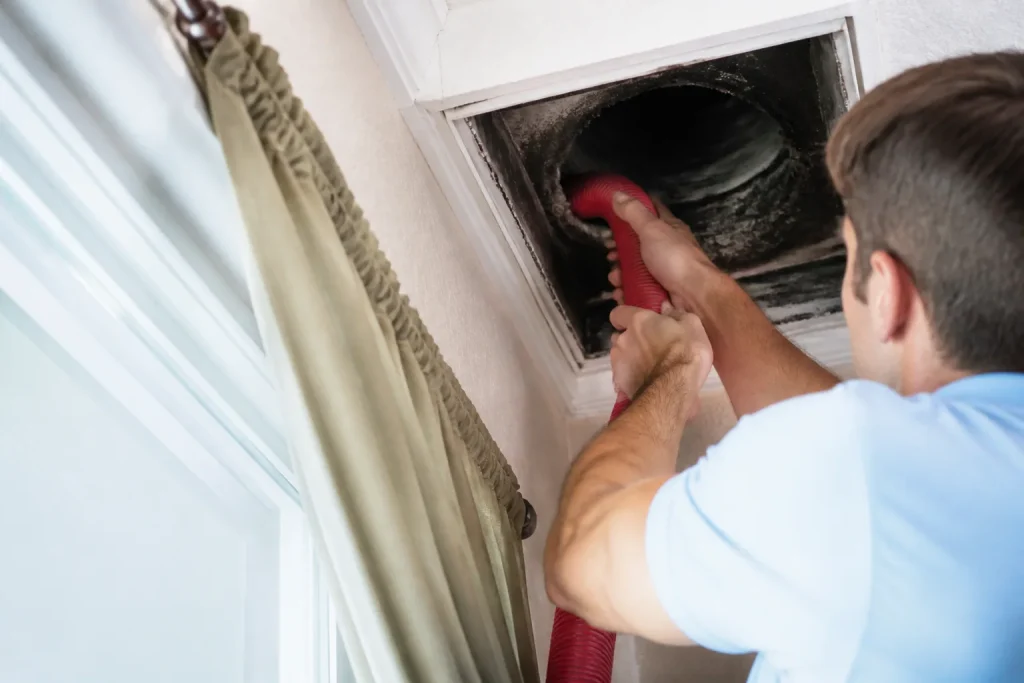
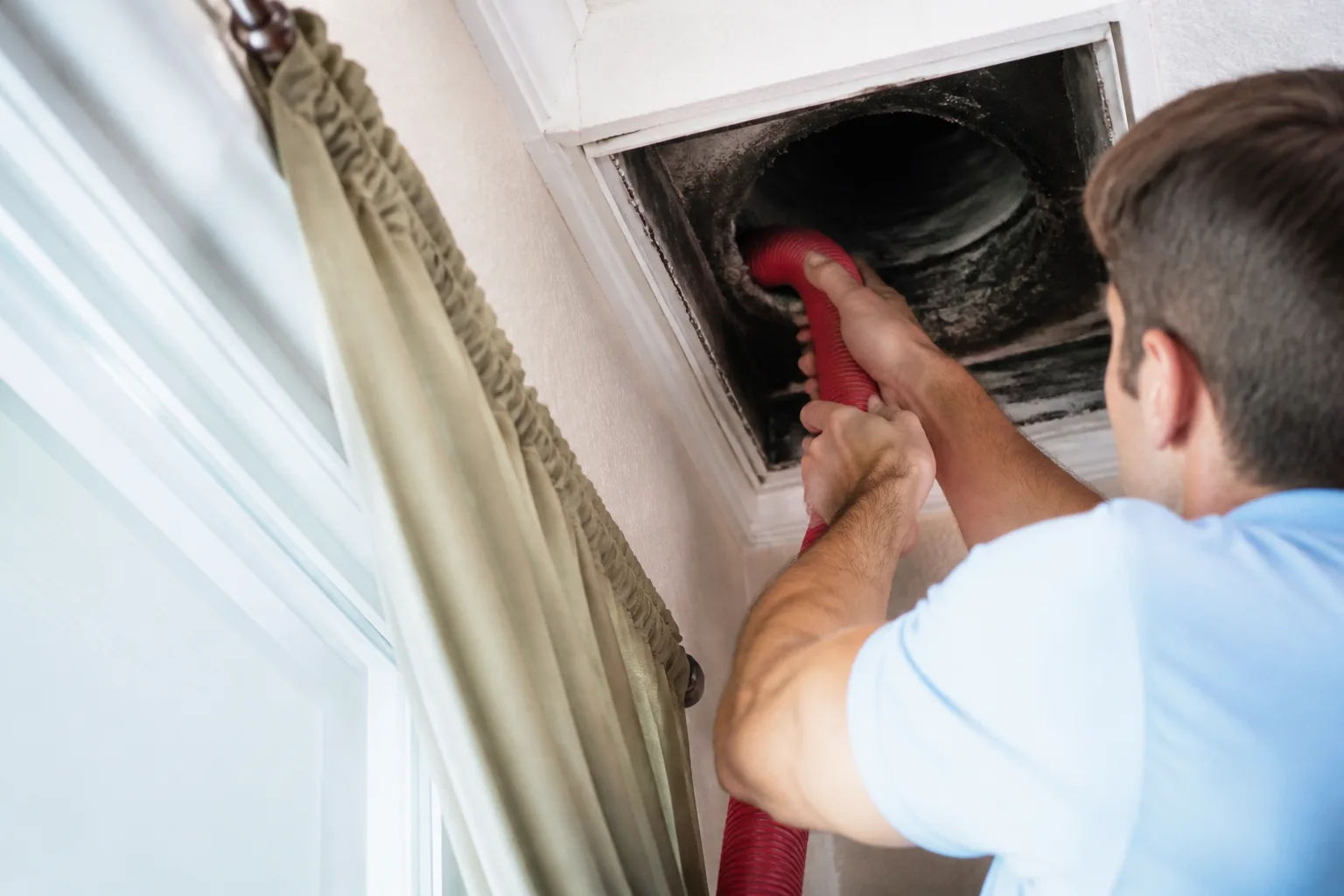
You can clean a grille and replace a filter yourself. You shouldn’t handle what’s inside a duct system once contamination is established – mold colonies and rodent debris are genuine health hazards, and a shop-vac pushing air the wrong way makes it worse by spreading the problem through the house. Professional equipment captures debris under negative pressure instead of redistributing it. When two or more of the signs above show up together, it’s time. As a broader preventive step, dryer vent cleaning on a set schedule also helps keep lint – a separate fire hazard – from building up.
The Bottom Line
Isolated symptoms are ambiguous. Combinations are diagnostic. If dust returns within 48 hours of cleaning, one room runs a different temperature, a musty smell rises through the registers, and symptoms track your heating cycle – that’s your duct system asking for attention, and treating filters or the furnace alone won’t reach the source. A proper inspection is free, and it tells you exactly what you’re dealing with. If you’re in Port Richmond and need help, Air Duct Cleaning Port Richmond offers free estimates – call (877) 792-6601. We answer 24/7. Fast dispatch from 7am to 7pm, Sunday through Friday.
Frequently Asked Questions
Normal dust settles over about a week. Duct-sourced dust returns within 48 hours of wiping a surface clean and is concentrated near registers. If dust reappears fast and clusters in the air path of a vent, it’s the ducts. Call (877) 792-6601 for an inspection – estimates are free.
Yes, more often than a failing HVAC system. A crushed, disconnected, or debris-packed duct run restricts air to one room while the equipment works fine. Weak airflow at a register plus a single hot or cold room is the classic pattern. Call (877) 792-6601 to have it checked before you replace equipment.
Not always. A musty, cellar-like smell points toward biological growth, but an ammonia or stale-urine smell usually means rodent intrusion, and a burning odor at seasonal startup is often debris burning off. Each needs a different fix. Call (877) 792-6601 to trace the source.
There’s no fixed schedule, and you shouldn’t let a company talk you into one. Clean when the signs say so: dust returning in 48 hours, visible mold, pest activity, allergy symptoms that track the HVAC cycle, or a recent renovation. Call (877) 792-6601 for a straight assessment rather than a maintenance pitch.
Written by the team at Air Duct Cleaning Port Richmond.
Need Air Duct Cleaning Help?
Call Air Duct Cleaning Port Richmond - the local pro we connect you with is licensed and insured, here with fast help in Port Richmond.
(877) 792-6601