
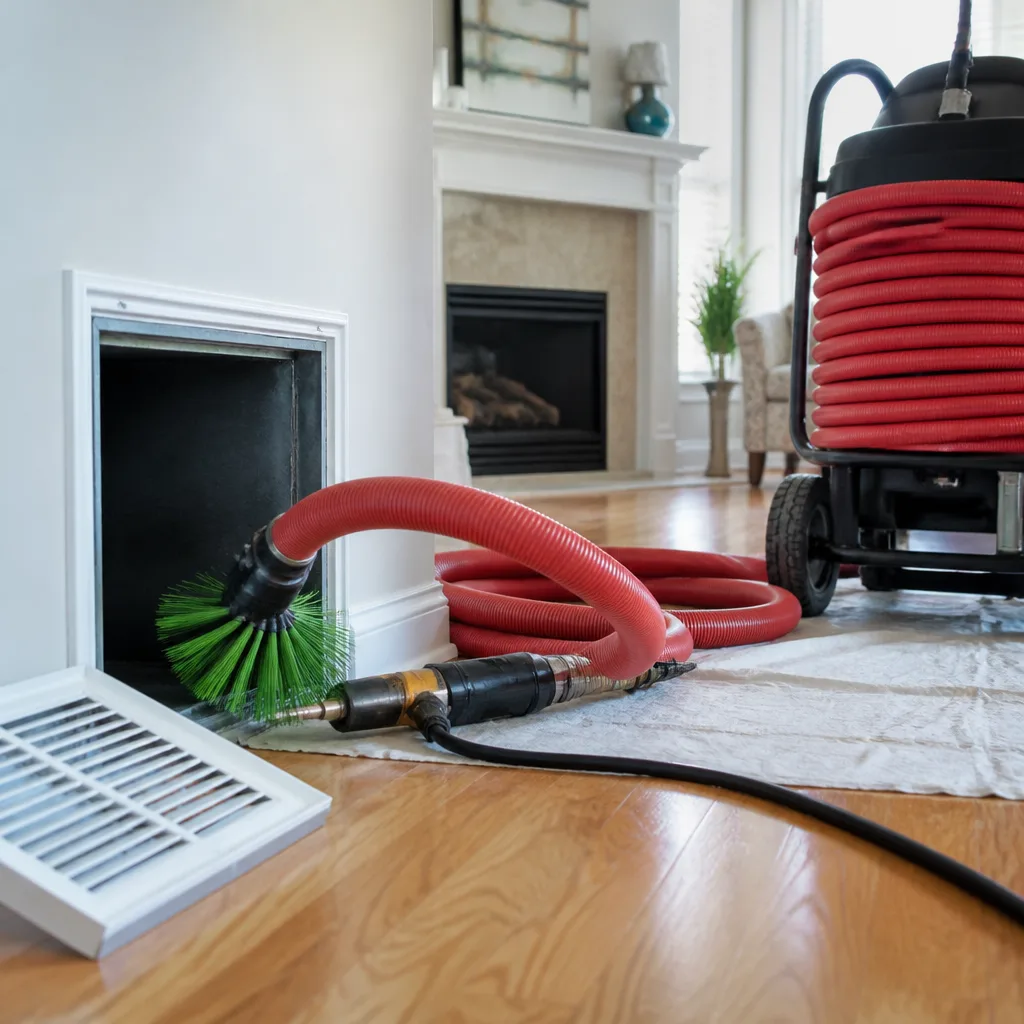
 Whole-home duct cleaning
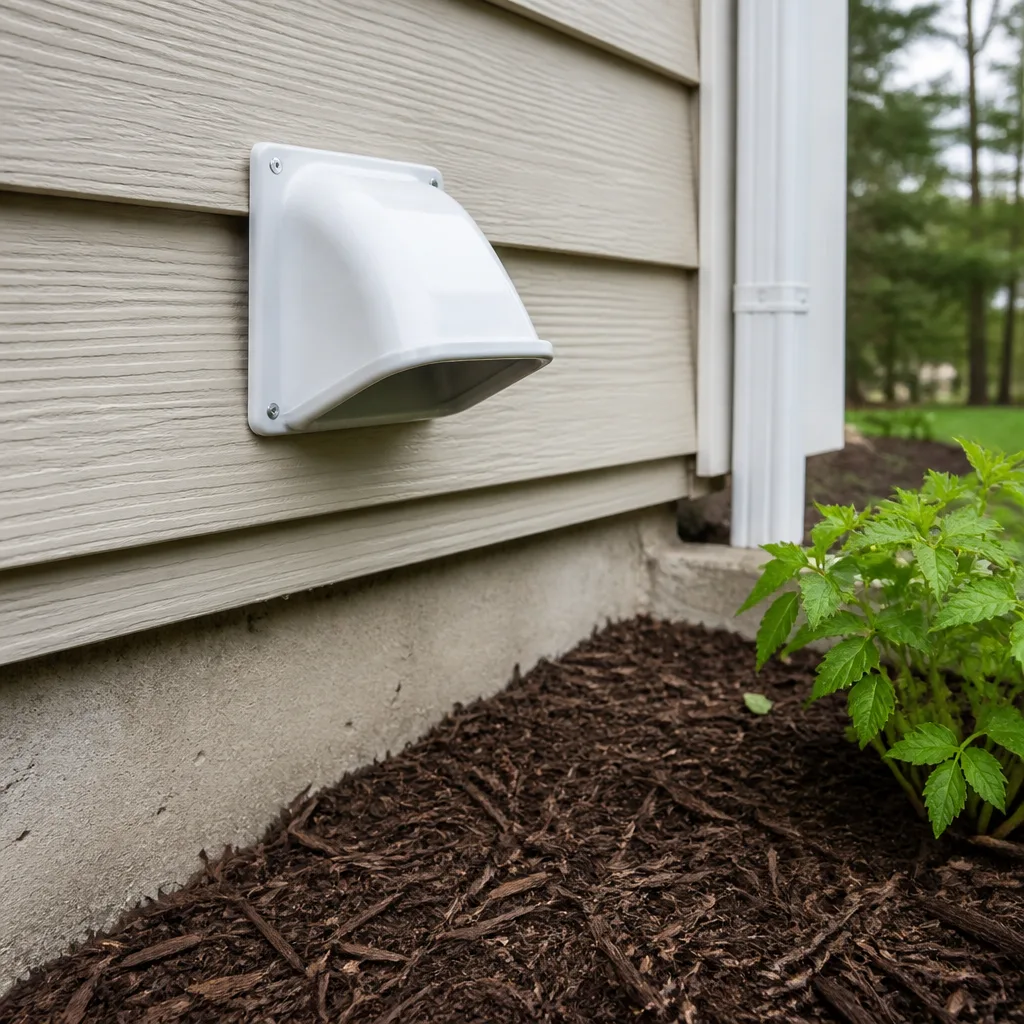 Dryer vent cleaning
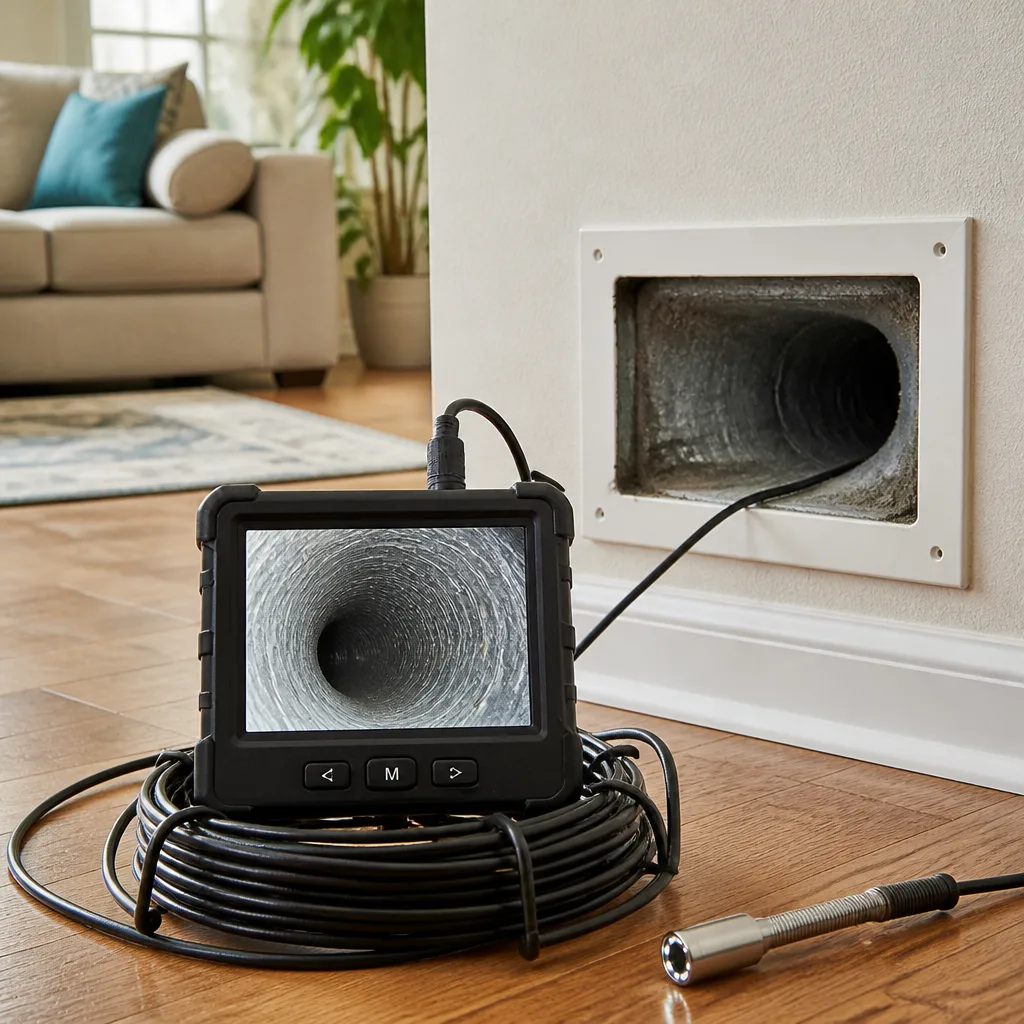 Camera inspection
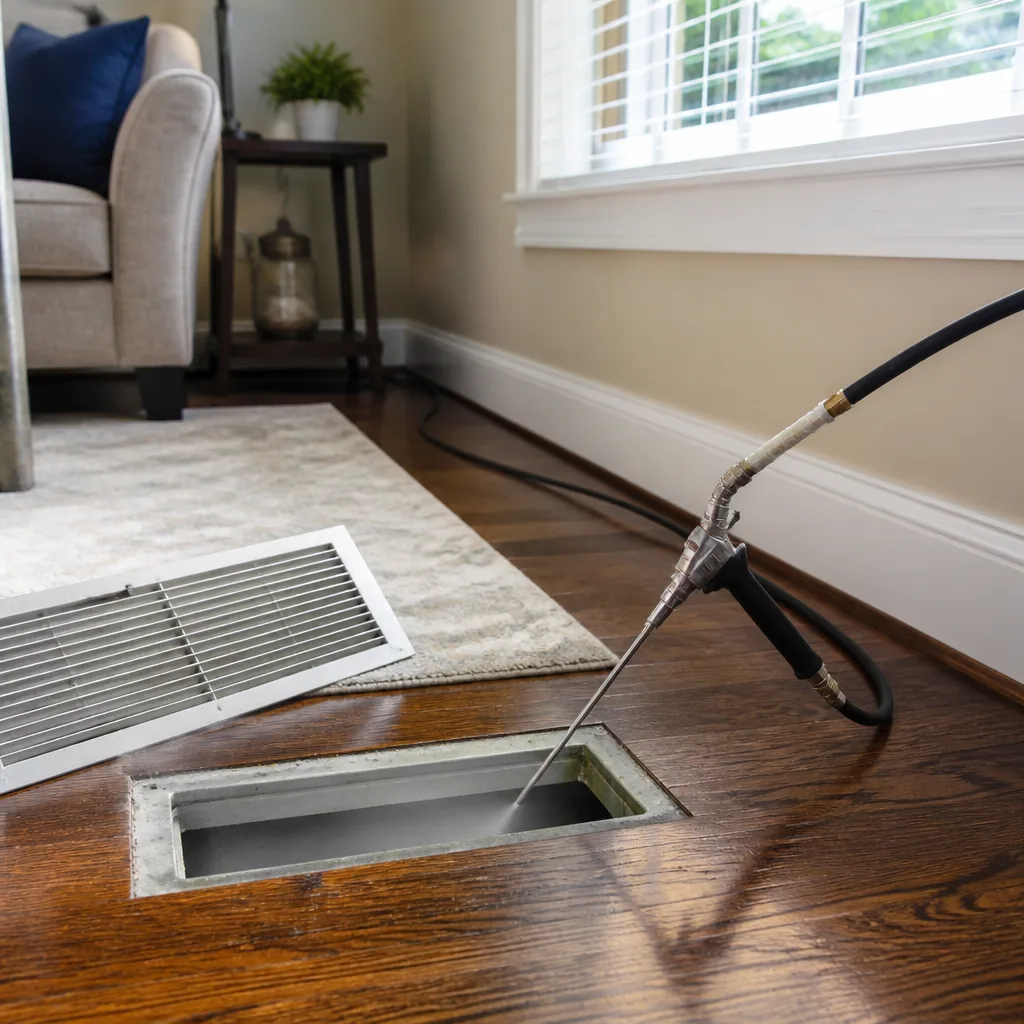 Sanitizing & deodorizing
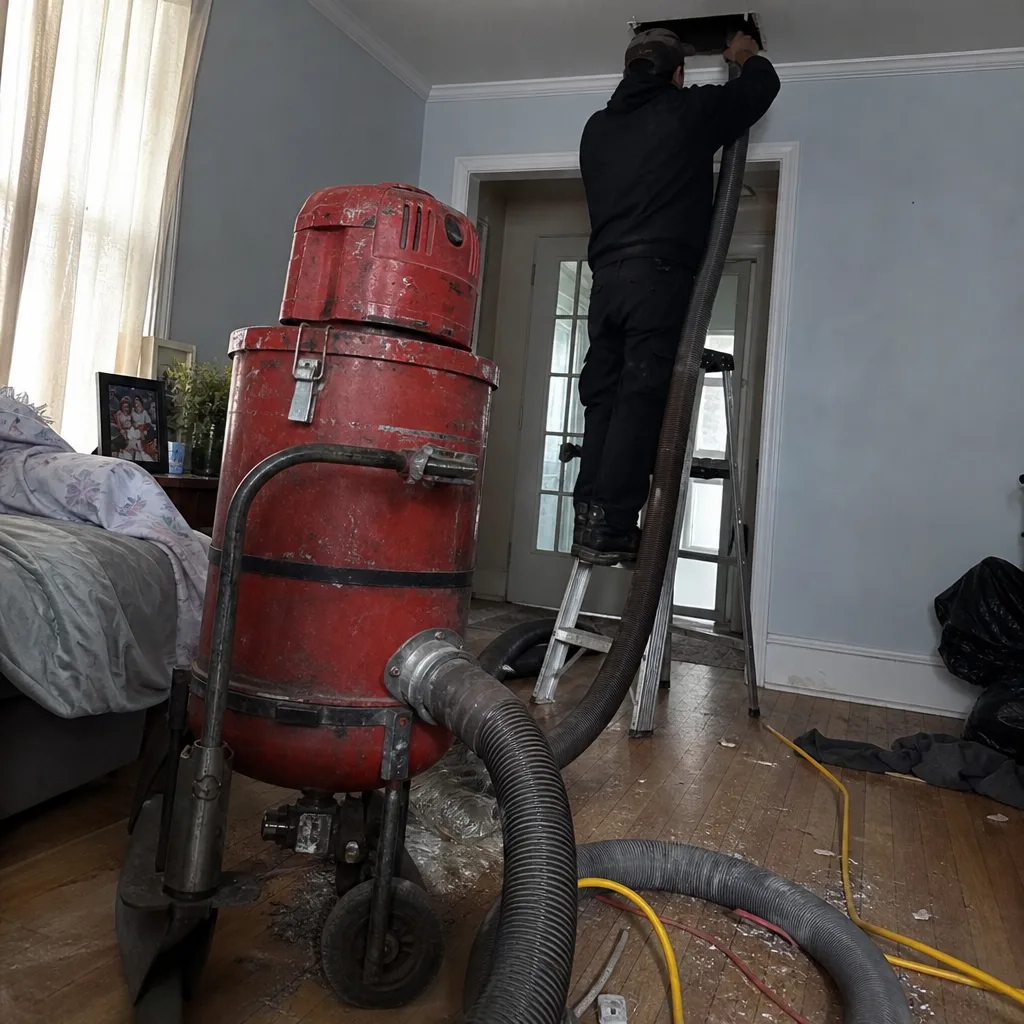
Whole-system duct and dryer vent check with before-and-after photos - you see exactly what came out of your vents
That "$99 whole-house special" is a bait ad - the real number appears once they are in your hallway, or the "clean" is a shop-vac at the register. We photograph the inside of your ducts before and after instead.
Styles & brands we work with
- Whole-home duct cleaning
- Dryer vent cleaning
- Camera inspection
- Sanitizing & deodorizing
See the difference
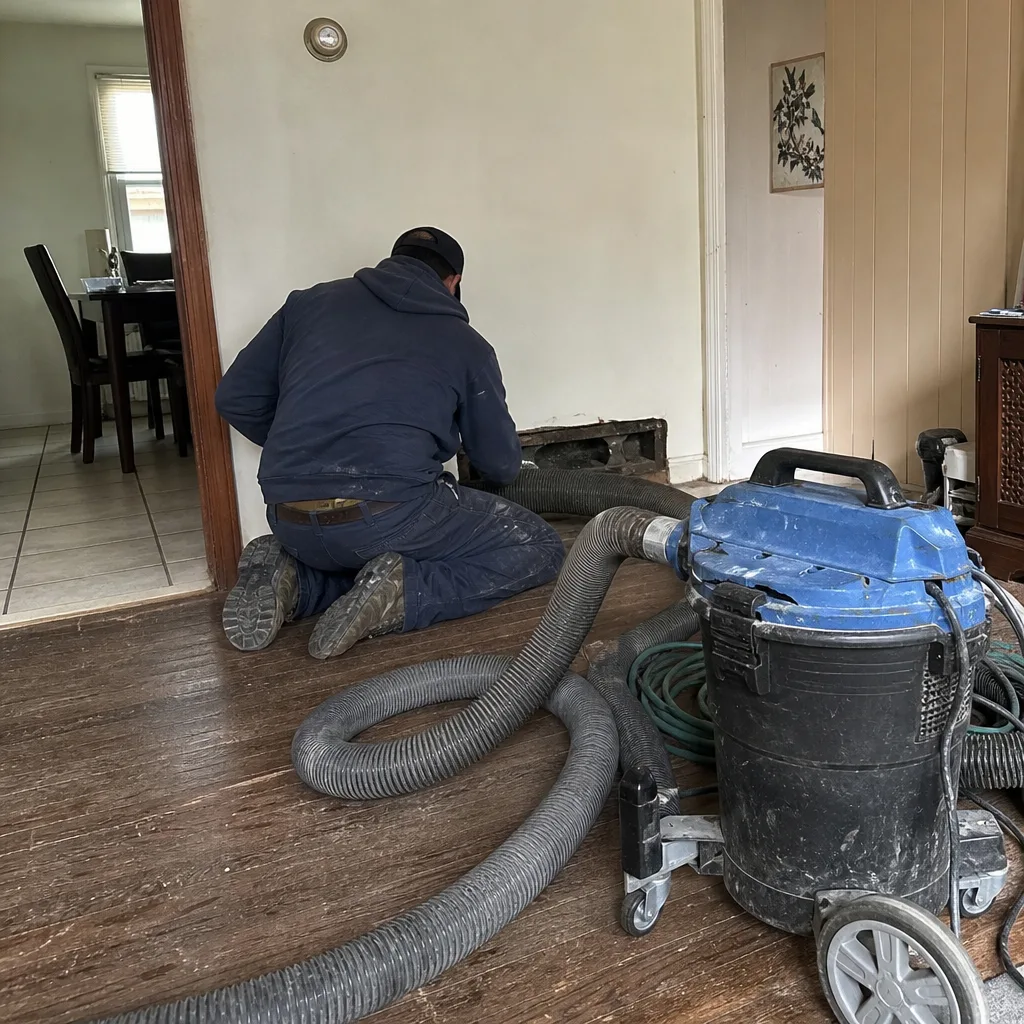 Before
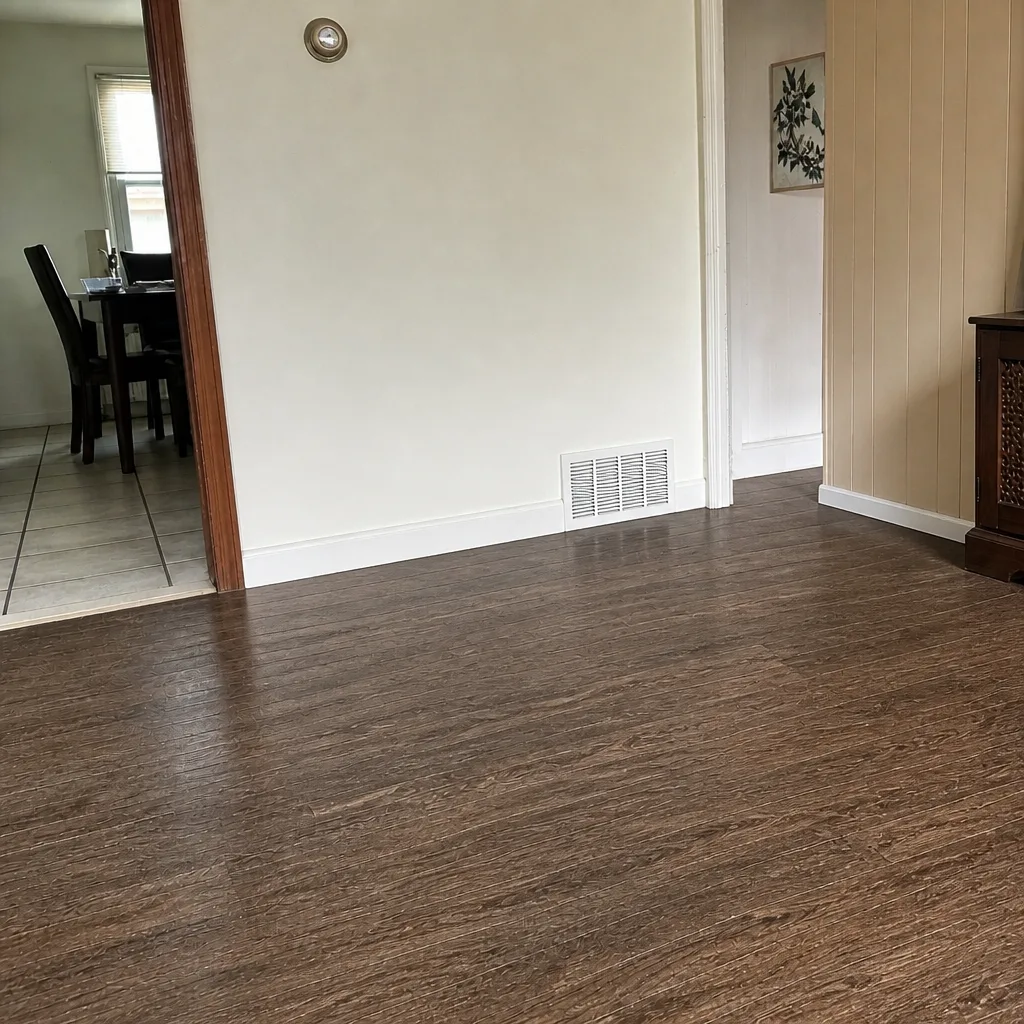 After
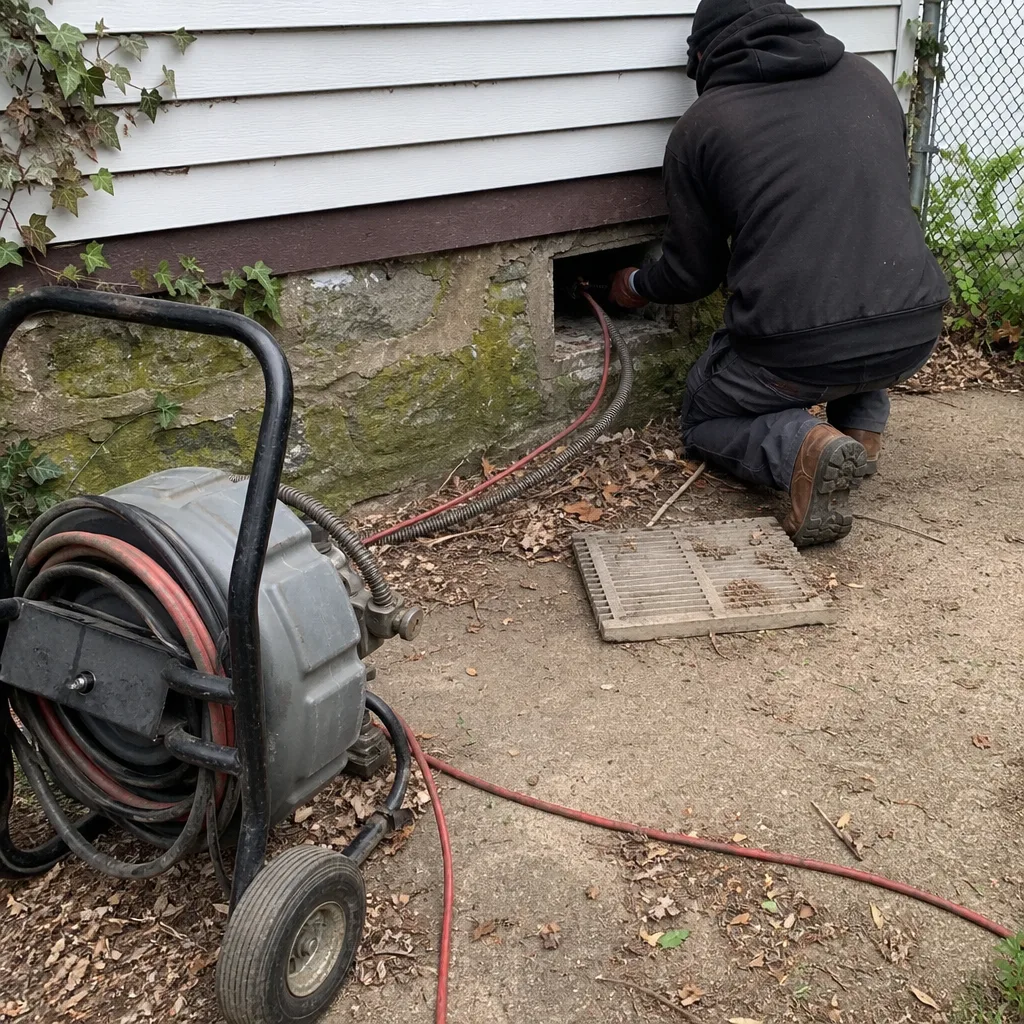 Before
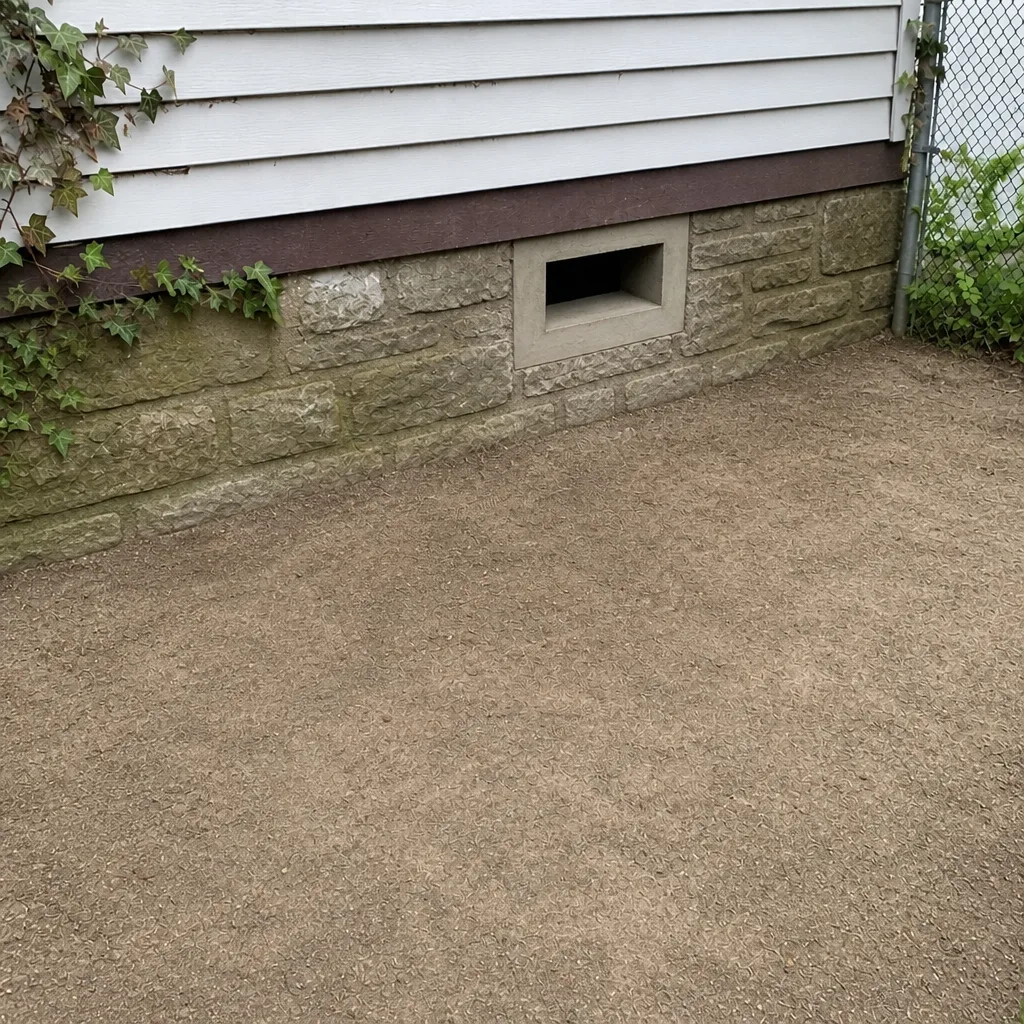 After
 Before
 After
How Much Does Duct Repair & Sealing Cost in Port Richmond?
Duct repair and sealing in Port Richmond typically costs $350 to $1,200, with most homes landing between $500 and $750. A single small leak sealed at a joint runs around $350 to $500, while a system with several failed joints, disconnected runs in a crawlspace, and a crushed flex section often climbs toward $1,000 to $1,200. The written estimate sets the final price, and the estimate itself is free.
If you’ve watched your energy bill climb, noticed dust settling faster than it used to, or felt a room that never quite gets warm while the rest of the house is fine, leaky ducts are a common culprit. Sealing them is one of the few home upgrades where the fix is measurable: less air lost into the attic or basement, more of it reaching the rooms you actually heat. Here’s what the work costs in Port Richmond, what pushes the price up or down, and how to tell whether you’re being quoted for the right job.
Key Takeaways
- Typical duct repair and sealing in Port Richmond runs $350 to $1,200, most commonly $500 to $750.
- Single joint or register boot leaks are the cheapest fix; disconnected and crushed runs cost more.
- Access is the single biggest price driver on Staten Island homes: tight attics and crawlspaces add labor.
- A proper job locates leaks, seals them, and verifies with a pressure or airflow test; patch-and-run work isn’t sealing.
- Estimates are free. Call (877) 792-6601. We answer 24/7.
Duct Repair & Sealing Cost Breakdown (2026)
Port Richmond sits in an older, dense part of Staten Island where much of the housing stock dates to the mid-20th century. That matters for price, because ductwork from that era tends to be galvanized steel with taped or mastic-sealed joints, or early flexible duct that has since sagged and split. Below is what each piece of the work typically runs on a Port Richmond home in 2026.
| Line Item | Typical Range |
|---|---|
| Sealing individual joints, seams and register boots (per leak point) | $85 – $175 |
| Small job: 1 – 4 leak points, one system, easy access | $350 – $500 |
| Mid-size job: 5 – 10 leak points, mastic and mesh at boots | $500 – $750 |
| Large job: 10+ points, attic plus crawlspace, multiple runs | $750 – $1,200 |
| Reconnecting a disconnected run (flex or rigid) | $150 – $350 per run |
| Replacing a crushed or torn flex duct section | $200 – $450 per section |
| Register boot replacement (undersized or rotted) | $150 – $300 each |
| Sealing a supply plenum at the air handler | $200 – $400 |
| Full system pressure test to verify seal | $150 – $300 |
| Duct cleaning bundled with sealing (same visit) | $400 – $800 add-on |
None of these are floor-and-ceiling numbers pulled from thin air; they reflect what the work actually demands in houses of this age and layout. A home in Port Richmond with a finished basement and a long straight trunk line is easier to service than one with a low attic you have to crawl through to reach the far end. The spread between the $350 small job and the $1,200 large job is almost entirely access and how many separate runs are leaking.
Sealing is often paired with a full cleaning when the ducts are already loaded with debris. If that’s your situation, our air duct cleaning Port Richmond page explains what a source-removal cleaning involves and why the order of operations matters.
What Affects Duct Repair & Sealing Pricing in Port Richmond
Six things move the number more than anything else. We walk into each job ready to explain which of these is driving your quote.
- Attic and crawlspace access. Many Port Richmond homes have shallow attics with limited clearance and low crawlspaces with plumbing in the way. Tight, hot working space slows the work and requires containment equipment rather than a shop-vac setup. That’s why we bring Abatement Technologies containment on sealing jobs: debris gets captured at the point of work instead of being redistributed through the house.
- Duct material and age. Original galvanized trunk lines with taped joints need different treatment than sagging flex duct. Flex sections that have pulled loose from collars are often the biggest leaks in a system and fairly fast to fix once found. Rigid duct with failed mastic takes longer because each joint must be cleaned before new sealant bonds.
- Number and location of leaks. Ten leaks clustered near a central plenum cost less to fix than five scattered at the far edges of an attic. Travel inside the house is real labor.
- Disconnects and crushed runs. A run that’s completely separated or crushed by stored boxes, furniture, or a sagging joist is a repair, not just a seal. Those pieces push the bill toward the high end of the mid-size range.
- Whether verification is included. A real seal is confirmed, not patched and declared done. A pressure test or airflow measurement at the air handler after sealing is part of a thorough job, and it’s what separates a proper result from cosmetic work.
- Integrated air quality hardware. If your system is a candidate for a filter upgrade or a humidity control addition, Honeywell and Aprilaire products can be integrated during the same visit. This is separate from sealing cost but changes how the job is scoped on the front end.
One local factor worth naming: Staten Island humidity swings and cold winters mean ducts that run through unconditioned attic space condense and dry repeatedly through the year. That cycling stresses tape and mastic joints and is part of why older Port Richmond systems tend to leak at the joints first. Our duct repair & sealing work is built around that pattern.
What a Duct Repair & Sealing Job Actually Involves
The cost figures above only make sense if you understand what’s being performed. A sealed-and-tested job typically follows the same path, and it’s worth knowing so you can ask the right questions when you get a quote.
First, the technician locates the leaks. This means inspecting accessible duct runs, register boots, plenum connections, and air handler penetrations. On many Port Richmond homes the worst leaks are at the air handler cabinet and the supply trunk the previous installer never sealed properly. Those aren’t visible from the living room. Second, containment goes up around the work area so any dislodged material is captured, not blown through the house. Nikro HEPA-filtered vacuum systems and Abatement Technologies containment are what we bring for this stage. Third, each leak is prepared and sealed properly with mastic and reinforcing mesh and, where appropriate, new collars or replacement flex sections. Taped-only patches fail, so we don’t rely on them. Fourth, the system is tested to confirm the seal held and that airflow through the run hasn’t dropped off.
If the ducts are also loaded with accumulated dust or the returns are noticeably grimy, a full source-removal cleaning before sealing keeps new sealant from trapping debris in place. Rotobrush rotary brush agitation combined with HEPA extraction is what we use on that kind of cleaning. It’s the same professional-grade equipment range used on commercial remediation, not the shop vac most quick-fix crews show up with.
How to Save on Duct Repair & Sealing
None of these are gimmicks. They’re the same practical levers any fair contractor would tell you about.
- Get the leaks found before you agree to sealing scope. A contractor who quotes sealing without inspecting your accessible attic or crawlspace is guessing. A free on-site estimate is exactly that: no charge to walk the system, measure and quote. Call (877) 792-6601 and we’ll book it.
- Combine services on one visit. If you’re already due for cleaning, seal on the same trip. A separate trip for sealing means setup labor twice and containment twice. It’s not a discount, it’s just less overhead.
- Address the worst leaks first. Sealing the plenum and the first 10 feet of trunk typically delivers the biggest airflow improvement per dollar. If budget is tight, start there and re-evaluate.
- Fix crush damage before it becomes a replacement. A flex run pinched under stored furniture or a collapsed joist is a $150 to $350 reconnect now; after years of pressure-backed leakage it may become a $450 replacement.
- Keep the attic accessible. Clearing a path to your air handler and trunk line before the tech arrives shortens labor. That’s a real number on the invoice.
If your system is a good candidate, a Honeywell or Aprilaire filter upgrade added during the job can reduce the dust load that contributes to joint fouling over time. It’s not a substitute for sealing; it’s a complement to it. As with any work on the air pathway, a trained technician should perform the sealing and the hardware integration. Mastic and adhesive products shouldn’t be applied by homeowners who can’t visually confirm the work inside a tight attic or crawlspace, and ductwork connected to a furnace has real safety implications if it’s sealed in a way that restricts airflow. Leave it to a trained professional.
Is Duct Repair Cheaper Than Replacement?
Yes, in almost every case. Repair and sealing on a functional duct system in Port Richmond runs $350 to $1,200, whereas a full duct system replacement typically runs several thousand dollars and involves opening walls or ceilings. Repair wins unless the ducting is broadly compromised: crushed throughout, wet from a chronic leak, or so old that joints won’t hold a seal. In that case partial replacement of the worst runs (often $700 to $1,800 depending on length) can be the practical middle path. Call (877) 792-6601 for a free estimate and we’ll tell you which category your system falls into.
FAQs – Duct Repair & Sealing Cost
How much does duct sealing cost in Port Richmond?
Duct sealing in Port Richmond typically costs $350 to $1,200, with most homes in the $500 to $750 range. Leak count and access drive the number. Call (877) 792-6601 for a free estimate; we answer 24/7.
Is duct sealing worth the money?
For most leaking systems, yes. Sealing leaks recovers air you’re already paying to condition, so the impact shows up on your energy bill and in room-to-room comfort. A free estimate is the fastest way to know what your system needs. Call (877) 792-6601.
How long does duct repair and sealing take?
Most residential sealing jobs in Port Richmond take 3 to 6 hours, depending on leak count and access. A single joint fix is often under 2 hours. Larger jobs spanning attic and crawlspace can run a full dispatch day. Call (877) 792-6601 to schedule.
Can you come the same day to look at my ducts?
Same-day service is often available. Fast dispatch from 7am to 7pm, Sunday through Friday, with same-day visits when the schedule allows. Call (877) 792-6601. We answer 24/7, and a call outside dispatch hours is booked into the next opening.
Does duct sealing really help with dust and allergies?
Yes, for a specific reason. A leaking return duct pulls air from the attic, crawlspace, or basement and delivers that unfiltered air into living space. Sealing stops that path. Reducing dust load is measurable; how much any one person notices depends on the home. Call (877) 792-6601 for a free assessment.
Why a Full Air Pathway Approach Saves Money Long Term
Duct sealing on its own is a fix, not a strategy. The systems we work on go further: cleaning, HVAC service, dryer vent clearing, duct repair and sealing, and air quality sanitizing, all handled through one service relationship. That matters because leaks, dust accumulation, and dryer exhaust problems often share the same underlying airflow dynamics. A path that’s leaking at the trunk, choked at the filter, and vented poorly at the dryer isn’t a set of unrelated problems; it’s one pathway working against you. Rotobrush, Nikro, and Abatement Technologies equipment is used across all of it, and our technicians have up to 14 years of experience on systems of this type.
Containment matters more than most homeowners realize. Without it, sealing work that dislodges debris can redistribute it into the rooms you’re trying to clean. Abatement Technologies containment equipment is what we use for exactly that reason, capturing dislodged material at the source rather than pushing it downstream. Guardsman protective treatments are available as part of the sanitizing tier for customers who want an ongoing air quality result, not just a one-time cleanup.
You don’t need all of that to get value from duct sealing. But when a technician inspects your system, they see the full picture, and it’s worth asking what else is leaking air quality the same way the ducts are.
Get a Free Duct Repair & Sealing Estimate in Port Richmond
Duct repair and sealing in Port Richmond runs $350 to $1,200 for most homes, and the price is set by the written estimate after we’ve inspected the system. Same-day service is often available, and every estimate is free. Call (877) 792-6601 and we’ll book an inspection. We answer 24/7, with fast dispatch from 7am to 7pm, Sunday through Friday, and we’re closed Saturday. Get a written scope, real leak count, and a price you can act on.
Written by the team at Air Duct Cleaning Port Richmond.
Pricing reflects the Port Richmond market as of 2026. Air Duct Cleaning Port Richmond offers free estimates – call (877) 792-6601.
What Our Customers Say
"My wife's allergies had been bad in this house since we moved in. It's been two months since they did the ducts and it's noticeably better. Not a miracle, but real."
- Scott Gallagher"Quoted per system rather than the bait and switch per vent pricing everybody else in town uses. The number I was told on the phone was the number on the invoice."
- Amanda Rhodes"Job was done well and the house smells better. There was some dust knocked loose around a couple of the registers that I had to wipe down afterward."
- Brooke Mercer