
Last updated November 24, 2026
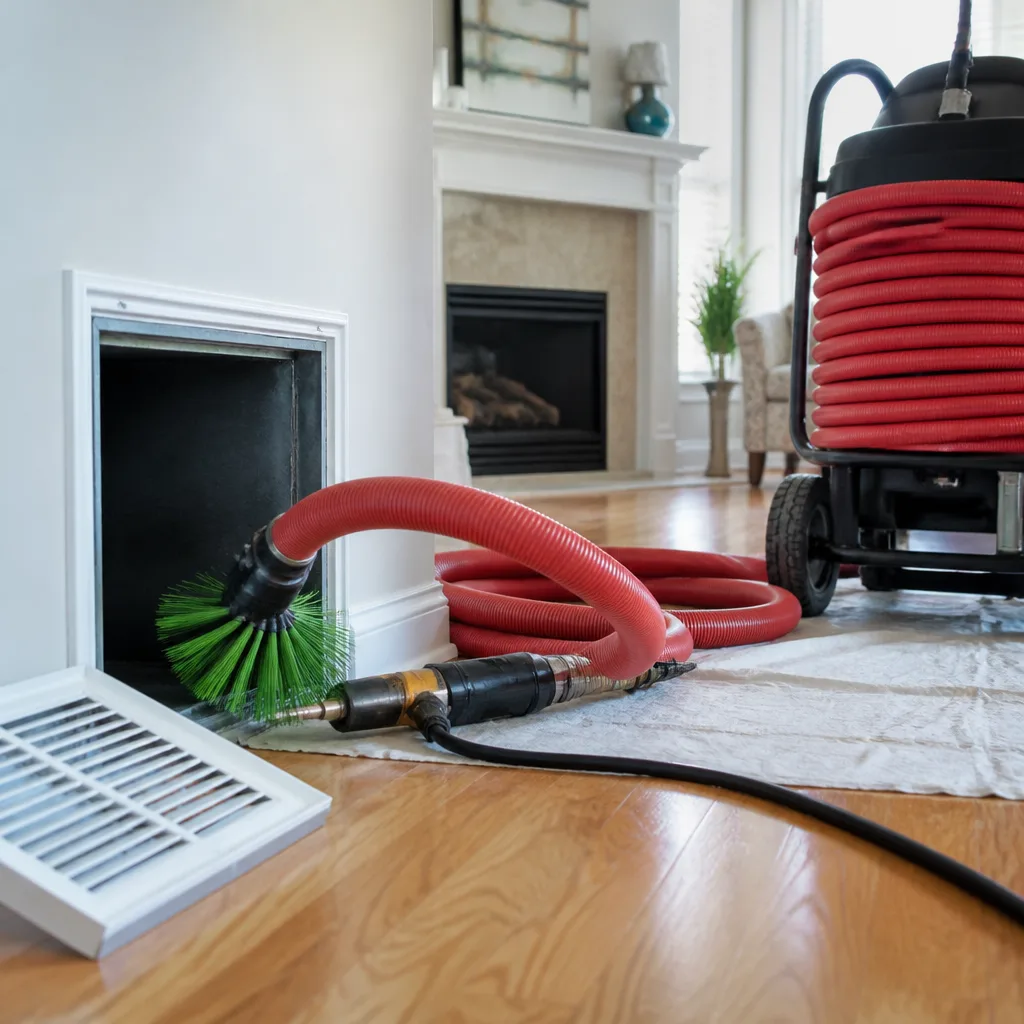 Whole-home duct cleaning
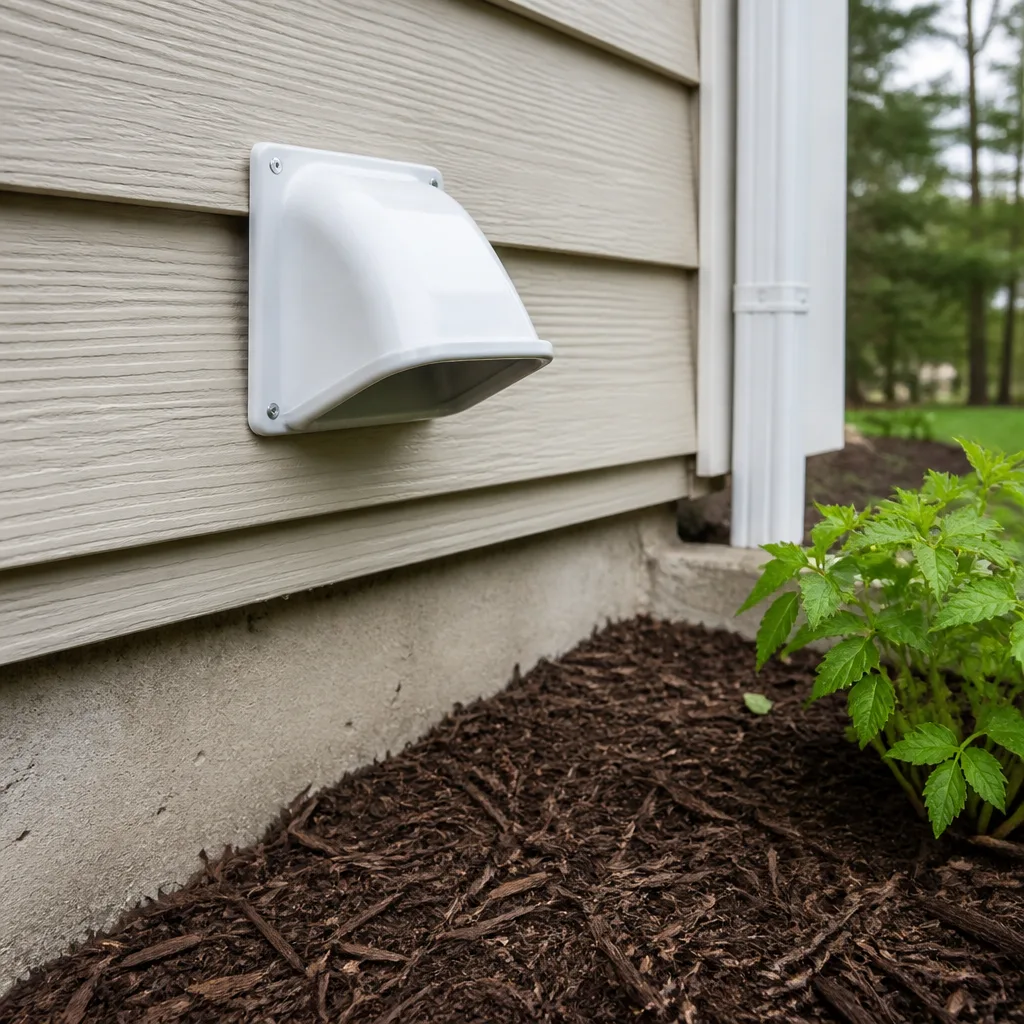 Dryer vent cleaning
 Camera inspection
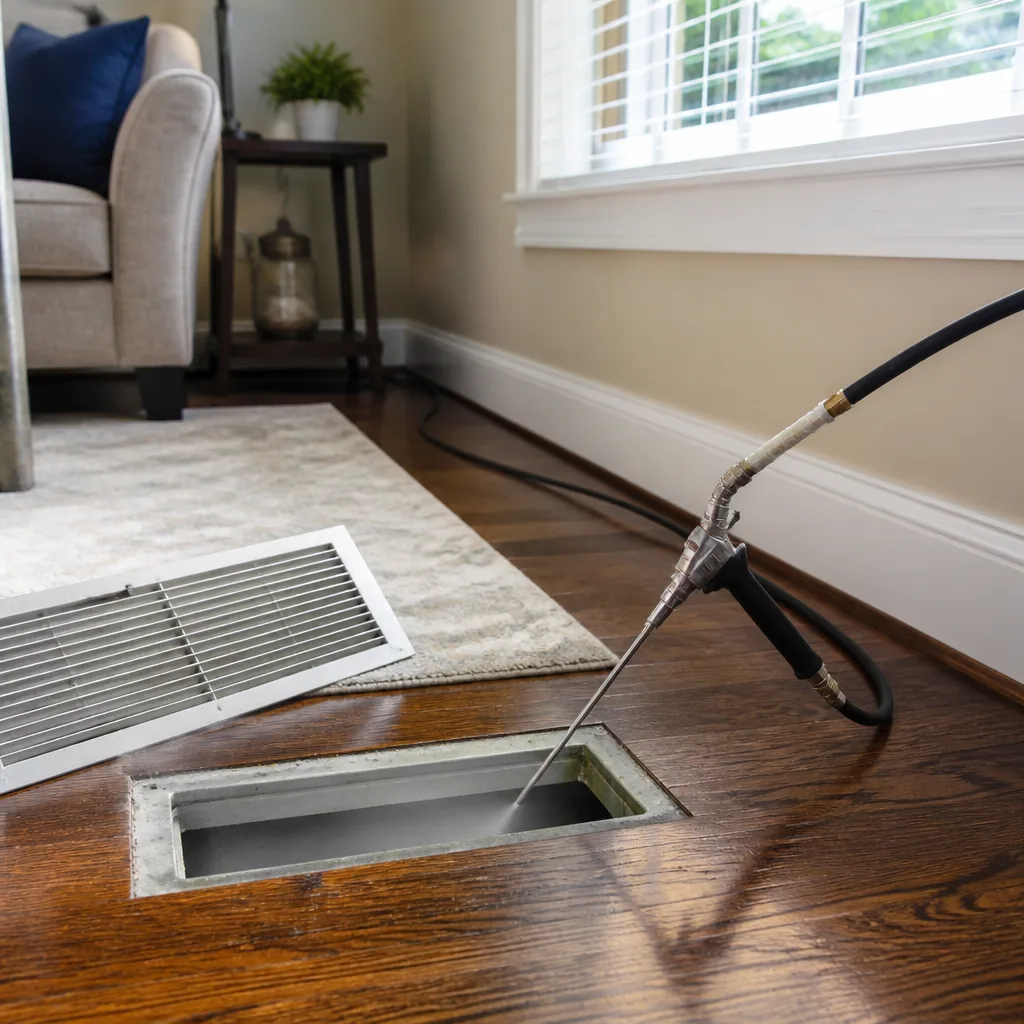 Sanitizing & deodorizing
Whole-system duct and dryer vent check with before-and-after photos - you see exactly what came out of your vents
That "$99 whole-house special" is a bait ad - the real number appears once they are in your hallway, or the "clean" is a shop-vac at the register. We photograph the inside of your ducts before and after instead.
Seasonal Air Duct Cleaning Care for Port Richmond: Year-Round Homeowner’s Guide
The worst month to clean your ducts in Port Richmond is often the one homeowners pick first: midsummer. Ambient humidity is at its peak, and moisture drawn into the system during cleaning has nowhere to go, lingering in the same dark, warm interior that microbial growth needs to get started. That single counterintuitive fact reshapes the whole calendar. Most advice tells you to clean once a year and be done. In Port Richmond, the better approach is to match each inspection and each cleaning to the contamination that season actually produces: spring pollen, summer humidity, fall combustion byproducts, winter concentration. This guide walks through that four-season calendar, tells you when to inspect versus when a full cleaning is warranted, and explains the local factors – commercial corridors, older oil-burner homes – that change the equation.
Quick Answer
For most Port Richmond homes, the smartest seasonal pattern is a full cleaning before heating season starts in fall, a lighter inspection in spring before cooling season, and filter changes triggered by real events – pollen release, first heat run, a furnace tune-up – rather than by a calendar date. Midsummer full cleanings are usually the wrong move because high humidity can trap moisture in the system. Annual full cleanings are rarely necessary; a shoulder-season inspection tells you whether one is actually needed.
Styles & brands we work with
- Whole-home duct cleaning
- Dryer vent cleaning
- Camera inspection
- Sanitizing & deodorizing
Table of Contents
- Why Port Richmond’s Climate Sets Its Own Duct Calendar
- Spring: Pollen Infiltration and the First Cooling Push
- Summer: Humidity, Moisture Risk, and Why Timing Matters
- Fall: Heating Startup and Combustion Byproducts
- Winter: Air Lock, Particulate Concentration, and Sealed-Home Effects
- Shoulder-Season Inspection vs. Full Cleaning: What Each Should Cover
- Filter-Change Triggers Tied to Events, Not Dates
- Port Richmond-Specific Factors: Commercial Corridors and Oil Burners
Why Port Richmond’s Climate Sets Its Own Duct Calendar
Port Richmond sees four distinct pressure periods on a duct system, and each one loads the inside of that system differently. Spring sends a heavy pollen load through open windows and return air. Summer swings between humid stretches and air-conditioning that runs hard and then sits idle, a combination that controls moisture as much as it does temperature. Fall brings the first heating startup, which is when accumulated dust and combustion byproducts from oil-fired equipment start moving through the house. Winter concentrates everything because windows stay closed and the air changes far less often than it does the rest of the year.
The practical takeaway is that a single annual cleaning doesn’t line up cleanly with any of these. A duct system that gets scrubbed in July has already lived through its heaviest pollen month and will spend fall collecting the soot and dust of a heating startup afterward. The work lands in the wrong place on the calendar.
We’ve seen this repeatedly across Port Richmond, and it’s why we frame the work as a season-specific action plan rather than a yearly appointment. The rest of this guide breaks each season down, but the underlying idea is simple: clean before a load enters the system, not after it has settled and been pushed through the house for months.
There’s also a piece homeowners tend to miss – the system itself. Ducts with loose joints, disconnected runs, or gaps at the plenum leak air, and a leaking system pulls dust from unconditioned spaces as readily as it pulls from the rooms it’s meant to serve. If you’re chasing why a freshly cleaned system turns dusty again quickly, Air Duct Cleaning Port Richmond starts with a look at the whole pathway, leaks included, before assuming the cleaning wasn’t thorough.
Spring: Pollen Infiltration and the First Cooling Push
Spring in Port Richmond does two things to a home’s air at once: it floods the outdoor air with pollen, and it starts homeowners opening windows and doors for the first time in months. Those open windows bring pollen in, where it settles into return-air grilles, filters, and any surface with a light dust film to catch it. Then the first warm stretch arrives, the air conditioning starts, and that settled pollen gets pulled straight back into circulation.
The spring window matters because it’s short. Once the AC is running consistently, the pollen that’s already inside the system is being distributed with every cycle. Cleaning after that point is still worth doing, but you’re chasing contamination that’s had a head start.
What the spring action window should cover:
- Return grilles and registers: the first place pollen accumulates. A visual check tells you quickly whether the filter is doing its job or has already loaded up.
- Filter condition: a filter that entered winter moderately loaded and then took on spring pollen is often overdue. See the filter-trigger section below.
- Supply vents and duct interiors in the main trunk: if you see a light dusting at the register faces a month after a cleaning, the system is likely pulling from a gap somewhere.
- Coil condition: a loaded cooling coil reduces airflow and holds moisture, which is the setup for the summer problem described next.
This is also the right time to consider a shoulder-season inspection rather than a full cleaning, which we cover in detail further down. The goal in Port Richmond spring is to catch accumulation early and clear it before the AC carries it through the house for the next four months. If you want the full cleaning side of that covered in one appointment, air duct cleaning handles the source removal and the filter check together.
Summer: Humidity, Moisture Risk, and Why Timing Matters
Summer is the one season where a full duct cleaning can work against you if the timing is wrong. Ambient humidity in a Port Richmond summer is high, and a wet-cleaning process – or a mechanical cleaning that stirs up a humid system – can introduce moisture into the ductwork that doesn’t fully evaporate before the system is sealed back up. Warm, dark, damp ductwork is exactly the environment where microbial growth establishes itself. The cleaning itself isn’t the problem; the moisture left behind is.
That doesn’t mean summer cleanings never happen. It means they should be deliberate. A conversation with the technician about drying, airflow, and whether the system will run immediately afterward decides whether a summer appointment is a good idea or one to reschedule for the fall.
The other summer dynamic is coil and condensate behavior. Air conditioning produces condensation on the coil by design, and that moisture drains away – unless the drain is slow or the coil is dirty enough to hold water. A dirty coil plus a humid Port Richmond summer is the highest-risk combination of the year for microbial growth in the system. If there’s a musty smell when the AC first starts, that’s the system telling you the coil or the drain pan needs attention, not the ducts alone.
What to watch for in summer:
- Musty odor at startup: a sign of moisture and growth somewhere in the cooling path, often the coil or drain pan.
- Weak airflow at certain vents: can indicate a coil that’s loaded or a duct leak pulling air from an unconditioned space.
- Condensate issues: a slow drain or standing water in the pan calls for HVAC attention before any duct work.
- Filter load: summer filters load with the same fine particles as the rest of the year, but the system runs more hours, so the load builds faster.
When the cooling side of the system needs attention, HVAC cleaning covers the coil, drain pan, and blower that duct cleaning alone doesn’t reach.
Fall: Heating Startup and Combustion Byproducts
The most important appointment on the Port Richmond duct calendar is the one before the first heating run of the season. Older homes in the area often rely on oil-fired heating equipment, and an oil burner that hasn’t run all summer can put out a puff of soot and combustion byproduct on startup. Those particles enter the air stream and settle into the ductwork, where they ride along with the heated air for the rest of the winter if they’re not cleared.
Even in homes without oil heat, fall startup is the moment accumulated summer dust – the light film that builds on duct interiors, register faces, and return grilles – gets lifted and circulated for the first time in months. The first run of the furnace is the loudest dust event of the year.
The fall pre-heating checklist:
- Get the furnace serviced first. Confirm the burner, heat exchanger, and venting are operating cleanly before the system starts moving air through the house.
- Inspect the ducts and registers before the first heat run. This catches accumulation while it’s still settled, not circulating.
- Full cleaning if inspection calls for it. Fall is the ideal season for a full source-removal cleaning because the system will run hard afterward and dry thoroughly.
- Address leaks and gaps at joints and the plenum. A sealed system runs cleaner, and the heating season is when a leaky system costs you the most in efficiency.
- Change the filter after the first heat run. The startup dust loads the filter fast, and a fresh filter afterward protects everything downstream.
In Port Richmond, this is the season where a shoulder-season inspection most often turns into a full cleaning – and where homeowners who skipped it in spring are glad to have a thorough job done before the system works all winter. We use professional-grade Rotobrush rotary brush equipment for mechanical agitation with simultaneous vacuum extraction, and Nikro HEPA-filtered vacuums for negative-pressure source removal, so the debris is captured at the point of agitation rather than pushed through the home. Abatement Technologies containment equipment keeps the airborne dust inside the work zone during remediation-level cleaning.
Winter: Air Lock, Particulate Concentration, and Sealed-Home Effects
Winter is the season Port Richmond homes are most sealed up – windows closed, doors closed, outside air exchange at its lowest. That’s good for heat retention and bad for air quality, because the same few thousand cubic feet of air are recycled through the system all season. Every particle that enters – dust from the filter, skin cells, pet dander, residue from cooking – stays in the loop longer.
Air lock is the related issue. Some rooms, especially in older Port Richmond homes with original duct layouts, get less airflow than others. The likely causes are duct runs that are undersized, joints that have opened, or a system that was never balanced for the current layout. When one room is cold and another is hot with the furnace running wide open, that’s an air distribution problem, not a cleaning one – though cleaning a restricted run first often reveals whether the real issue is accumulation or design.
What winter care actually involves:
- Filter changes on a shorter cycle: a sealed home loads the filter faster because less fresh air dilutes the load. Check monthly.
- Watch for condensation on cold ducts: an uninsulated run in a cold attic or crawlspace can collect moisture in winter and become a growth point.
- Air distribution checks: if one room stays cold, that’s a cue to inspect the run, not just clean the system.
- Consider a post-cleaning air quality product: Honeywell and Aprilaire filtration and humidity products make sense to install after a cleaning, not instead of one, so the system starts clean and stays that way longer.
We don’t recommend full cleanings in the dead of winter unless the late fall inspection missed something. The right winter move is maintenance and observation, holding the system in good shape until the spring inspection window opens again.
Shoulder-Season Inspection vs. Full Cleaning: What Each Should Cover
The most common waste in this industry is the annual full cleaning that nobody actually checked was needed. An inspection and a full cleaning are different jobs with different scopes, and a competent provider will tell you which one your system actually needs. Getting both priced and described honestly is exactly where the bait-and-switch problem starts, so here’s what to expect from each.
A shoulder-season inspection (spring and fall) should cover:
- Visual walkthrough of every supply register and return grille.
- Filter condition and the last change date.
- Accessible duct interior at the main trunk and plenum.
- Coil and drain pan condition (spring, before cooling season).
- Burner and venting condition on oil-fired equipment (fall, before heating season).
- Leak check at joints, collars, and the plenum – gaps are common and cost efficiency year round.
- A written recommendation on whether a full cleaning is warranted, and why.
A full cleaning should cover source removal:
- Every supply and return run that can be accessed, not just the main trunk.
- Mechanical agitation (rotary brush) with simultaneous extraction, so dislodged debris is captured, not redistributed.
- HEPA-filtered negative pressure to hold the containment while work is in progress.
- Blower, coil, and drain pan as part of the system, not as an add-on.
- A leak check and – if you approve it – sealing of the leaks found, with the sealed system confirmed after the repair.
The one flat price per system should be agreed before work starts, and before-and-after photos of your own ducts should come with the job. If a provider can’t describe that in writing, that’s your signal to get another estimate.
Filter-Change Triggers Tied to Events, Not Dates
Calendar-driven filter advice (“change every three months”) is the wrong frame, especially in Port Richmond. Filters load based on what the system is doing, not what the calendar says. A better approach is to trigger the change on real events in the home, with a quick end-of-season check as a backstop. Filters are cheap and changing them keeps the rest of the work you’ve already paid for intact.
Event-based triggers to watch for:
- After the first heating run of fall. That first run stirs up dust that’s been settled inside the system all summer, and it lands in the filter fast.
- When spring pollen peaks. If you’ve had windows open for a stretch and the pollen count is high, the filter has taken the load. Change it once the pollen settles.
- After any duct cleaning or HVAC work. New filter after the work, always, to catch anything disturbed during the job.
- When you notice reduced airflow at the registers by feel. A filter at end of life restricts flow before it looks completely clogged.
- After a renovation, a move-in, or a new pet in the home. Each of these loads the filter heavily for a stretch and is worth a fresh start.
- End of winter. A sealed-home winter loads the filter harder than any other three-month stretch. Change it when the house opens up for spring.
The right filter for the right system still matters. A filter rated too high for the blower restricts airflow. If you’re unsure, ask on the call – we can walk through what your system can handle. And if you’re installing upgraded media filtration or a humidity control system, Aprilaire and Honeywell products are part of the air quality service tier rather than something a cleaning alone provides.
Port Richmond-Specific Factors: Commercial Corridors and Oil Burners
Two features of Port Richmond shape the duct picture in a way that doesn’t show up in a generic seasonal calendar.
Commercial corridors. Homes near the busier commercial stretches pick up a steady film of fine particulate from traffic and nearby activity. That film settles into return grilles faster than it does in quieter blocks, so the filter trigger for those homes should be shorter, and the spring inspection is worth doing a bit earlier. This isn’t a dramatic difference, but it’s a real one, and it’s why a homeowner near a commercial corridor should watch the return grille for visible dusting rather than rely on a strict calendar.
Older oil-fired heating. Many Port Richmond homes still heat with oil, and oil burners produce soot and combustion byproduct on startup that migrates into ductwork when a system isn’t serviced. The fall cleaning has to happen after the burner service and before the first real run of the season, or the startup particles just land in a system that was recently cleaned. This is also why we don’t recommend a full duct cleaning that isn’t paired with a burner service where oil heat is in play – there’s no point cleaning the ducts if the source is still depositing material into them.
Both factors make the local fall inspection and cleanup more valuable, not less. Homes on quieter blocks and with gas heat have a gentler fall load, but the rest of the calendar still applies.
Common Mistakes to Avoid
- Booking a full cleaning in July. High humidity plus a recently cleaned system is the moisture setting that microbial growth needs. That’s the season to inspect and schedule, not the season to wet-clean.
- Repeating an annual full cleaning out of habit. A shoulder-season inspection tells you whether the full cleaning is actually warranted. Many Port Richmond homes can go longer between full cleanings when leaks are sealed and filters are changed on trigger.
- Skipping the furnace service in fall. An oil burner that hasn’t been serviced will deposit soot into ducts on the first run. Clean ducts and an unserviced burner are a losing combination.
- Cleaning but not checking for leaks. A leaky system pulls dust from unconditioned spaces back into the house within weeks of the cleaning. Sealing and confirming the seal is the step most duct-only providers skip.
- Changing the filter on the calendar instead of on the event. A fresh filter installed in an unserviced furnace after a heavy startup run should be replaced a second time within weeks. Calendar filters miss this.
- Accepting a “45-minute whole-house clean.” Source-removal work with real containment takes hours, not minutes, and a rushed job redistributes debris more than it removes it. The tell is the before-and-after photos; if a provider doesn’t provide them, the job is unverifiable.
- Ignoring musty smell at cooling startup. A musty odor when the AC first comes on is a signal of moisture and growth in the cooling path. Covering it with air freshener just delays the diagnostic step.
See the difference
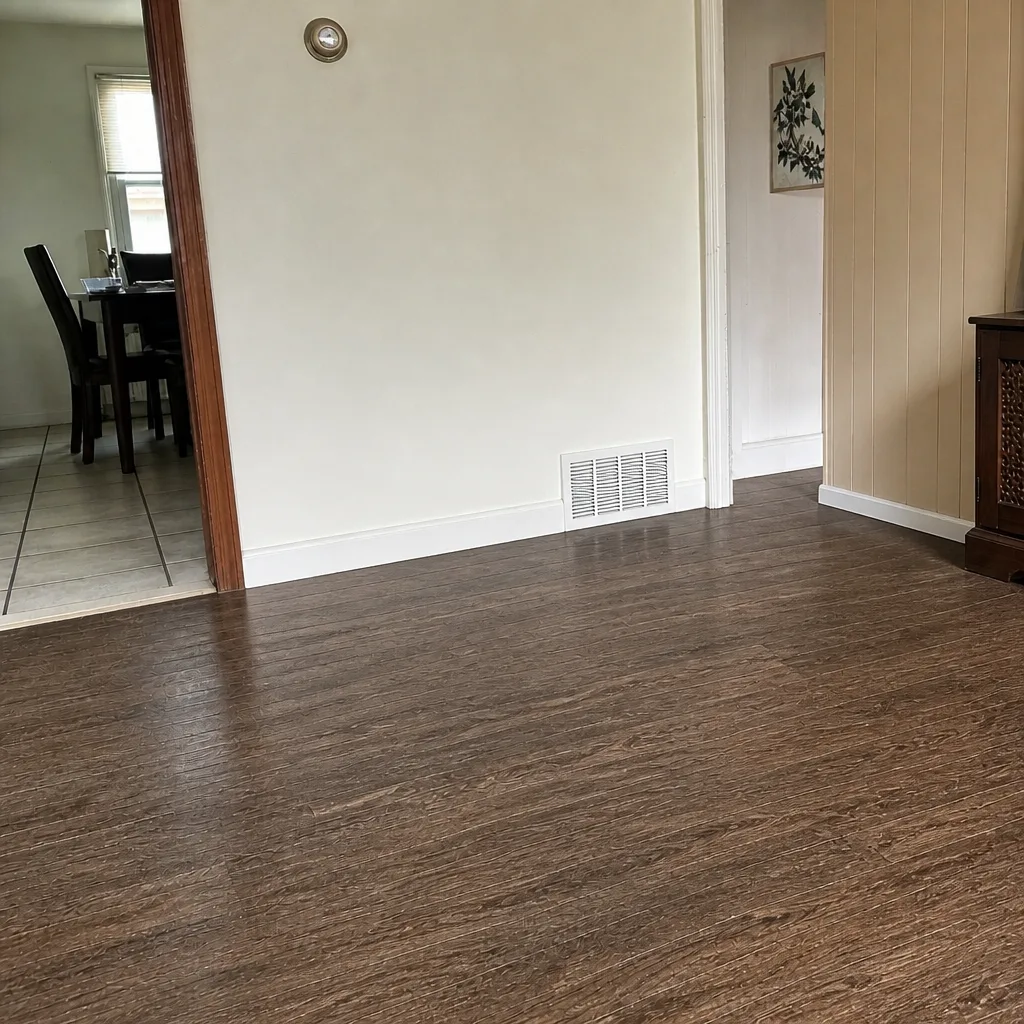
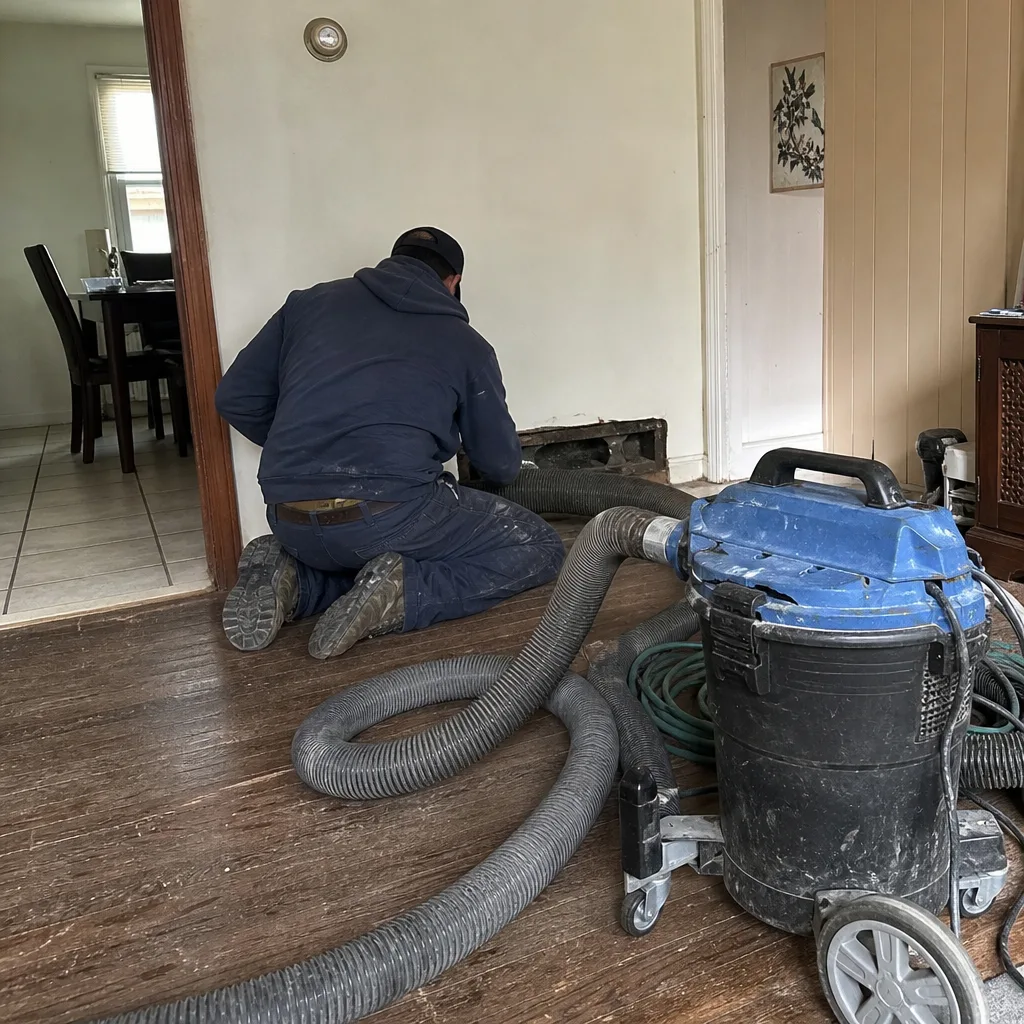 Before
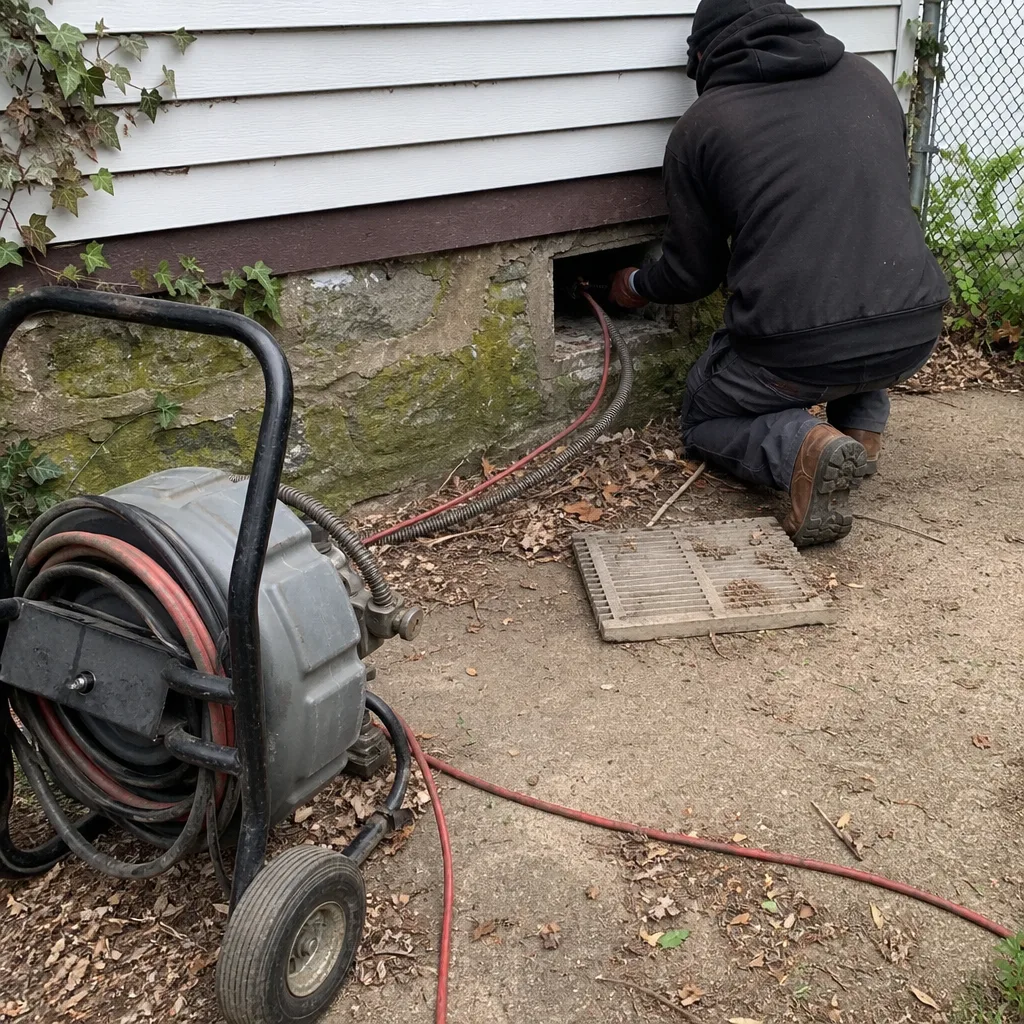
 After
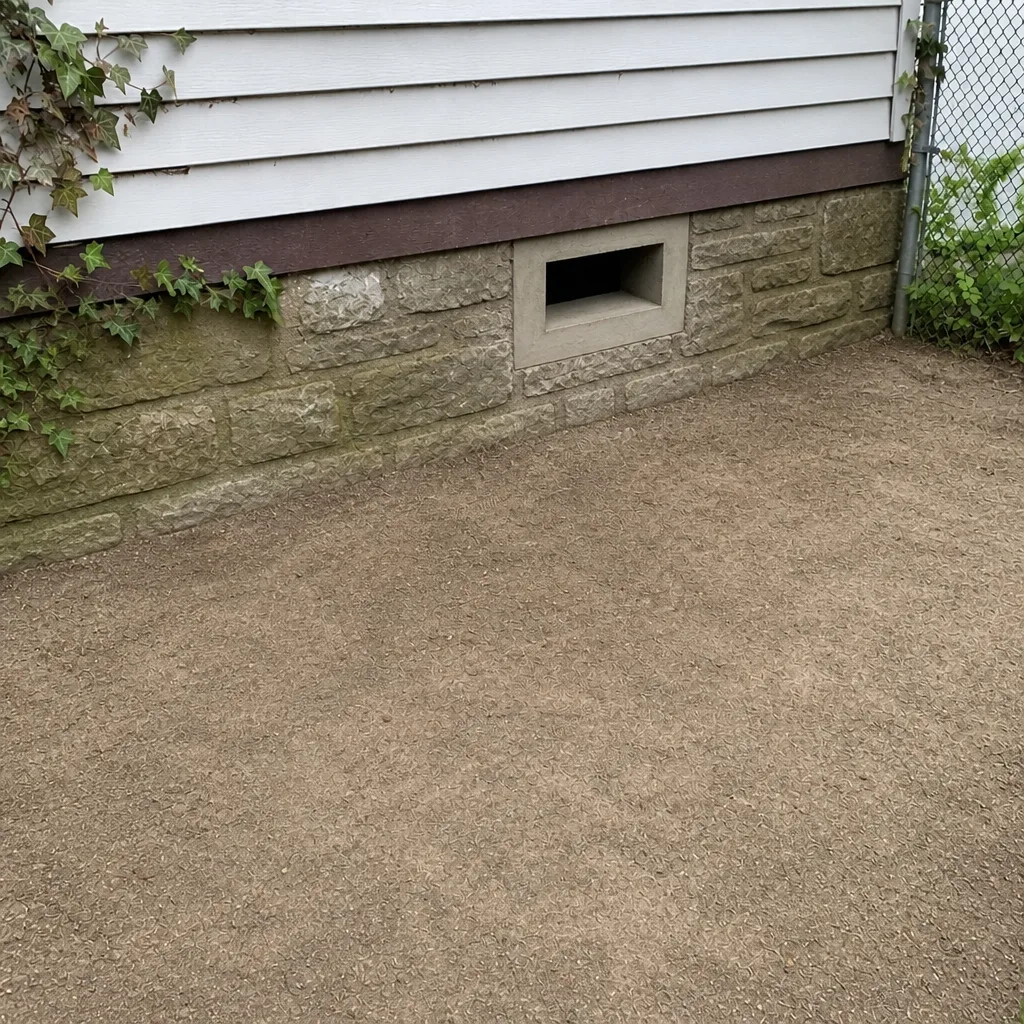
 Before
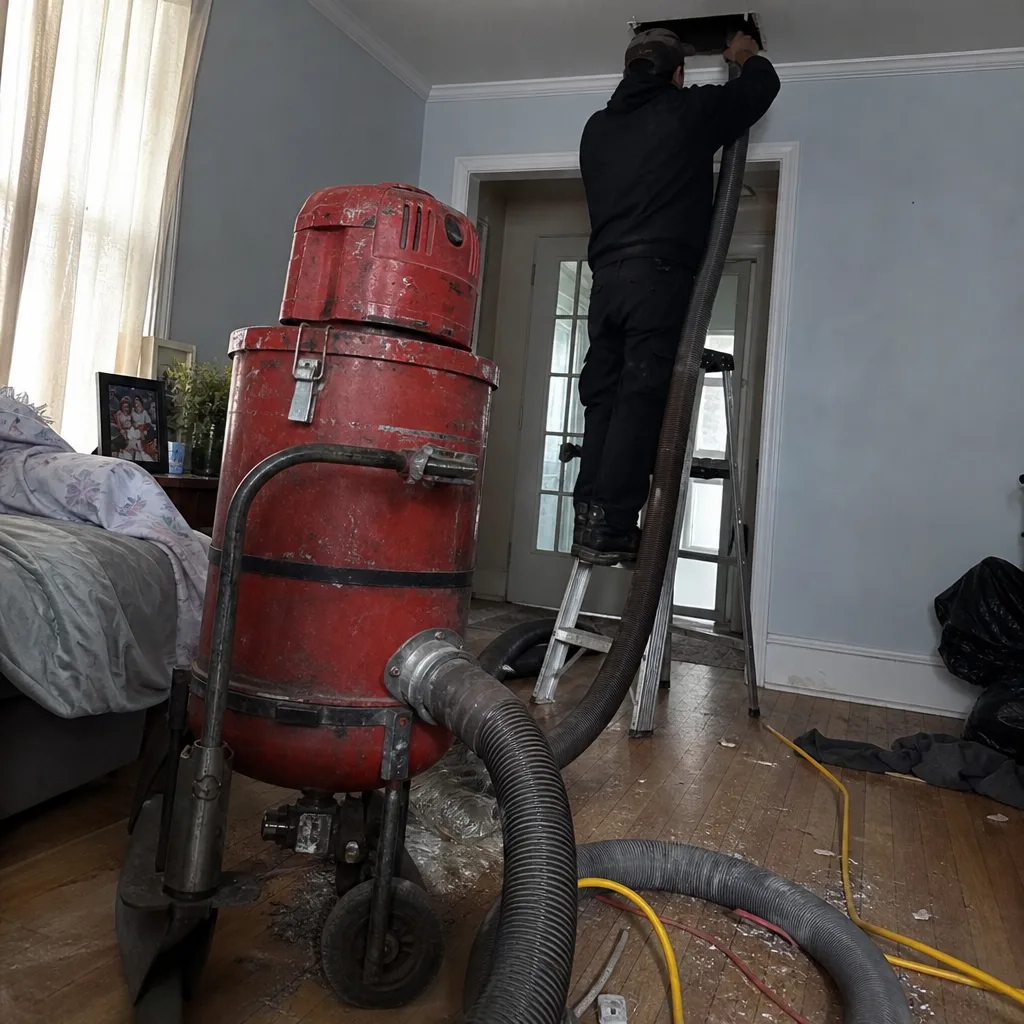
 After
 Before
 After
When to Call a Professional
Some seasonal duct care is a homeowner’s job: changing filters, checking registers, watching for musty odors, and noting which rooms stay cold when the system runs. But specific signals mean it’s time to bring in a technician. Persistent visible dusting at register faces within months of a cleaning usually points to a leak, and leaks need proper diagnosis, not a second cleaning. A musty smell at cooling startup, weak airflow on multiple runs, visible soot around the furnace or at the registers, or a duct inspection that finds disconnected runs all call for professional work – the last one in particular, because sealing and confirming a seal requires the right tools and materials. If you’re not sure whether it’s a cleaning or a repair, that’s exactly what a free estimate is for. Air Duct Cleaning Port Richmond offers free estimates in Port Richmond – call (877) 792-6601.
Frequently Asked Questions
For most Port Richmond homes, a full cleaning every two to three years is realistic, with an inspection each spring and fall in between. Homes with oil heat, pets, allergy sufferers, or a recent renovation may need more frequent full cleanings. The inspection is what tells you, and skipping it is how the calendar-driven “every year” advice starts.
Summer is the hardest season for a full cleaning because high humidity can leave moisture in the system. That moisture, in a warm dark duct, is the condition that microbial growth needs. A cleaning can be done in summer with the right drying and system airflow, but fall is the safer default for a Port Richmond home.
A duct inspection is a visual check of the system – filters, registers, plenum, coil, drains, and accessible runs – and ends with a written recommendation. A duct cleaning is the source-removal work itself: agitation, extraction, containment, and verification. The inspection tells you whether the cleaning is needed. Call (877) 792-6601 for an exact quote on either.
Yes, if the burner has deposited soot or if the system hasn’t been serviced in a while. Oil furnaces can put out combustion byproduct on startup that migrates into ducts. The right order is: service the burner first, then clean the ducts before the winter heating runs. Call (877) 792-6601 for an exact quote – estimates are free.
How do I know the work was actually done?
Ask for before-and-after photos of your own ducts, not stock images, and confirm the scope in writing before the job starts. A job priced as one flat price per system, with photographs, is the standard we hold ourselves to. If a provider can’t show you either, don’t book. Call (877) 792-6601 for a free estimate with the scope explained up front.
The Bottom Line
The right seasonal pattern for a Port Richmond home is a full cleaning before heating season, a spring inspection before cooling season, filter changes on real events rather than on the calendar, and a deliberate decision – not a default – on summer full cleanings. Homes near commercial corridors should watch return grilles more closely. Homes with oil heat should service the burner before cleaning. Shoulder-season inspections catch most problems before they become a full job, and leaks found and sealed during those inspections keep a cleaned system cleaner for longer. Every cleaning is priced as one flat price per system, agreed before work starts, with before-and-after photos of your own ducts. Breathe with confidence, and let the season tell you when.
Ready to get on a real seasonal schedule? Call (877) 792-6601 for a free estimate with Air Duct Cleaning Port Richmond. We answer 24/7. Fast dispatch from 7am to 7pm, Sunday through Friday. Insured and state-licensed local pros on the work.
Written by the team at Air Duct Cleaning Port Richmond.