
Last updated November 24, 2026
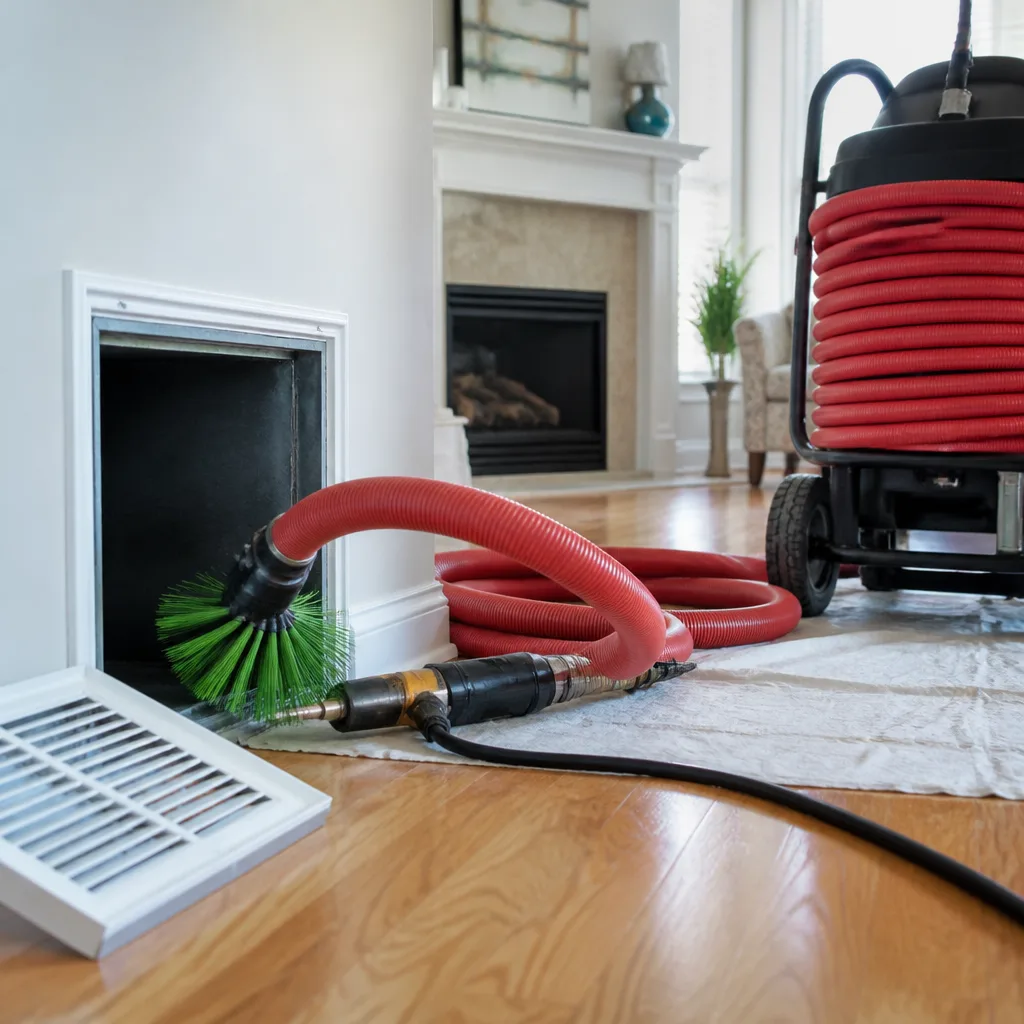 Whole-home duct cleaning
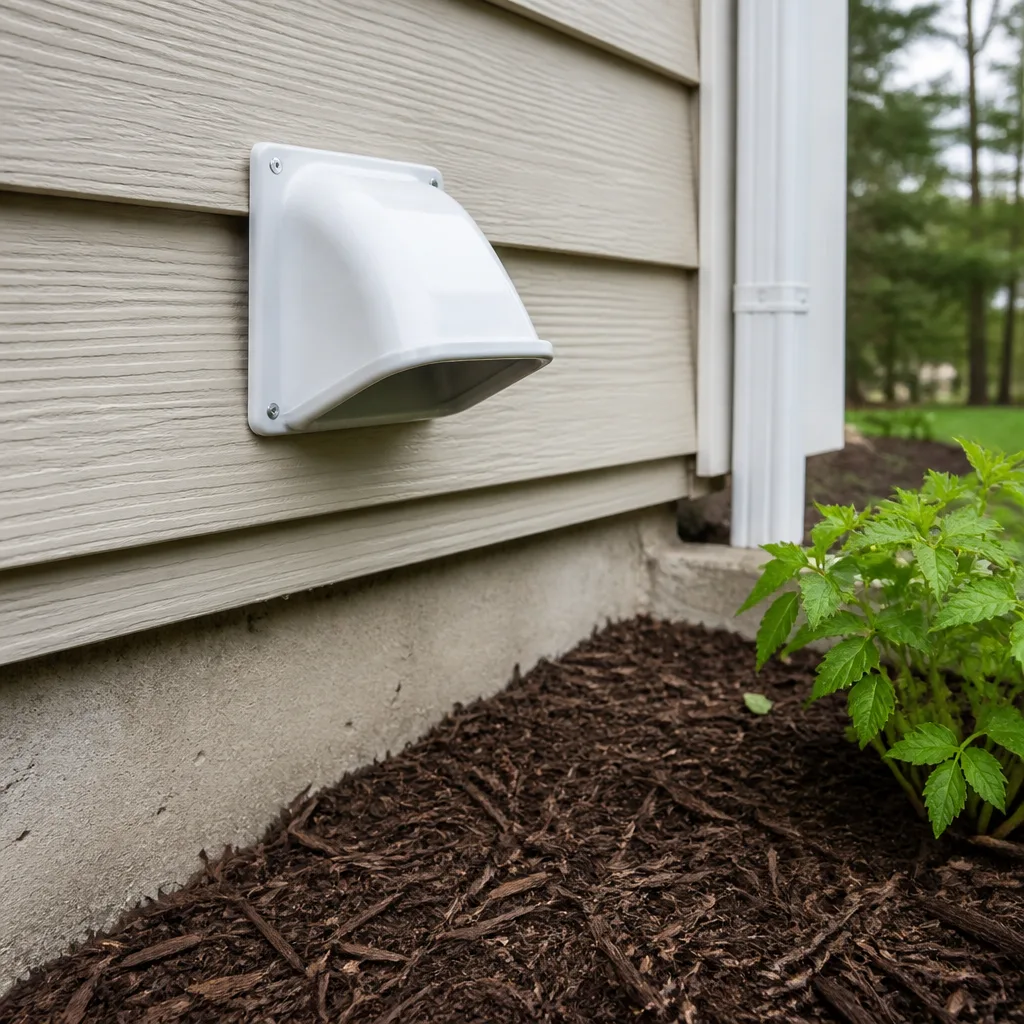 Dryer vent cleaning
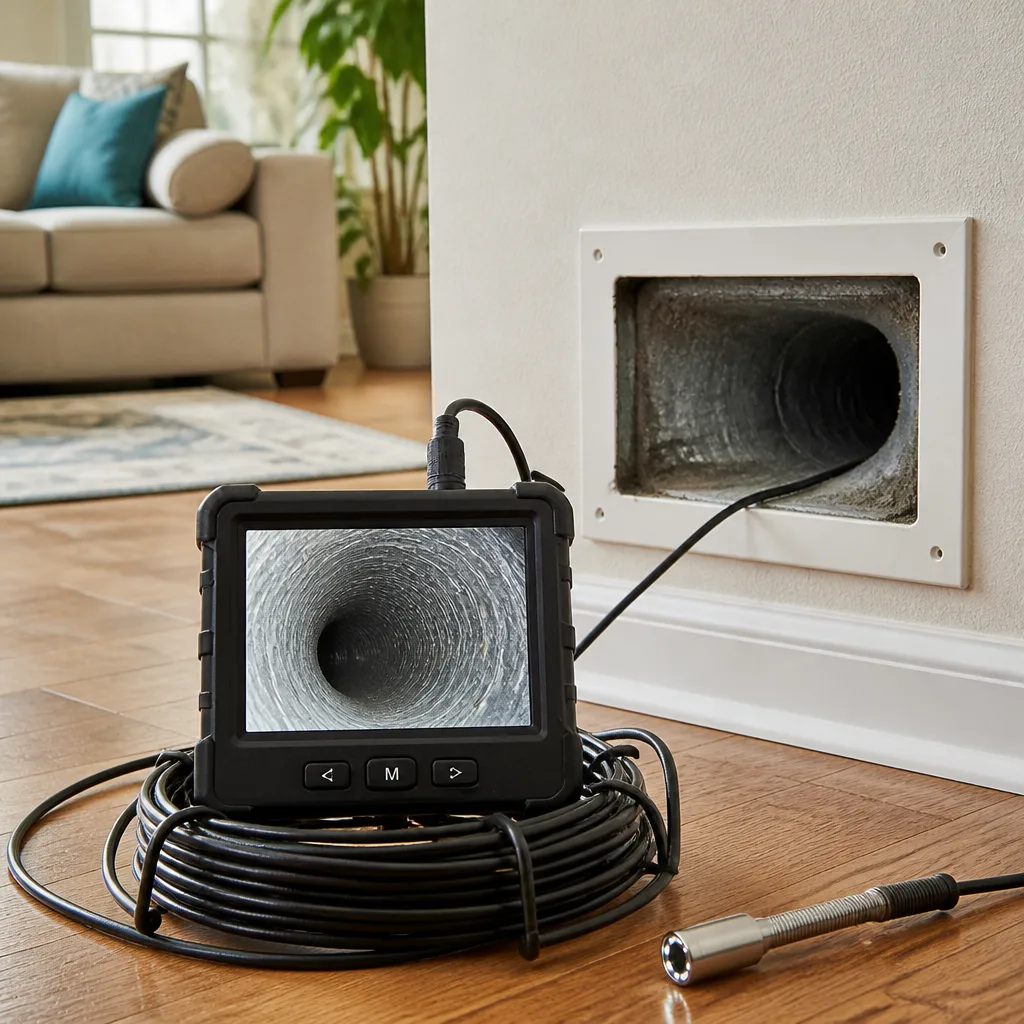 Camera inspection
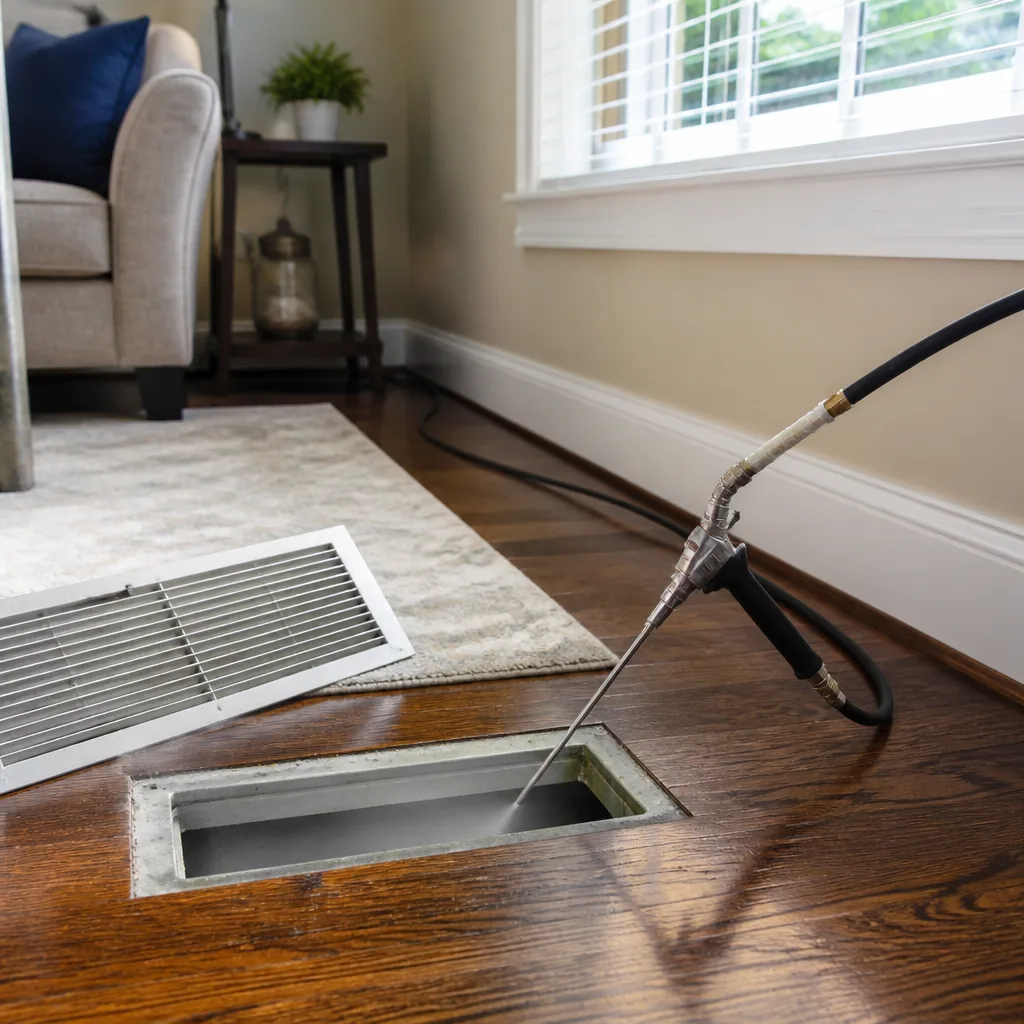 Sanitizing & deodorizing
Whole-system duct and dryer vent check with before-and-after photos - you see exactly what came out of your vents
That "$99 whole-house special" is a bait ad - the real number appears once they are in your hallway, or the "clean" is a shop-vac at the register. We photograph the inside of your ducts before and after instead.
Air Duct Cleaning Maintenance Checklist for Port Richmond Homeowners
The pleated filter you change every 90 days is a contamination log, and most homeowners throw away the evidence. What collects on it, and where that material lands across the grilles, registers, and returns in your home, tells you more about the true condition of your duct system than any sales call will. We’ve seen homes in Port Richmond that looked clean from the register but carried a year of buildup on the return-side filter face. This guide is a 12-month observation protocol: what to check, when to check it, and which findings mean “keep watching” versus “book the work.” It’s written for Port Richmond homes, from a Port Richmond business, with the specifics this climate and housing stock demand.
Quick Answer
A duct maintenance checklist for a Port Richmond home is a room-by-room register inspection, a filter pattern log, a humidity baseline, and a written record of what every HVAC service call revealed about your ducts. Run the visual checks monthly, log filter condition every time you swap it, track indoor humidity weekly through the humid months, and schedule professional cleaning based on what those records show rather than a calendar. When any single indicator turns from “dusting” to “deposit,” that’s your signal to call for an assessment.
Styles & brands we work with
- Whole-home duct cleaning
- Dryer vent cleaning
- Camera inspection
- Sanitizing & deodorizing
Table of Contents
- The Room-by-Room Register Inspection Protocol
- Choosing Filter MERV Ratings for Port Richmond’s Seasonal Particulate Load
- The Five Things to Document After Every HVAC Service Call
- Humidity Tracking as a Leading Indicator for Microbial Growth
- The Decision Matrix: Clean Now, Monitor, or Call Immediately
- Dryer Vent Checks: The Exhaust Segment of Your Air Pathway
- Why Duct Repair and Sealing Belongs on the Checklist
- The Twelve-Month Observation Calendar
The Room-by-Room Register Inspection Protocol
A register inspection takes about twenty minutes for a typical single-family home, and it needs nothing more than a flashlight and your phone camera. The point is to build a visual record you can compare against month to month. Dust that looks the same in April and October is settled. Dust that thickens, darkens, or shifts position is active.
Step-by-step register protocol
- Photograph every supply and return grille from a fixed distance, with the grille in frame and something for scale. Keep the photos in one phone album named by month so comparison is fast.
- Shine the flashlight into the grille at an angle. Straight-on light flattens texture; angled light reveals the boundary between settled dust and greasy deposit.
- Wipe one grille fin with a white paper towel and photograph the towel. A light tan smear is normal house dust. A dark, sticky, or oily smear means cooking vapor, candle soot, or something the return is pulling from a specific room.
- Note which rooms collect fastest. In Port Richmond’s older two- and three-family houses, the room closest to the return trunk usually collects first, and the top-floor bedrooms often collect last.
- Check the return grille on the furnace or air handler every quarter. That single grille shows you the aggregate of everything the system is pulling.
- Look for gaps around the boot where the duct meets the floor or wall. A gap that shows daylight or feels cool to the back of your hand is a leak, and leaks belong on your repair list.
Compare each month’s photos side by side. The visible change over a season is your real contamination clock, and it’s the record a good technician can read with you. We’ve found that homeowners who keep this log make clearer decisions about when to schedule air duct cleaning, because they’re acting on change rather than guesswork.
Choosing Filter MERV Ratings for Port Richmond’s Seasonal Particulate Load
Filter selection isn’t a universal rule. It’s a trade-off between capture and airflow, and in Port Richmond the seasonal load shifts enough that a single rating all year may not be the right answer. Urban density here means constant road dust and diesel particulate. Ongoing construction activity around the North Shore adds a fine, gritty fraction that rides the outside air and settles into the return path. And the steady conversion of older oil-fired heating systems to gas changes the combustion byproducts that find their way into a home’s return air, which matters because the residue behaves differently on a filter than oil soot does.
How to pick a rating without choking the system
- MERV 8 is the practical floor for a residential system in a dense urban neighborhood. It catches the bulk of the visible particulate without measurable airflow penalty in most homes.
- MERV 11 to 13 is where allergy-focused households often want to be, but this is the band where you must confirm the blower can handle the added resistance. A filter that’s too restrictive starves the system, and a starved system pulls dust in through every leak instead of pushing it through the return.
- One-inch filter slots cap you quickly. If your air handler takes a thin filter, pushing the MERV rating up means changing it more often, not less.
- Change cadence beats rating. A MERV 8 filter swapped on schedule captures more total dust than a MERV 13 filter run long past loading.
- Read the filter, not the calendar. If your 90-day filter is gray at 60 days in the heating season, your home’s real interval is 60 days in that season.
The pattern on a spent filter is diagnostic. Uniform gray means general household dust. Dark edges with a clean center means air is bypassing the frame, and that gap is a duct or cabinet sealing issue. A creosote-like smell or an oily sheen points to something upstream that needs eyes on it. Some homes pair a filter upgrade with a whole-home filtration unit; that’s where Honeywell or Aprilaire hardware enters the conversation, and it only makes sense once the duct path behind it is clean and sealed.
The Five Things to Document After Every HVAC Service Call
Every time a technician finishes work on your furnace, air handler, or AC, you have a narrow window to collect duct-relevant information while the system is open. Most homeowners get an invoice and a handshake. You want five things, and they all take under two minutes to ask for.
- The condition of the evaporator coil and blower wheel. Ask whether they were dusty, matted, or clean. A matted blower wheel moves less air, and less air means less efficient duct flow, which redistributes debris instead of exhausting it.
- What they saw inside the plenum and return trunk. Even a quick look at the duct interior at the connection point tells you whether the system needs a full assessment.
- Whether they found or sealed any leaks. Note exact locations. Leak history repeats, and a leak that reappears is a sign the first repair wasn’t confirmed.
- The static pressure reading, if they took one. High static pressure is a measurable signal that the duct system is undersized, restricted, or loaded with debris. It’s the number that turns “seems fine” into data.
- Any sign of moisture, rust, or biological growth. Get it on paper, in the technician’s words, with a location. Moisture findings are the single most important thing to carry forward.
Keep these notes with your filter log. Together they form a maintenance history that lets a professional give you a straight assessment instead of a discovery process. If your notes show recurring moisture or matted components, the next step is HVAC cleaning, which addresses the equipment side of the air pathway, not just the ductwork.
Humidity Tracking as a Leading Indicator for Microbial Growth
Humidity matters more than temperature for what grows inside a duct system. In Staten Island’s coastal-adjacent climate, the humid months run long and the shoulder seasons swing hard, which means a duct system that stays damp can start growing biological material well before anyone smells it. Tracking indoor humidity weekly through the summer gives you a leading indicator, not a symptom to react to after the fact.
What to track and what to do
- Buy a cheap hygrometer and place it near the return intake, not in a bathroom or kitchen. That’s the air the system is actually pulling.
- Log indoor relative humidity once a week through the humid months. Write the number next to the outdoor reading so you can see the gap your HVAC system is or isn’t closing.
- Watch for sustained interior readings above the mid-50s percent. That’s when condensation forms on cold duct surfaces and in the plenum, and damp surfaces on a cool supply run are the most common growth site we look at.
- Check the basement and crawlspace. Port Richmond’s older housing stock often has damp lower levels that feed the return air directly. A dehumidifier downstairs can change the whole-house picture.
- Note any musty smell and when it appears. A smell that arrives with the first cooling cycle in spring is a humidity signal, not a dust signal, and it should go in the log.
When humidity tracking and visual inspection both point the same direction, air sanitizing becomes part of the maintenance plan rather than an afterthought. Aprilaire humidity control hardware can hold a home in a range that makes microbial growth far less likely, and Guardsman-line protective treatments applied after a cleaning buy time against recurrence. The point isn’t to sell hardware; it’s that humidity tracking turns a vague discomfort into a documented pattern you can act on.
The Decision Matrix: Clean Now, Monitor, or Call Immediately
Every finding from your checklist should land in one of three buckets. Sorting them takes the guesswork out of scheduling and stops you from either over-cleaning a healthy system or waiting on a problem that’s already active.
Monitor (keep logging, no action yet)
- Dust on register fins is light, even, and thin.
- The filter looks loaded at the expected interval, not before it.
- Indoor humidity stays in a reasonable band through the humid months.
- No musty smell, no visible gaps around boots, no static pressure complaints from any service call.
Schedule a cleaning
- Noticeable dark deposit on return grilles and the furnace return, consistent across rooms.
- Filter loading faster than usual, especially partway into the heating season.
- Static pressure readings trending upward across two service calls.
- A documented history of cleaning that has aged out, with dust now clearly following the supply path.
Call immediately
- Visible mold or a persistent musty smell coming from registers or the return.
- Rust or standing moisture inside the duct interior or plenum.
- Daylight or a strong draft at a boot or duct joint, meaning an active breach.
- A dryer vent that feels hot or backed up, or lint visible around the outside termination.
- Allergy or respiratory symptoms that consistently worsen when the system runs.
We’ve seen the matrix work as a filter for the “should I or shouldn’t I” question, because it forces a finding into a category instead of letting it drift. When the answer lands on “call immediately,” one call to Air Duct Cleaning Port Richmond gets an assessment scheduled. Call (877) 792-6601. We answer 24/7. Fast dispatch from 7am to 7pm, Sunday through Friday.
Dryer Vent Checks: The Exhaust Segment of Your Air Pathway
A duct maintenance checklist that stops at the supply and return path misses the most safety-relevant exhaust line in the house. The dryer vent is part of the building’s air pathway, and in Port Richmond’s older homes the vent run is often longer, more bendy, and more stuffed with lint than the installation instructions ever intended. Your job here is observation, not disassembly.
What to check monthly
- Feel the outside termination while the dryer runs. Strong, steady airflow is healthy. Weak, warm, or intermittent flow is a blockage signal.
- Look for lint around the outside flap or packed into the wall where the vent exits.
- Time a normal load. If a load that used to dry in one cycle now needs two, the vent is a prime suspect.
- Check the flexible transition behind the dryer for kinks and crush points.
Never reach into the duct or pull the vent apart to clear a blockage yourself. Lint packed into a run can sit directly against heat, and the safe fix is a professional clearing with the right tools. That’s what dryer vent cleaning covers on a scheduled basis, and it’s worth putting on the same observation log as your register photos. When airflow drops and the load takes two cycles, the checklist is doing its job; that’s your call.
Why Duct Repair and Sealing Belongs on the Checklist
Cleaning a leaky duct system is only half the job. Leaks let unfiltered air in from the attic, crawlspace, or wall cavity, which means the system recontaminates itself between cleanings. That’s why we treat duct repair and sealing as a maintenance item, not a repair job you get around to. The checklist step is to locate every leak, repair it, and confirm the repair with a pressure or airflow test, so you know the result rather than assuming it.
Where leaks hide
- Boot connections at the floor and wall, especially in homes where the duct was retrofit into an older structure.
- The plenum and cabinet connections at the furnace or air handler.
- Joints in flex runs routed through unconditioned attic or crawlspace space.
- Disconnected sections hidden behind finished walls, which you’ll only catch from a static pressure reading.
Your flashlight check from the register protocol tells you where to look. A professional assessment confirms what’s actually happening inside the closed portions of the run. Sealed, tested ducts hold the result of the cleaning, keep the return pulling from conditioned space instead of the attic, and take pressure off the blower, which is where energy savings come from rather than any coupon. Every finding here is the kind of specific evidence a written estimate should be able to point at.
The Twelve-Month Observation Calendar
The checklist works because it spreads small, cheap observations across the year instead of waiting for a symptom. Here’s how the calendar breaks down for a Port Richmond home.
- Every month: photograph registers, wipe one grille fin, check the outside dryer termination, and note any smells.
- Every filter change: photograph the spent filter against a known scale, note which side loaded, and log the interval.
- Weekly through the humid months: record indoor and outdoor humidity at the return.
- Every HVAC service call: get the five documentation items in writing before the technician leaves.
- Every spring before cooling season: flashlight check every supply and return, look for moisture or rust, and compare against last spring’s photos.
- Every fall before heating season: confirm filter type is right for the season, check boot and joint seals, and review the year’s log against the decision matrix.
- Annually: review the whole log with a professional and decide whether cleaning, sealing, or sanitizing is actually warranted.
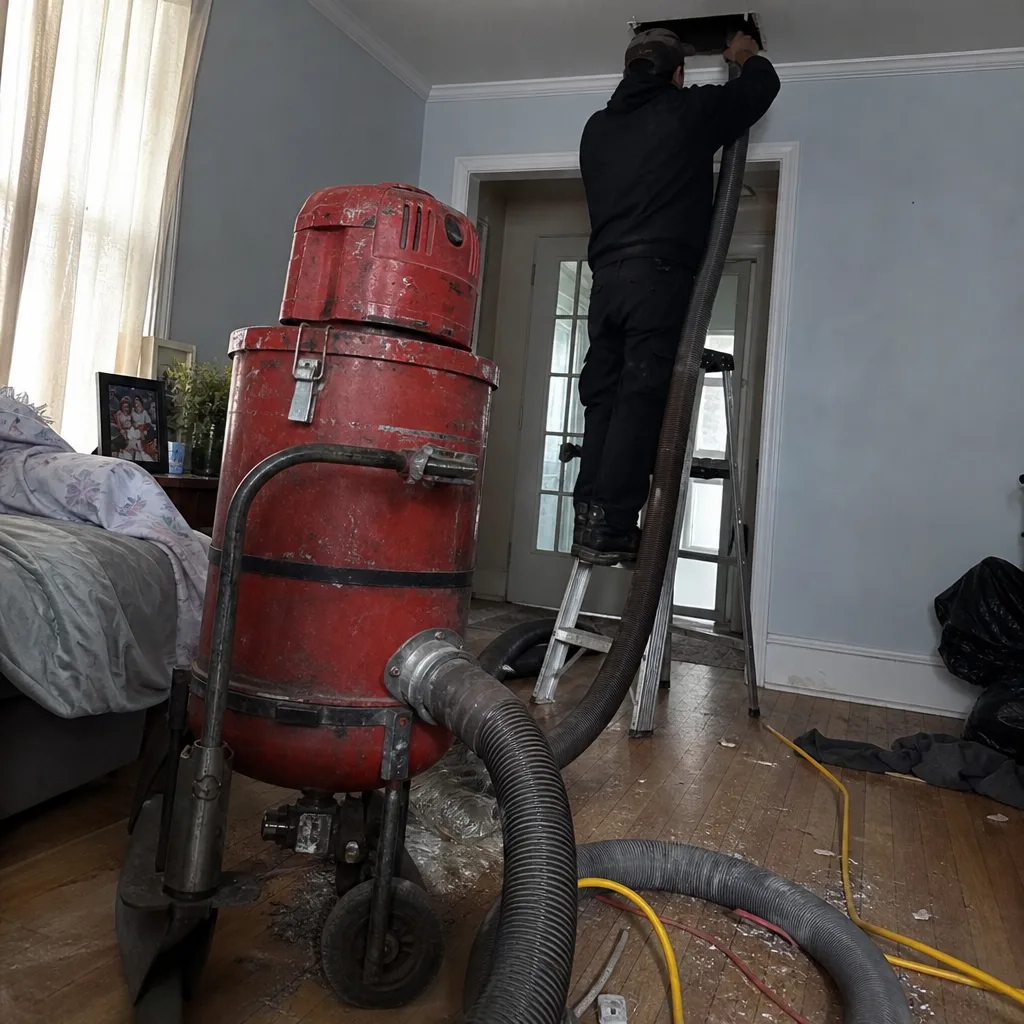
The self-check is a strong baseline, but the equipment that does the deep work is different in kind. Professional cleaning uses tools like the Rotobrush rotary brush system for mechanical agitation combined with simultaneous extraction, and Nikro HEPA-filtered vacuums for negative-pressure source removal, plus Abatement Technologies containment to capture what gets dislodged rather than redistributing it. Our technicians have up to 14 years of experience with this equipment, and the difference between that and a shop-vac setup is the reason a manufacturer’s equipment pedigree matters when you’re comparing bids. You don’t need that equipment on every visit; you do need to know when a visit calls for it, and the checklist is what tells you.
Common Mistakes to Avoid
- Replacing the filter and stopping there. A new filter catches what’s circulating, but it doesn’t address what’s already settled on the interior surfaces. The filter log tells you whether the settled layer is growing, and that’s the signal to act.
- Chasing the highest MERV rating. An overly restrictive filter in an older one-inch slot starves the blower and can pull more debris in through leaks. Match the rating to the system’s airflow capacity, not to the label on the box.
- Skipping the return grille in the basement or crawlspace. Port Richmond’s older housing stock has plenty of damp lower levels, and a return pulling from a damp basement feeds moisture straight into the system. Check it as often as the ones upstairs.
- Throwing away the spent filter without a photo. The filter is the single best record of what your system is pulling. Photograph it, note the loading pattern, and then discard it.
- Waiting for a smell before checking humidity. By the time you smell mustiness, growth is established. The hygrometer log catches it weeks earlier.
- Accepting a duct cleaning quote that only references the run count. A quote built on register count tells you nothing about source-removal methodology or containment. Ask what equipment will be on site and how dislodged debris is captured.
- Ignoring the dryer vent. It’s part of the air pathway, and it’s the line most homeowners never look at. A slow load that needs a second cycle is the earliest and clearest warning.
See the difference
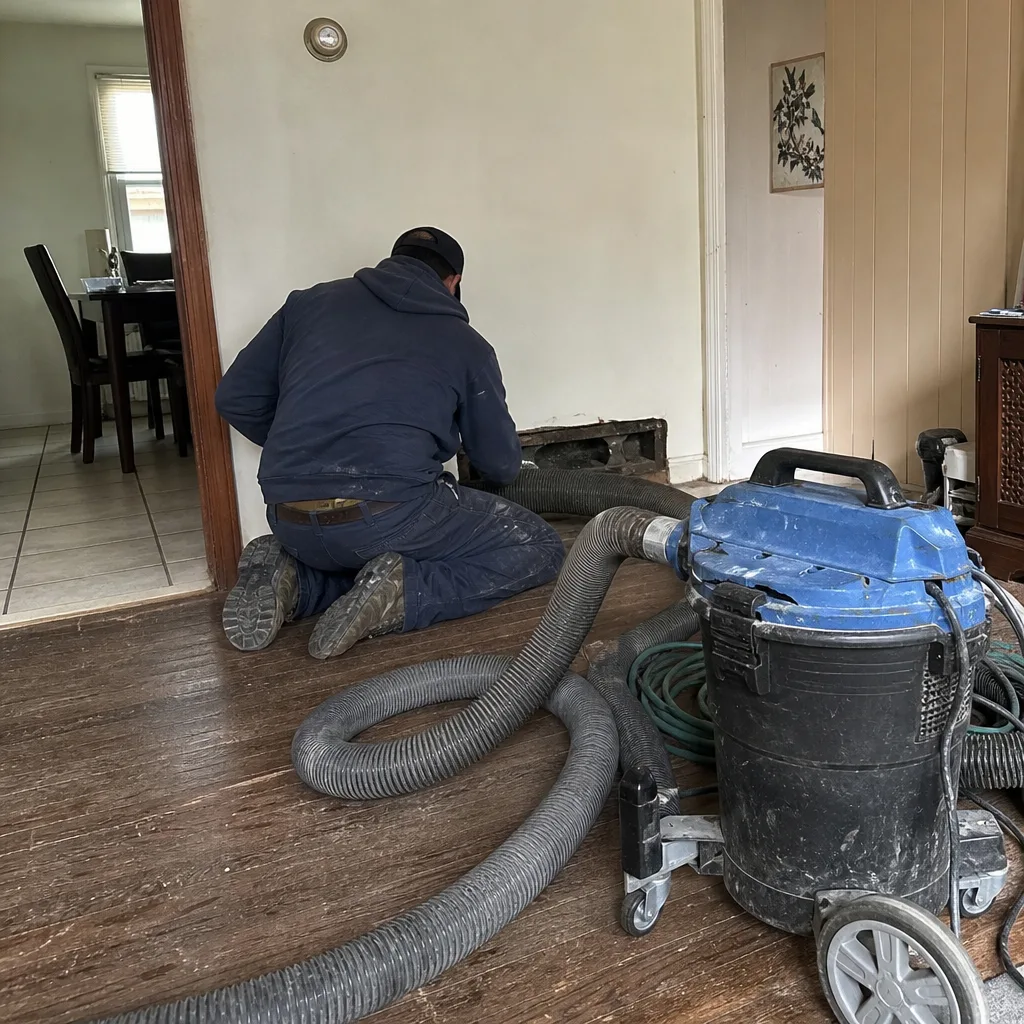 Before
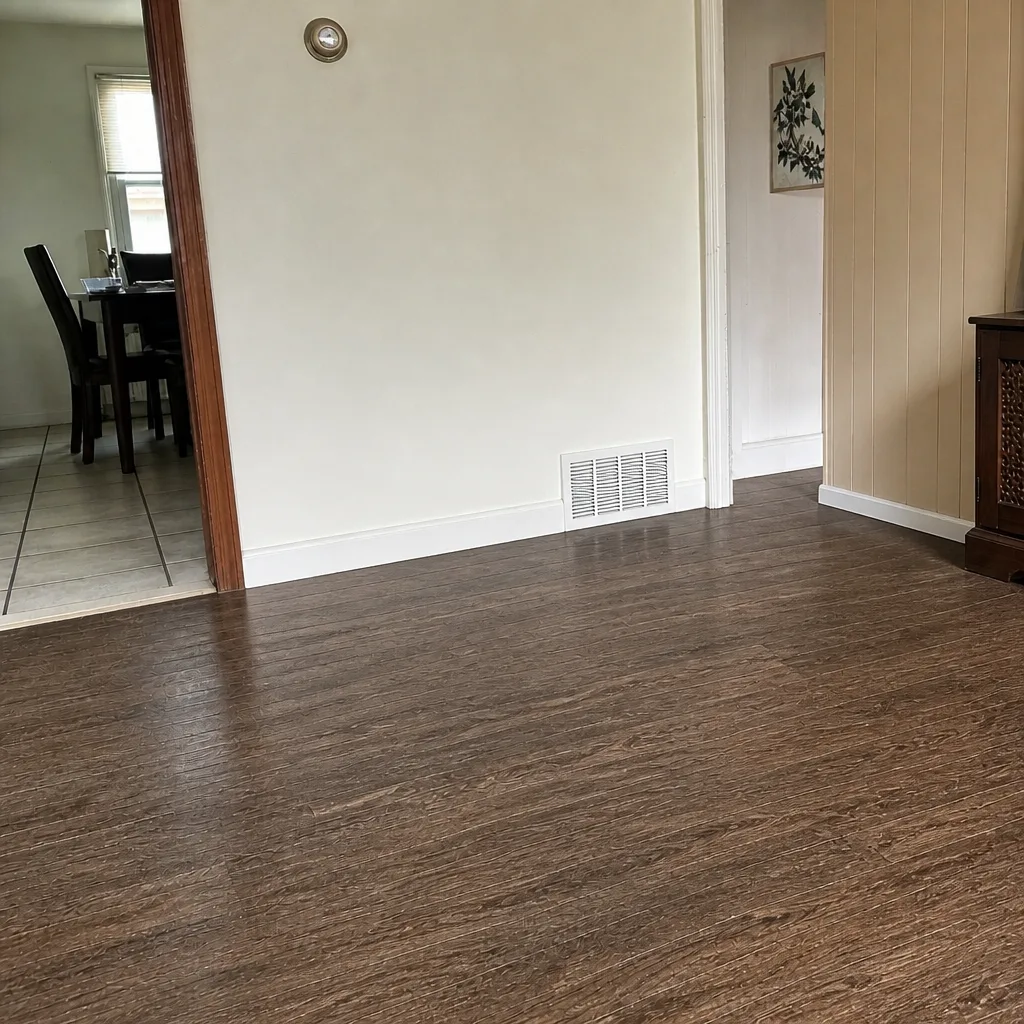 After
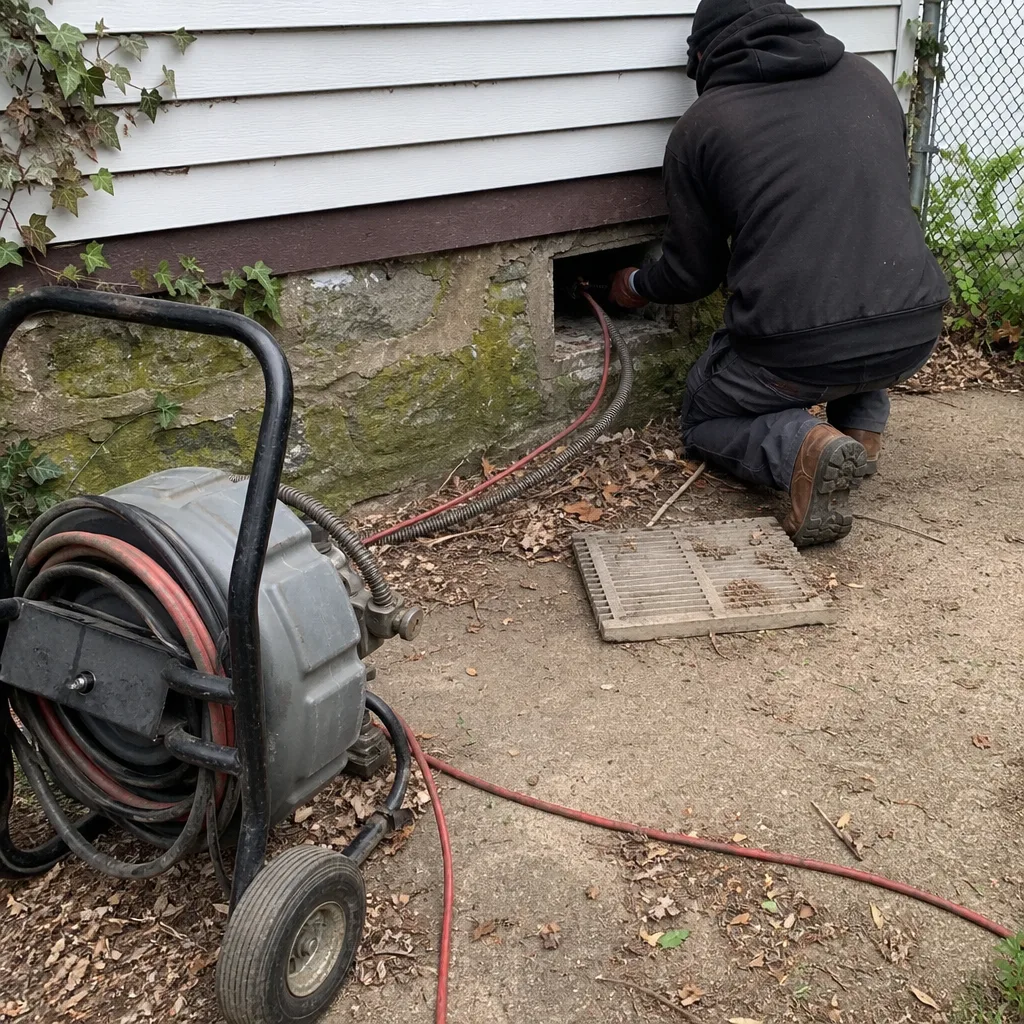 Before
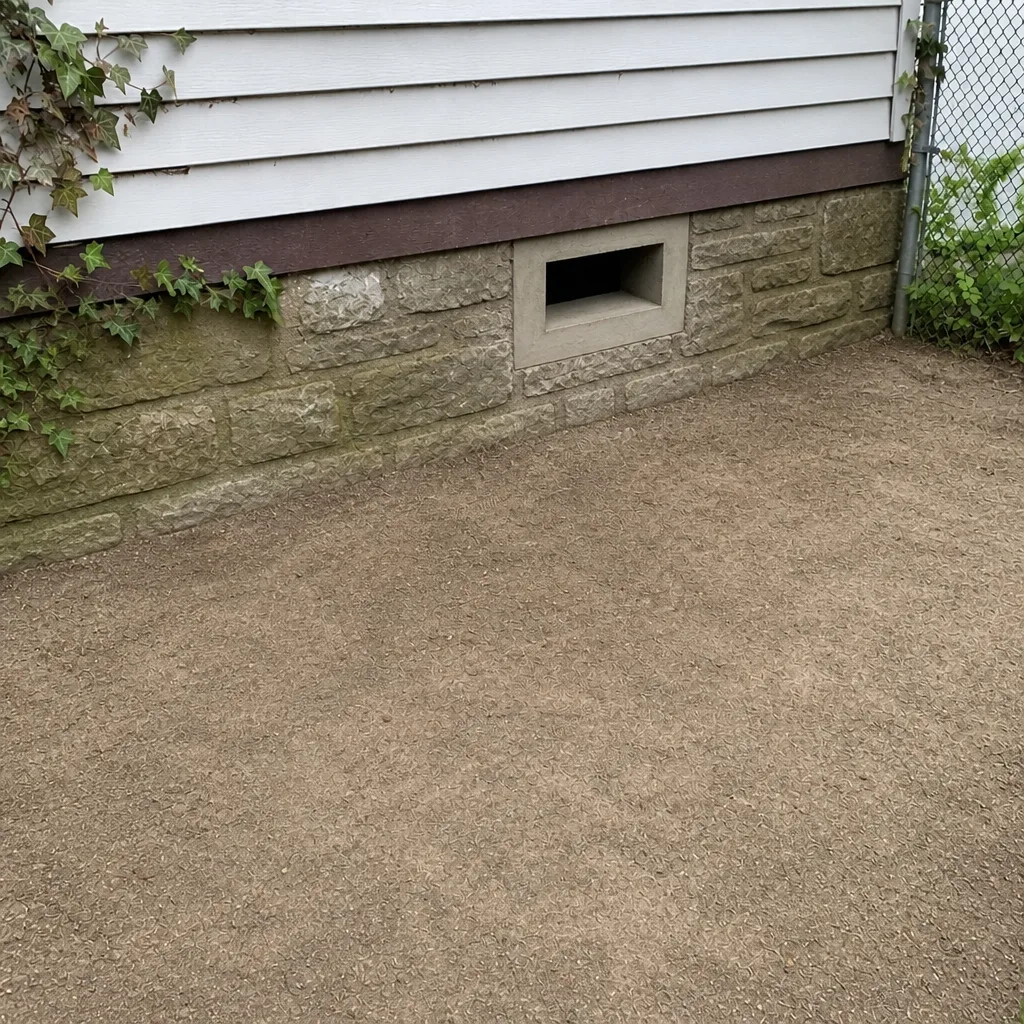 After
 Before
 After
When to Call a Professional
Some findings are for the log. Others need a call. If you find visible mold or a persistent musty odor at a register, moisture or rust inside the duct or plenum, a boot that shows daylight, a dryer vent with weak airflow or lint packed at the termination, or allergy symptoms that clearly worsen when the system runs, book an assessment rather than waiting for the next interval. The same goes for a static pressure reading that has been climbing across two service calls, or a filter that loads noticeably faster than it did last year. When the log shows a pattern rather than an outlier, that’s your moment. Air Duct Cleaning Port Richmond offers free estimates in Port Richmond, with one flat price per system agreed before work starts and before-and-after photos of your own ducts so you can see what was actually done. Call (877) 792-6601 to schedule. We answer 24/7. Fast dispatch from 7am to 7pm, Sunday through Friday.
Frequently Asked Questions
There’s no universal interval, and any company that quotes a fixed number without looking at your system is guessing. For most Port Richmond homes, a cleaning every several years is reasonable, but dense urban particulate and older housing stock can shorten that. Your register log, filter pattern, and humidity record are the real answer: clean when those show deposit and growth, not when a calendar says so. Call (877) 792-6601 for an exact quote; estimates are free.
Pricing depends on the system, the number of trunk runs, the condition found on site, and whether sealing or sanitizing is part of the scope. We set one flat price per system based on the written estimate, agreed before work starts, rather than a per-vent rate that climbs once the technician is inside. That protects you from the bait-and-switch pattern most people worry about. Call (877) 792-6601 for an exact quote; estimates are free.
They’re usually quoting a different job. A low quote often means a shop-vac-grade setup, no containment, and a visit that agitates debris back into the air rather than capturing it at the source. Professional work uses systems like Nikro HEPA vacuums and Abatement Technologies containment to remove debris, not redistribute it. Ask what equipment will be on site, and ask how the dislodged material gets captured. Call (877) 792-6601 for an exact quote; estimates are free.
You should be able to see it. We provide before-and-after photos of your own ducts, taken at your registers and accessible runs, so you’re looking at your system rather than a stock image. A written scope and a flat price agreed in advance round out the record. If a company can’t show you your own ductwork, that’s a signal. Call (877) 792-6601 for an exact quote; estimates are free.
Yes, and humidity matters more than temperature for microbial growth. In a coastal-adjacent climate like Staten Island’s, sustained indoor humidity above the mid-50s percent allows condensation on cool duct surfaces and in the plenum, which is the most common growth site. A cheap hygrometer logged weekly through the humid months catches it before you smell it. Call (877) 792-6601 for an exact quote; estimates are free.
Absolutely, and we’d rather you did. The register photo protocol, filter log, and humidity tracking are all homeowner-level checks that need no tools beyond a flashlight, phone camera, and hygrometer. Nothing in that protocol asks you to open a duct, dismantle a vent, or reach into a plenum. When the record points to professional work, that’s when the call makes sense. Call (877) 792-6601 for an exact quote; estimates are free.
The Bottom Line
Your duct system tells you its condition every month if you record what you see. The filter pattern, the register photos, the humidity log, and the notes from every service call combine into a maintenance record that’s specific to your home in Port Richmond, not a generic cleaning schedule. Run the visual checks monthly, log the filter every change, track humidity through the humid months, and document what every HVAC visit reveals about your ducts. When a finding moves from settled dust to active deposit, moisture, or a sealed breach, it’s time to call, and the log will tell the technician exactly where to look. Our technicians have up to 14 years of experience with professional-grade equipment, and we provide before-and-after photos of your own ducts so you can see the work was done. Call (877) 792-6601 for a free estimate. We answer 24/7. Fast dispatch from 7am to 7pm, Sunday through Friday.
Written by the team at Air Duct Cleaning Port Richmond.