
Last updated November 24, 2026
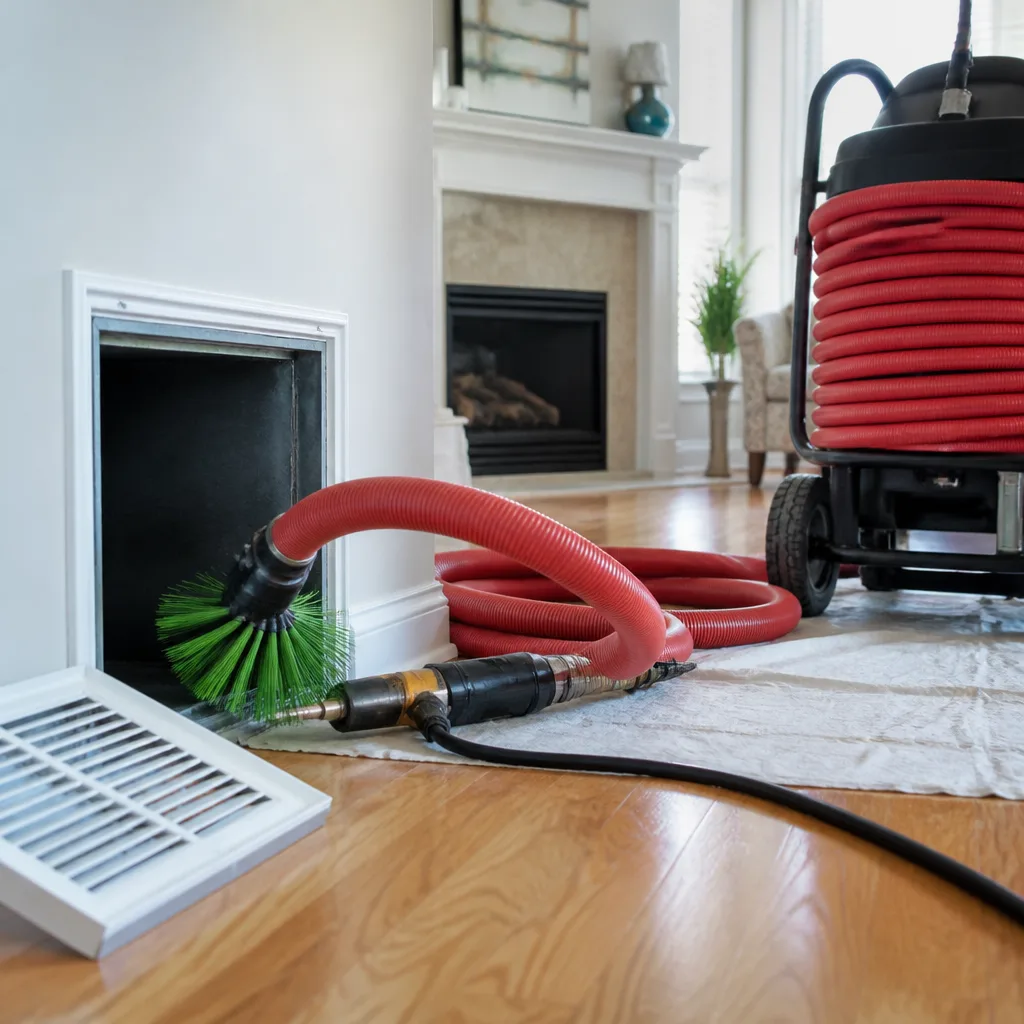 Whole-home duct cleaning
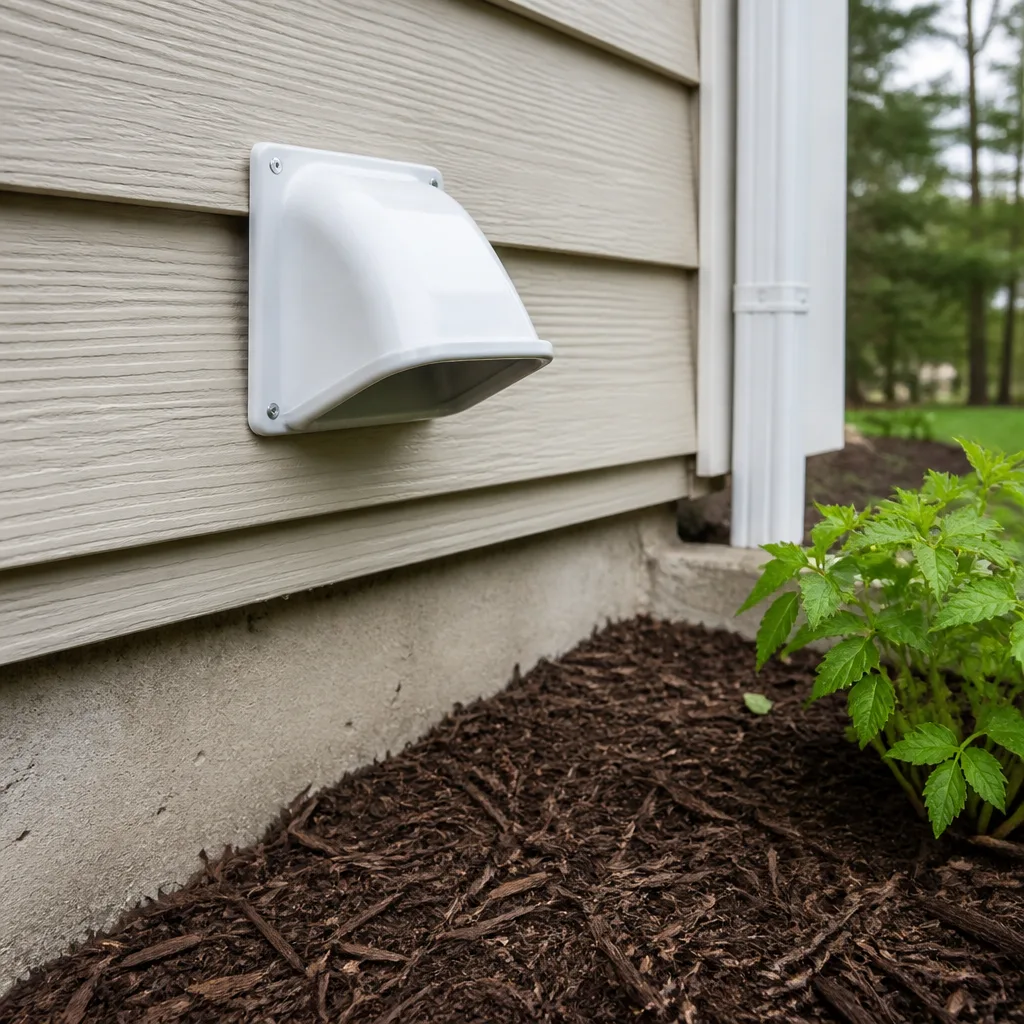 Dryer vent cleaning
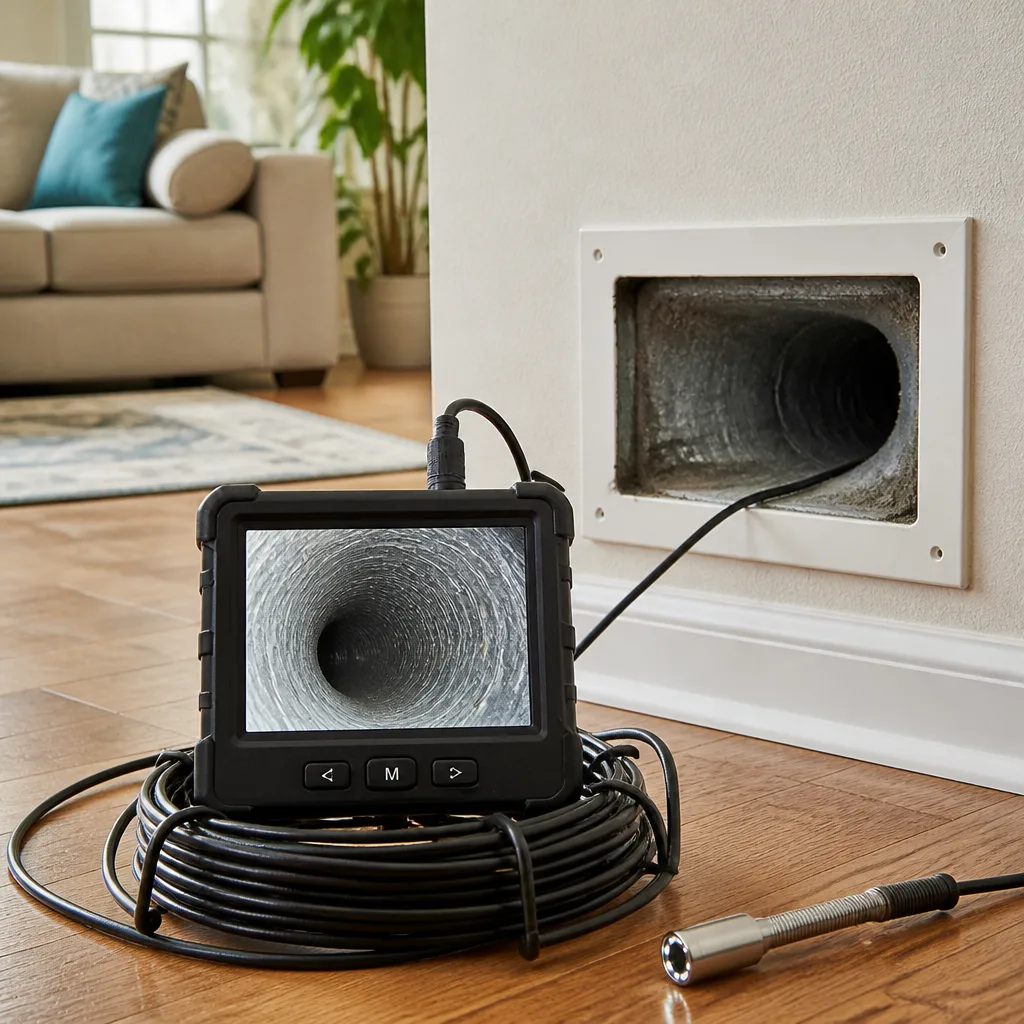 Camera inspection
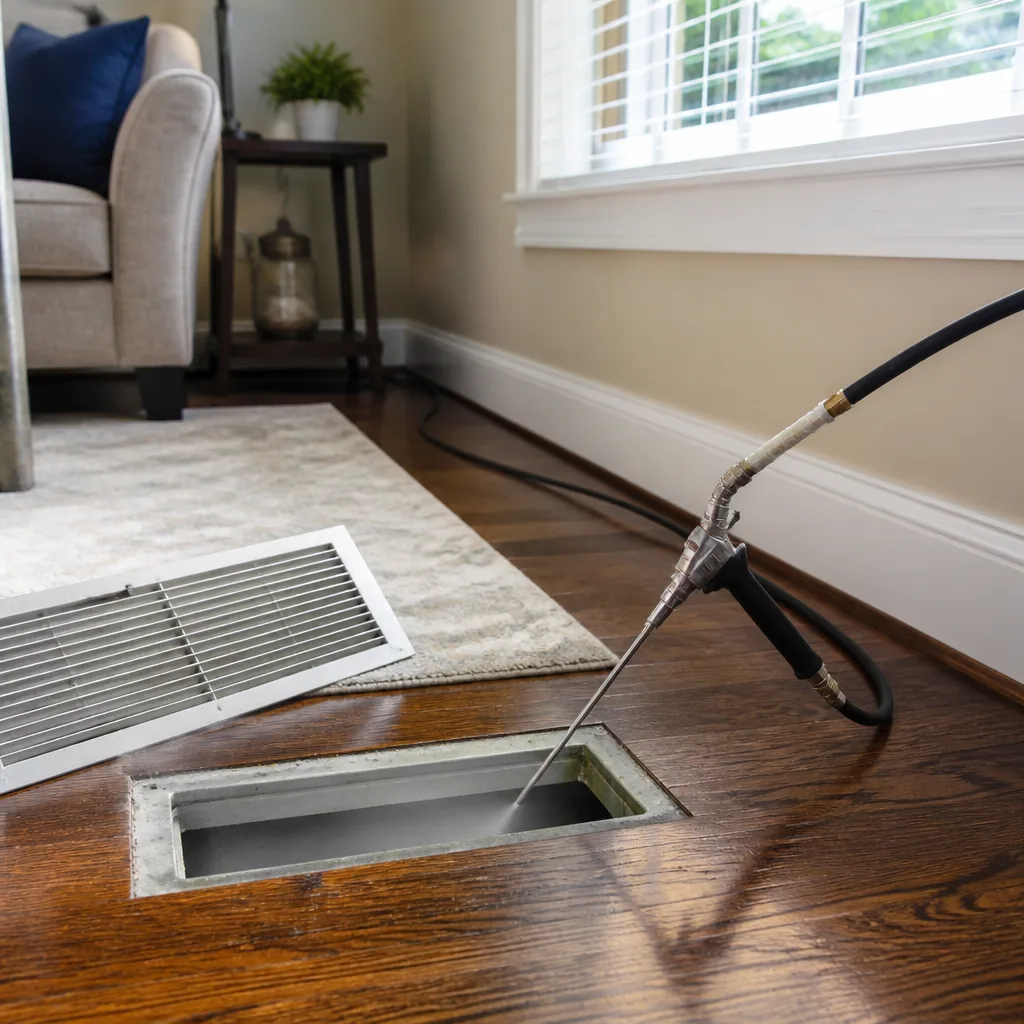 Sanitizing & deodorizing
Whole-system duct and dryer vent check with before-and-after photos - you see exactly what came out of your vents
That "$99 whole-house special" is a bait ad - the real number appears once they are in your hallway, or the "clean" is a shop-vac at the register. We photograph the inside of your ducts before and after instead.
DIY vs Professional Air Duct Cleaning: The Port Richmond Homeowner’s Decision Guide
Most homeowners picture duct cleaning as a giant vacuum sucking dust out of a metal tube. That picture is incomplete, and the gap between it and what actually happens explains why so many Port Richmond households spend a Sunday with a shop vac and end up with more dust in the air than they started with. Extraction doesn’t work by suction alone. It works by sustained negative pressure held across an entire duct system while the debris is mechanically loosened, so the contaminant travels to a collection point instead of settling back onto the walls of the duct. This guide walks through the physics, what you can realistically do yourself, what the older housing stock in Port Richmond means for the risk of agitating the wrong material, and how to calculate whether the DIY route is genuinely cheaper. By the end you’ll know exactly which jobs belong in your hands and which ones need professional-grade equipment.
Quick Answer
Professional air duct cleaning is worth it when your ducts hold loose debris that gets pulled back into the living space, and DIY cleaning won’t fix that because consumer vacuums can’t generate the sustained negative pressure needed for true source removal. A household vacuum connected to a register does not clean the duct; it pulls debris toward the opening and leaves it sitting in the duct wall to re-enter the air when your blower restarts. You can safely handle register cleaning, filter changes and visual checks yourself. The moment you need actual extraction from inside the duct run, you need professional-grade equipment.
Styles & brands we work with
- Whole-home duct cleaning
- Dryer vent cleaning
- Camera inspection
- Sanitizing & deodorizing
Table of Contents
- Why a Shop Vac Doesn’t Clean a Duct
- The CFM and Static Pressure Gap, Explained
- What You Can Actually Do Yourself (and Do Well)
- The Risk in Port Richmond’s Older Homes
- The Real Cost Comparison: DIY vs Professional
- When Professional Cleaning Is Non-Negotiable
- What Professional Equipment Actually Looks Like
- How to Verify the Work Was Done Right
Why a Shop Vac Doesn’t Clean a Duct
The physics of a duct system work against a household vacuum. A typical duct run has dozens of feet of galvanized steel or flex, bends, boots, takeoffs and registers. Debris settles along the bottom wall, in corners, on the rough interior surface of flex duct, and behind the register diffuser. When you connect a vacuum to one end, the pressure drop along the length of the run is so steep that the airflow at the far end is barely measurable. You are pulling from the opening, not from the whole system. The dust that felt loose when you put your hand near the register is still on the wall 12 feet away.
Worse, that low-pressure zone you just created pulls debris from deeper sections toward the register, where it piles up. The moment you switch the HVAC blower back on, that concentrated pile gets pushed into the room. Homeowners in Port Richmond who clean a register and then notice an immediate dust bloom in the room aren’t imagining it. They’ve just experienced the difference between agitating debris and extracting it.
Source-removal methodology is the fix. Debris is loosened at the point of contact with a mechanical tool (a rotary brush or air whip), and simultaneously captured at that same point by a high-capacity vacuum holding the whole system under negative pressure. The contaminant never gets a chance to migrate because it’s being pulled into the collection point as it releases from the duct wall.
The CFM and Static Pressure Gap, Explained
Two numbers separate consumer vacuums from professional equipment: cubic feet per minute of airflow (CFM) and static pressure, measured in inches of water column. A shop vac rated for household use moves a high CFM number in free air, but the moment you attach a hose, that number collapses because it can’t generate static pressure. Static pressure is what overcomes the resistance of the duct run. Without it, CFM is a marketing figure.
Professional systems are built around the opposite trade-off. They generate high static pressure that holds a duct length under real negative pressure even with resistances like flex corrugation, turns and long runs. Rotary brush systems like the Rotobrush line pair mechanical agitation with a vacuum source sized for the duct it’s cleaning. Nikro HEPA systems used for source removal pull filtered air under sustained pressure so that dislodged material travels into a sealed collection chamber. This is the equipment category commercial remediation contractors use, and it’s the reason the process works.
Here’s the practical comparison:
- Household shop vac: free-air CFM looks respectable, static pressure collapses with any hose length, filtration is typically a paper or foam filter that lets fine particles through, and there’s no way to hold a duct run under pressure.
- Professional-grade portable unit (Rotobrush class): designed specifically for duct interiors, held at the register under sustained pressure while a rotary brush agitates the full length of the run.
- HEPA negative-pressure system (Nikro class): multi-stage filtration captures fine particulate rather than exhausting it back into the room, and holds the system under measurable negative pressure during cleaning.
- Containment equipment (Abatement Technologies class): seals the work area so that no dislodged debris escapes into the living space during cleaning of a heavily contaminated system.
The takeaway is not that consumer vacuums are bad. They’re excellent at what they’re designed for. They just weren’t designed for pressure-holding in a duct run, and that’s the one capability the whole job depends on.
What You Can Actually Do Yourself (and Do Well)
None of this means a homeowner should never touch the duct system. There’s real value in competent maintenance, and several tasks belong in your hands because they’re low-risk, high-return, and don’t require pressure-holding equipment. What changes is knowing where the line is.
Here’s what you can do yourself, done properly:
- Clean the register diffusers. Remove the grille (usually two screws), wash it in the sink with warm water and a drop of dish soap, dry it fully and reinstall. Do this a few times a year. It’s the first surface your supply air hits, and it collects dust fast.
- Change or clean the HVAC filter on schedule. Look at the filter every month and replace it based on how loaded it is, not on the calendar. A dirty filter restricts airflow, which raises static pressure on the system and makes every downstream problem worse.
- Vacuum visible dust from inside the register boot with a brush attachment. The short section you can reach from the register opening is fair game. Stop where your arm ends.
- Dryer vent brushing between professional cleanings. The short run from the dryer to the exterior wall can be brushed with a vent brush kit. The full run, the exterior termination and the transition behind the dryer deserve professional attention. If you want the full service done properly, dryer vent cleaning covers the entire exhaust path.
- Visual monitoring. Shine a flashlight into the register boot once or twice a year and look for buildup, moisture, discoloration, or debris that’s migrated into the register area. Take photos. Those photos become useful when you talk to a professional because they show the actual condition.
That’s the full DIY envelope. It’s not nothing; it catches early problems, extends the time between cleanings, and keeps the system running efficiently. What it can’t do is extract loose debris from a 20-foot duct run, and trying to do so with a household vacuum makes things worse, not better.
The Risk in Port Richmond’s Older Homes
Port Richmond has a wide range of housing stock, and some of the older buildings carry duct-adjacent materials that make DIY cleaning more than just ineffective. The main concern is asbestos-containing insulation or duct wrap that may still be present on older systems. Asbestos fibers are hazardous when they’re disturbed and become airborne. A rotary tool pushed into a duct with friable asbestos insulation on the exterior, or a shop vac with a leaking paper filter trying to pull the debris through a compromised wrap, can aerosolize those fibers into the living space. That’s a scenario where the wrong tool creates a hazard that wasn’t there before.
Deteriorating flex duct is the other risk. Flex duct has an inner liner that ages, tears and sags. Once it’s compromised, agitating it with any tool accelerates the failure. The duct that was dusty becomes a duct that’s actively leaking supply air into a crawl space, a wall cavity or an unconditioned attic. In a Port Richmond home where an older flex run was originally installed in a tight joist bay, this is the kind of mistake that turns a $300 cleaning into a $1,500 duct replacement.
Professional cleaning in these homes isn’t just about capability; it’s about being able to see what the duct condition actually is before cleaning begins. A trained technician with a camera can identify asbestos-wrapped duct, deteriorating flex, moisture intrusion or hidden mold and stop the work or refer it to the right specialist. We’ve handled enough Port Richmond homes to know the difference, and a proper inspection before agitation is standard practice, not a sales upsell.
The Real Cost Comparison: DIY vs Professional
The DIY cost always looks lower at first. It’s only when you count the full cost, including the risk of doing the job wrong, that the comparison shifts. Here’s an honest breakdown of what each path actually costs a Port Richmond homeowner.
DIY route:
- Shop vac rental or purchase: modest cost, but the equipment is fundamentally unsuitable for the task.
- Rotary brush attachment and flexible rods for a drill: cost varies, and the tools are designed for surface dust, not full duct interiors.
- HEPA filter upgrade for the shop vac: adds cost but still doesn’t create negative pressure in the duct.
- Time investment: a half-day or more, before accounting for the dust cleanup in the room afterward.
- Risk: redistribution of debris into the living space, possible damage to flex duct, and a second cleaning needed once you realize the DIY result isn’t the answer.
Professional route:
- Free written estimate before any work begins, with the price agreed on a per-system basis.
- Equipment included in the price (Rotobrush rotary brush system, Nikro HEPA extraction, Abatement Technologies containment when needed).
- Camera inspection and source-removal methodology on the whole system, not just the reachable parts.
- Before-and-after photos of your own ducts so you can verify what came out and what the system looks like after.
- All five service categories available under one relationship: cleaning, HVAC service, dryer vent work, duct repair and sealing, and sanitizing.
The comparison shifts the moment you factor in what happens when DIY doesn’t work. A shop vac rental plus a Saturday of your time plus the cleanup plus a subsequent professional cleaning usually costs more than the professional cleaning would have cost on its own. That’s not a sales pitch. It’s an accounting observation. And it’s the same reason we write a single flat price per system rather than quoting per-vent figures that creep upward once the technician is on site. Call (877) 792-6601 for a free estimate up front, before you decide which path makes sense.
When Professional Cleaning Is Non-Negotiable
Three specific scenarios move professional cleaning from “worth considering” to “not optional,” regardless of budget. We won’t pretend every dirty duct needs remediation-level attention; most don’t. But these do, and the stakes are higher than dust.
- Post-renovation debris. Drywall dust, sawdust, construction debris and fine aggregate plaster dust settle into every part of the duct system after a renovation, and they’re heavy, corrosive to blower bearings, and notoriously hard to move without agitation paired with extraction. A shop vac cannot handle the volume, and running the HVAC without cleaning first distributes that dust to every room in the home. This is the one scenario where professional cleaning directly protects the HVAC equipment itself.
- Rodent contamination. Rodent activity in ducts leaves droppings, urine, nesting material and dander, and it can also leave biological contamination in the insulation lining the duct. Disturbing that material with a household vacuum without HEPA filtration and containment is a genuine health risk. Professional remediation with Abatement Technologies containment and Nikro HEPA extraction captures the debris at the source, and a post-cleaning sanitizing pass addresses surface contamination.
- Confirmed mold presence. If mold is visible inside the duct, at the register boot, or at the interior lining of flex duct, it doesn’t get better with a shop vac. Mold requires identifying the moisture source, removing the affected material if the liner is compromised, cleaning the surface, and sanitizing the duct. That’s a professional process, and skipping the moisture diagnosis means the mold returns in weeks.
In each case the reason isn’t that the job is harder. It’s that the wrong tools make the situation actively worse by spreading contamination through the home. That’s the line that separates “should have hired a professional” from “the professional now has a bigger job to fix.”
What Professional Equipment Actually Looks Like
Homeowners often ask what “professional-grade” really means when the price on the estimate doesn’t line up with a shop vac rental. This is the honest answer: the equipment is designed from the ground up around source removal, and each piece solves a specific problem that consumer equipment can’t.
Rotobrush rotary brush systems are the backbone of professional duct interior cleaning. The brush is fed into the duct from the register, spun to agitate the full interior surface, and paired with simultaneous high-volume extraction. The agitation loosens debris from the duct wall; the extraction captures it at the point of loosening. That simultaneous pairing is what defines “source removal,” and it’s why this isn’t a brush attached to a drill.
Nikro HEPA-filtered vacuum systems pull the air stream through multi-stage filtration designed to capture fine particulate before any of it exhausts back into the room. They’re sized to hold a full duct run under negative pressure, which is the pressure condition that makes extraction work.
Abatement Technologies containment equipment seals the work zone so that during heavily contaminated cleaning, no debris escapes into the living space. Containment isn’t a standard step for routine cleaning; it’s what separates a thorough professional cleaning of a contaminated system from a dust storm in the hallway.
For the parts of the system outside the ducts themselves, HVAC cleaning handles the air handling unit, coil, blower and drain pan, which is where a lot of the “duct smell” actually originates. And for post-cleaning filtration improvements, Honeywell and Aprilaire products are installed and serviced as part of the air quality tier, which extends the effect of cleaning into long-term filtration and humidity control instead of just resetting the clock.
How to Verify the Work Was Done Right
The verification question is the one that separates trustworthy service from coupon-driven service. Here’s what to look for when you hire anyone for air duct cleaning in Port Richmond, including us.
- Before-and-after photos of your own ducts. Not stock photos. Photos taken inside your system, at the register openings and inside the runs, showing what came out and what it looks like after. If a provider won’t share them, that’s a real signal.
- A flat price per system, agreed in writing before work starts. Not per-vent pricing, not a coupon that grows on site. The written estimate should tell you what’s included, what’s excluded, and what triggers additional work.
- A camera inspection of the system. Before cleaning begins, and ideally again after. A provider who can’t show you the inside of your duct before starting isn’t doing source-removal work.
- Professional equipment visible on arrival. Rotobrush, Nikro or equivalent HEPA extraction units. If the van arriving at your home carries a shop vac and nothing else, the job can’t meet the standard.
- Clear explanation of what was found. If duct repair and sealing is needed, the diagnosis should be shown to you (with photos), and the repair should be sealed and tested, not just patched and abandoned.
That’s the standard we hold ourselves to, and it’s also the standard to hold any provider to. For the wider context on the service itself, the Air Duct Cleaning Port Richmond page covers the full scope. Our technicians have up to 14 years of experience working with the equipment described here, and the work is priced per system so you know the number before anything begins.
Common Mistakes to Avoid
- Running a shop vac into a register and calling it cleaning. It pulls debris toward the register instead of extracting it, and the blower pushes it back into the room. The result feels like progress and usually isn’t.
- Assuming “same-day service” means quick and thorough. A cleaning that takes less than an hour on a whole-house system is either a partial job or a rushed one. Source-removal work on a full system is thorough by design, and that takes time.
- Ignoring the filter schedule. Port Richmond homes with any age to the HVAC system often have undersized returns, and a loaded filter accelerates the problem. Check the filter on a schedule, not by memory.
- Treating visible dust on a register as the whole problem. Dust on the diffuser is one data point; it doesn’t tell you the condition of the duct interior. Camera inspection is the diagnostic step that actually tells you something.
- Agitating aging flex duct without knowing its condition. Compromised flex duct tears, and a “cleaning” that ignores the condition of the duct can turn a dust problem into a leak problem. Verification before agitation matters in older Port Richmond housing.
- Hiring for the coupon, not the equipment. A low teaser price that becomes a large invoice once the technician is on site is the most common complaint in this industry. Ask about the equipment and the flat-price policy before booking.
- Skipping the sanitizing step after contamination. Cleaning removes debris; sanitizing addresses surface contamination left behind. After rodent or mold contamination, cleaning alone doesn’t close the loop. The Guardsman-line protective treatments we offer as part of the sanitizing tier are designed for exactly that gap.
See the difference
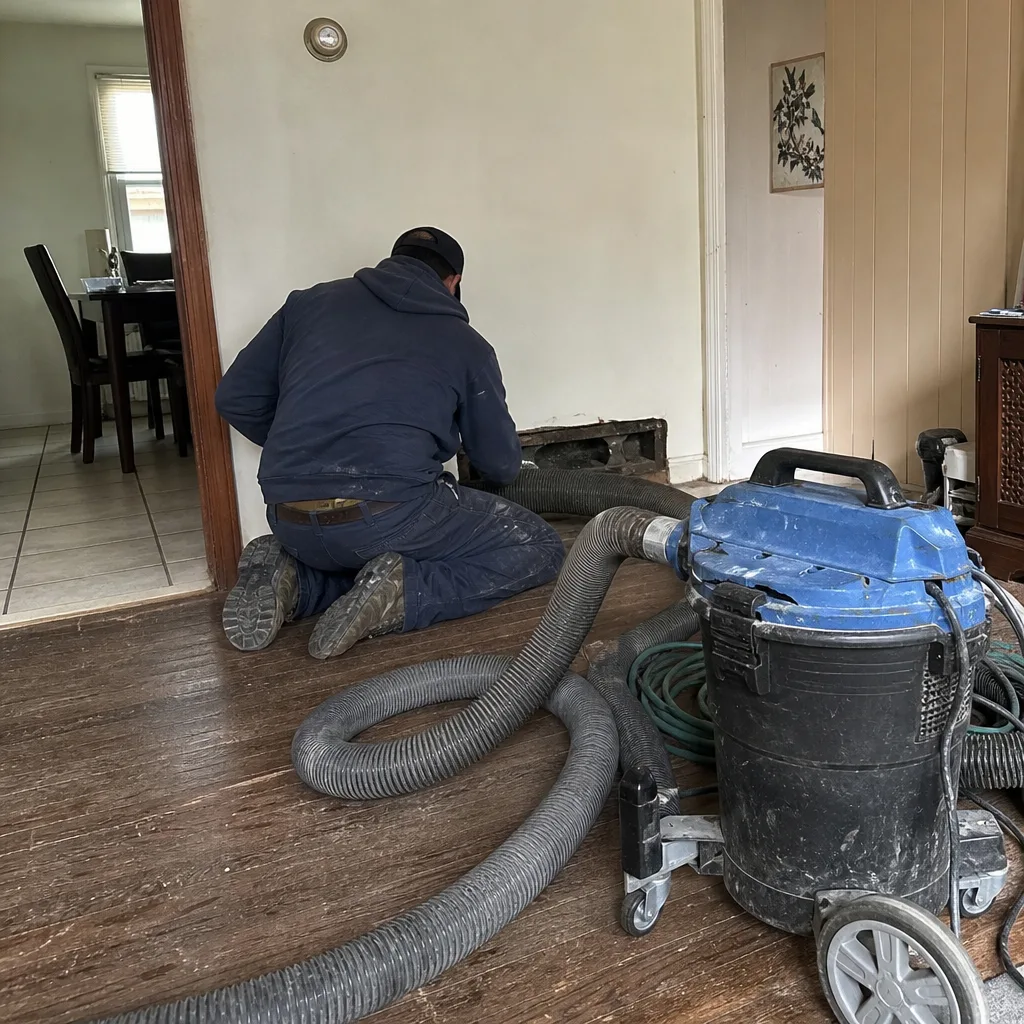 Before
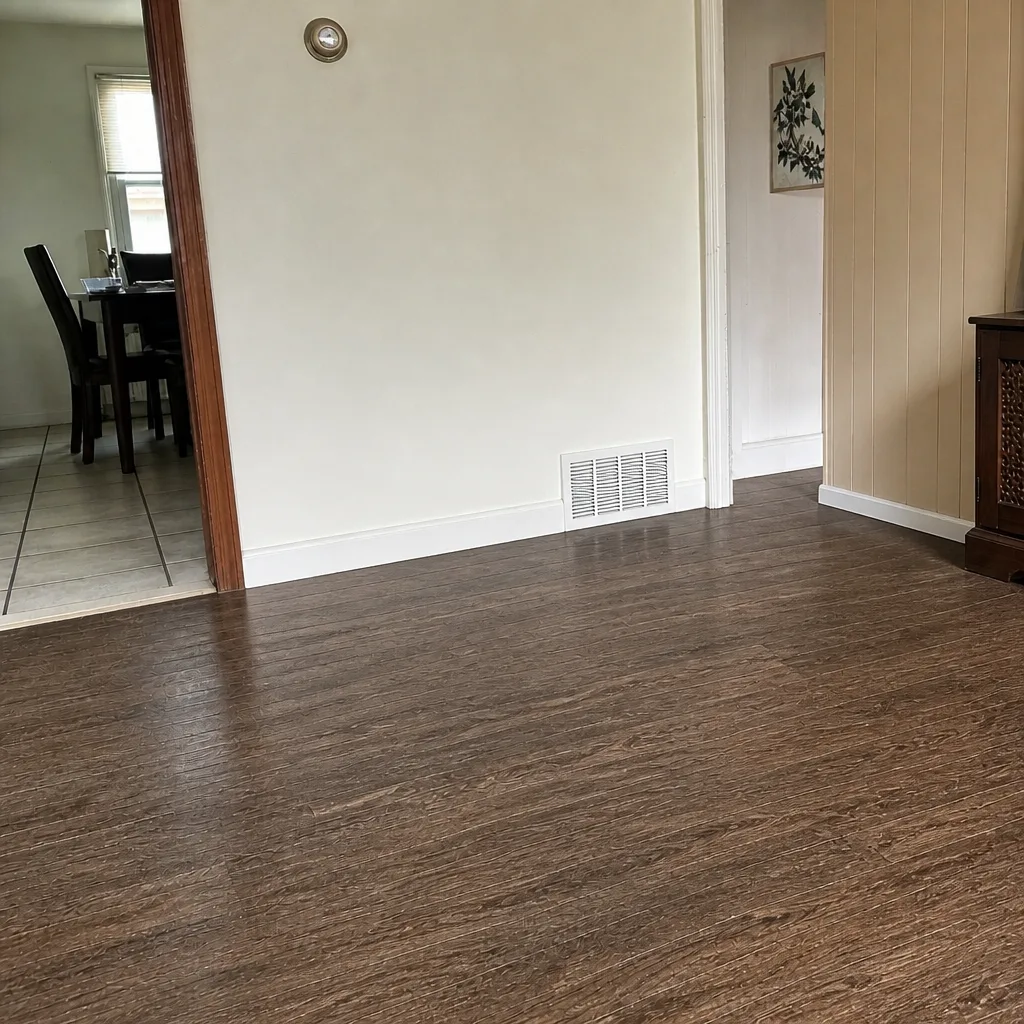 After
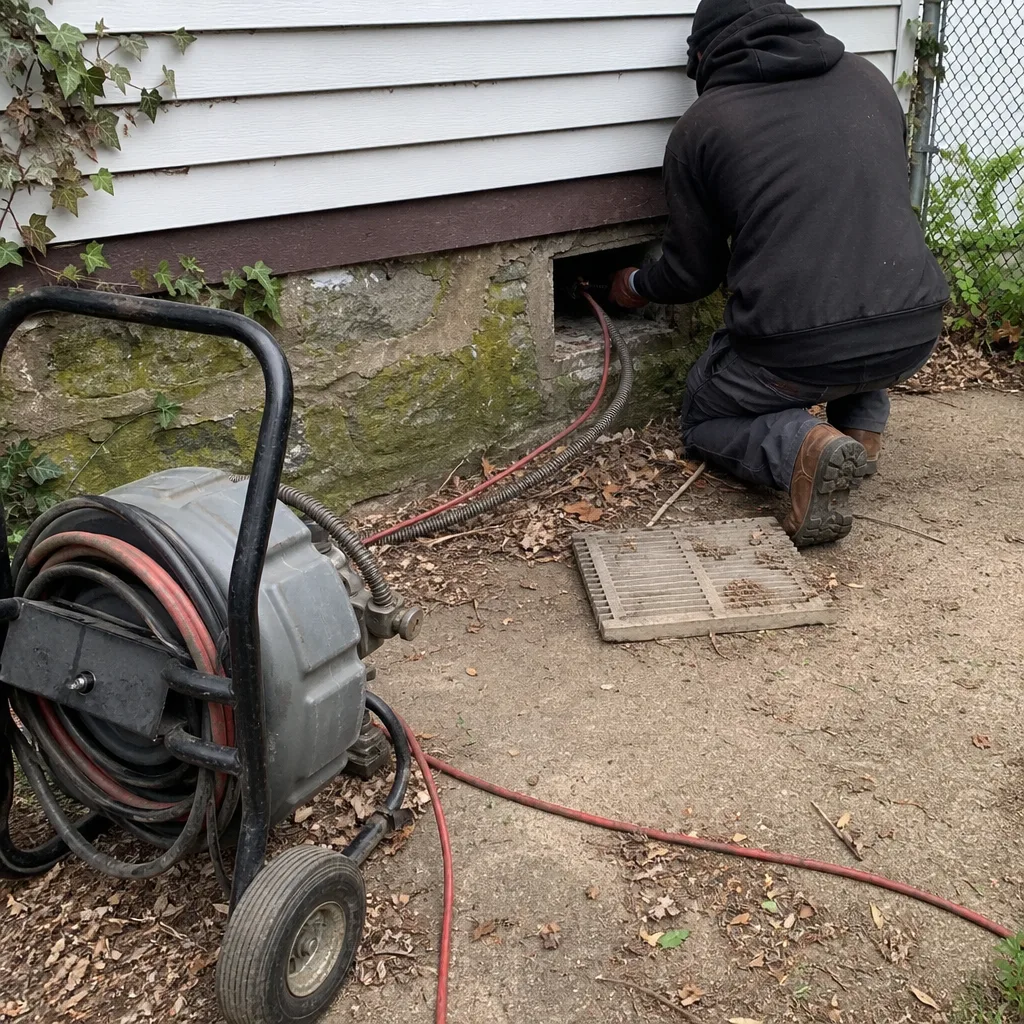 Before
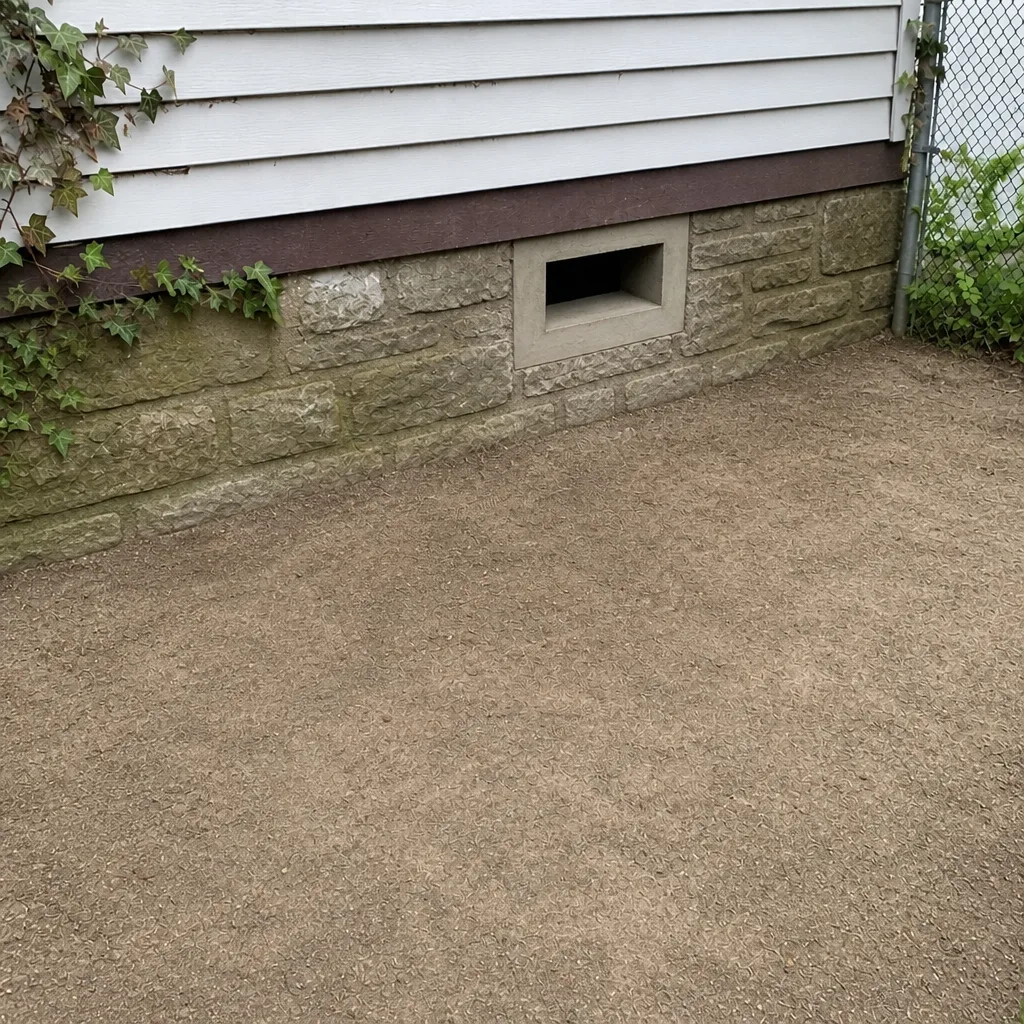 After
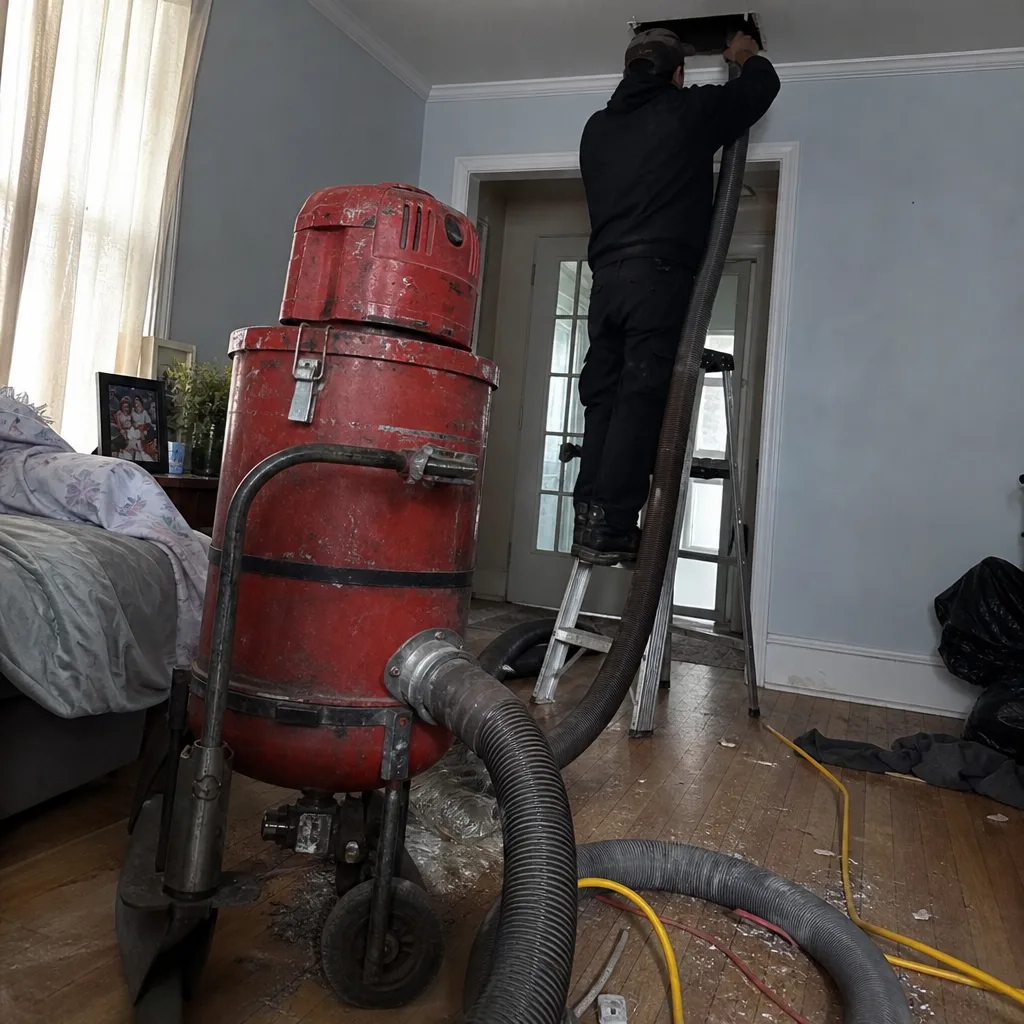 Before
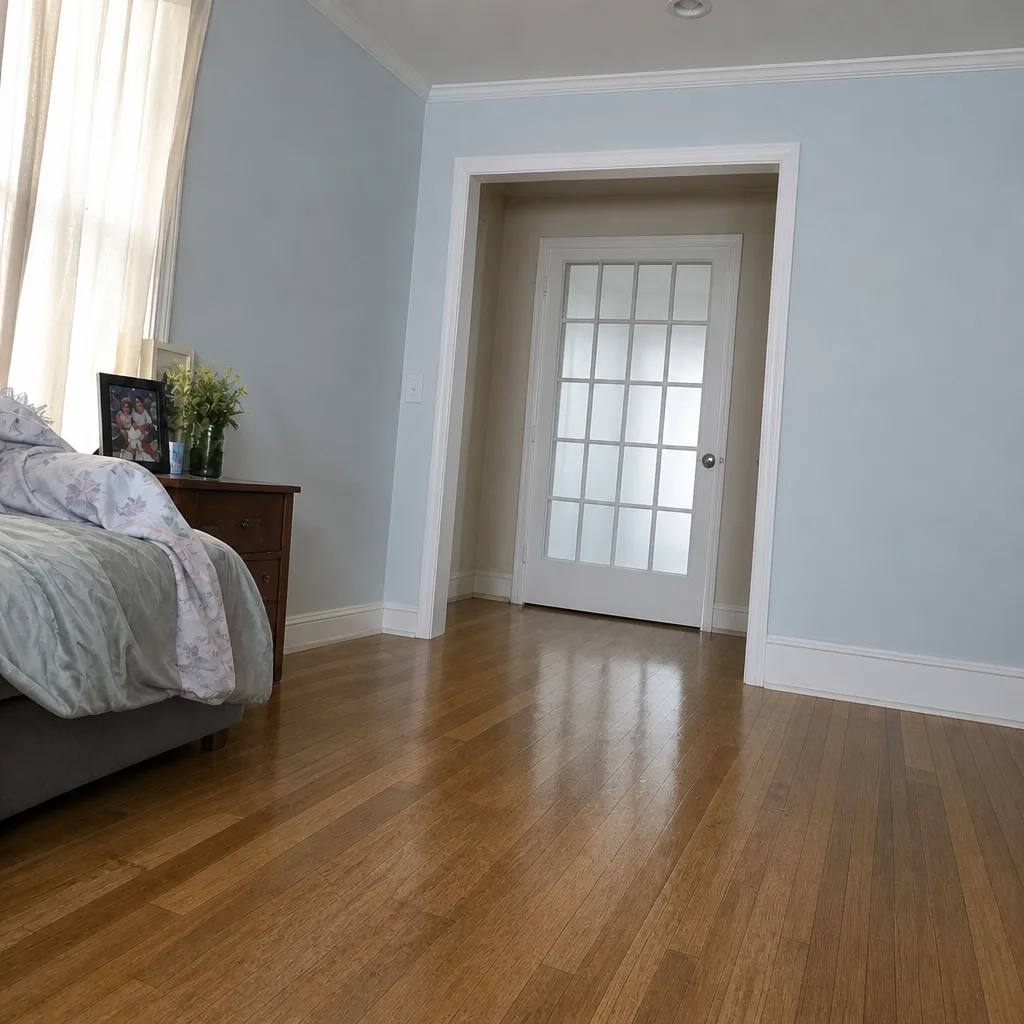 After
When to Call a Professional
Call a professional when the job crosses the line from maintenance into extraction, and that line is measurable. Visible debris in a register boot that keeps returning after cleaning is a sign the duct interior holds more than surface dust. Persistent dust in the room after you change the filter, frequent allergy symptoms that spike when the HVAC kicks on, or a musty smell from a supply register all point to a system that needs camera inspection and source-removal cleaning. Post-renovation, after rodent activity, or with confirmed mold present, professional work is non-negotiable, not optional. Our team at Air Duct Cleaning Port Richmond offers free estimates in Port Richmond, with a flat price per system agreed before work starts and before-and-after photos of your own ducts. Call (877) 792-6601. We answer 24/7. Fast dispatch from 7am to 7pm, Sunday through Friday.
Frequently Asked Questions
DIY air duct cleaning is a good idea for surface-level maintenance and a poor idea for actual duct interior cleaning. Register cleaning, filter replacement, dryer vent brushing on the short run, and visual inspection with a flashlight are all homeowner-appropriate tasks. Cleaning the duct interior with consumer equipment isn’t, because the pressure physics don’t work. Call (877) 792-6601 for an exact quote on a proper cleaning, and the estimate is free.
Professional air duct cleaning is priced per system, not per vent, based on the size of the system and the condition found during camera inspection. We don’t quote per-vent figures because the number that matters is the flat price for the whole system, agreed in writing before any work begins. The written estimate sets the final price, and it’s free. Call (877) 792-6601 to schedule an estimate.
Cheap quotes are usually cheap because the equipment isn’t professional-grade and the job is done in less than an hour. A shop vac and a brush can’t do source removal, so a low-price cleaning often redistributes debris rather than extracting it, and it sometimes damages aging flex duct along the way. Ask what equipment is on the truck before you book. Then call (877) 792-6601 for a quote that reflects actual source-removal cleaning.
Before-and-after photos of your own ducts are the answer, plus a camera inspection of the system before cleaning begins. Photos taken inside your system, at register openings and inside duct runs, tell you exactly what came out and what condition the duct is in afterward. Any provider who can’t or won’t share those photos of your specific system hasn’t demonstrated the work. Call (877) 792-6601 for an estimate, which includes the inspection scope.
Most homes don’t need a set interval; the right answer depends on the system and the household. Drivers include pets, recent renovation, allergy or asthma symptoms, a persistently dusty return, or visible evidence in a register. A home with none of those drivers can go years between cleanings; a home with several can need it every couple of years. Port Richmond homes with older systems, aging flex duct or high household dust benefit from a camera check more often than a full cleaning. Call (877) 792-6601 for an informed estimate.
Duct sealing is worth considering whenever cleaning reveals leaks, and cleaning often does reveal them. Leaky supply ducts waste heated or cooled air before it reaches the room, which drives up energy bills and pulls unconditioned air into the system through return leaks. Repair and sealing at Air Duct Cleaning Port Richmond means finding the leaks, repairing them, and testing the result, not just applying tape and moving on. Cleaning without addressing leaks addresses part of the problem. Call (877) 792-6601 to have the system assessed.
The Bottom Line
DIY duct cleaning fails for a specific reason: consumer equipment can’t generate the sustained negative pressure that source removal requires, so dust gets moved around instead of captured. What you can do yourself, and do well, is register cleaning, filter maintenance, short-run dryer vent brushing and visual monitoring. What you can’t do is extract debris from a full duct run, and in older Port Richmond homes agitating an unknown system can damage flex duct or disturb hazardous insulation. Professional cleaning is genuinely non-negotiable after renovation, with rodent contamination, or where mold is confirmed. Everywhere else, the calculation is worth making honestly: the free estimate, the flat per-system price, and the before-and-after photos usually answer the question faster than a shop vac rental.
If you’d like to know what your system actually needs, our team at Air Duct Cleaning Port Richmond offers free estimates with camera inspection, a flat price per system agreed in writing before work begins, and before-and-after photos of your own ducts. We use Rotobrush rotary brush systems, Nikro HEPA extraction and Abatement Technologies containment, and our technicians have up to 14 years of experience. We also handle duct repair and sealing, sanitizing with Guardsman-line protective treatments, and Honeywell and Aprilaire air quality products, all under one service relationship. Call (877) 792-6601. We answer 24/7. Fast dispatch from 7am to 7pm, Sunday through Friday.
Written by the team at Air Duct Cleaning Port Richmond.