
Last updated November 24, 2026
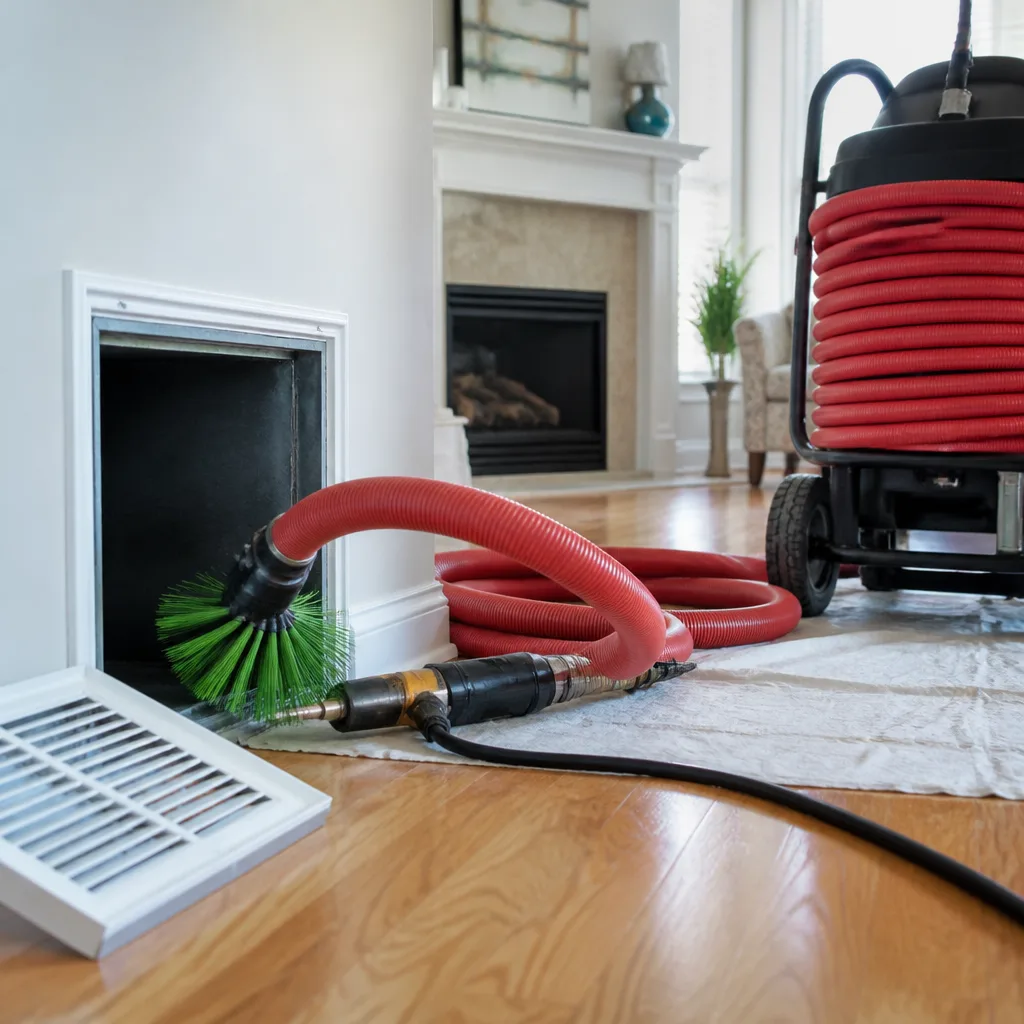 Whole-home duct cleaning
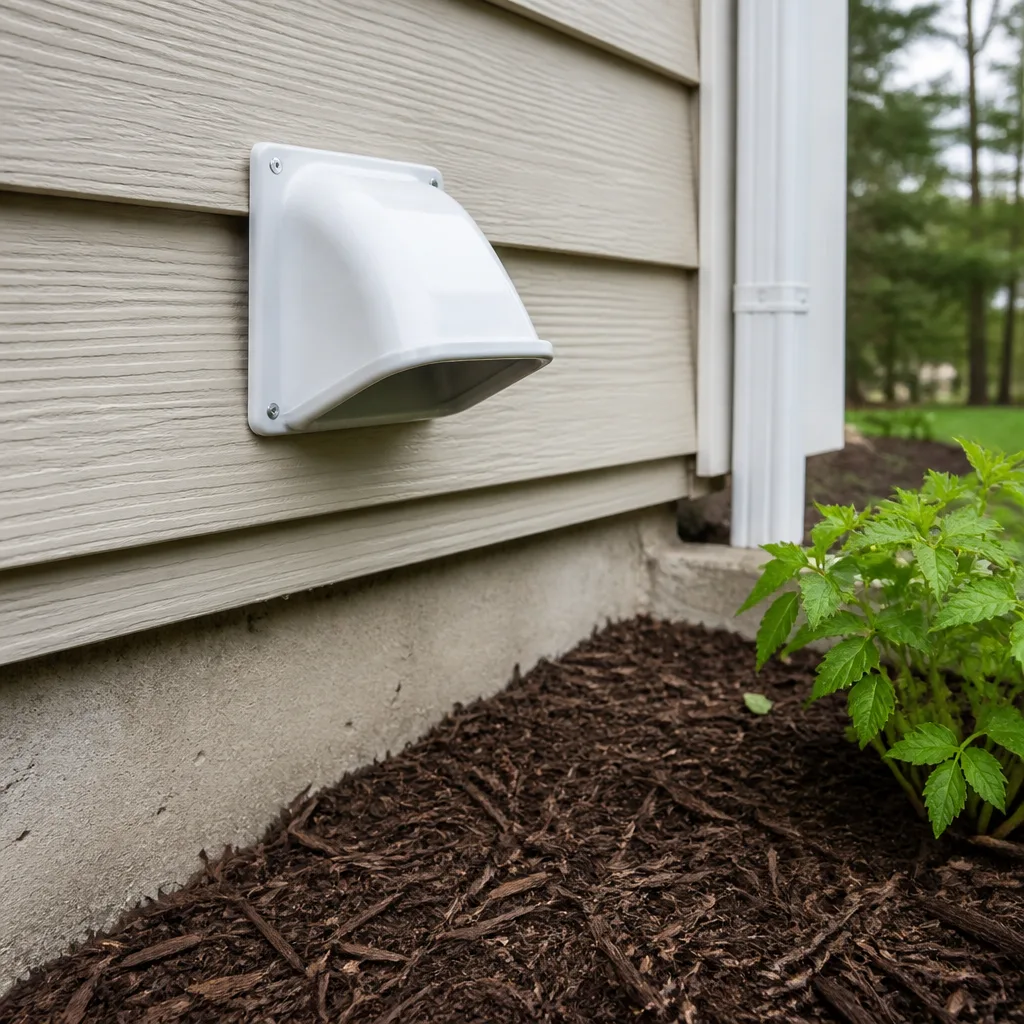 Dryer vent cleaning
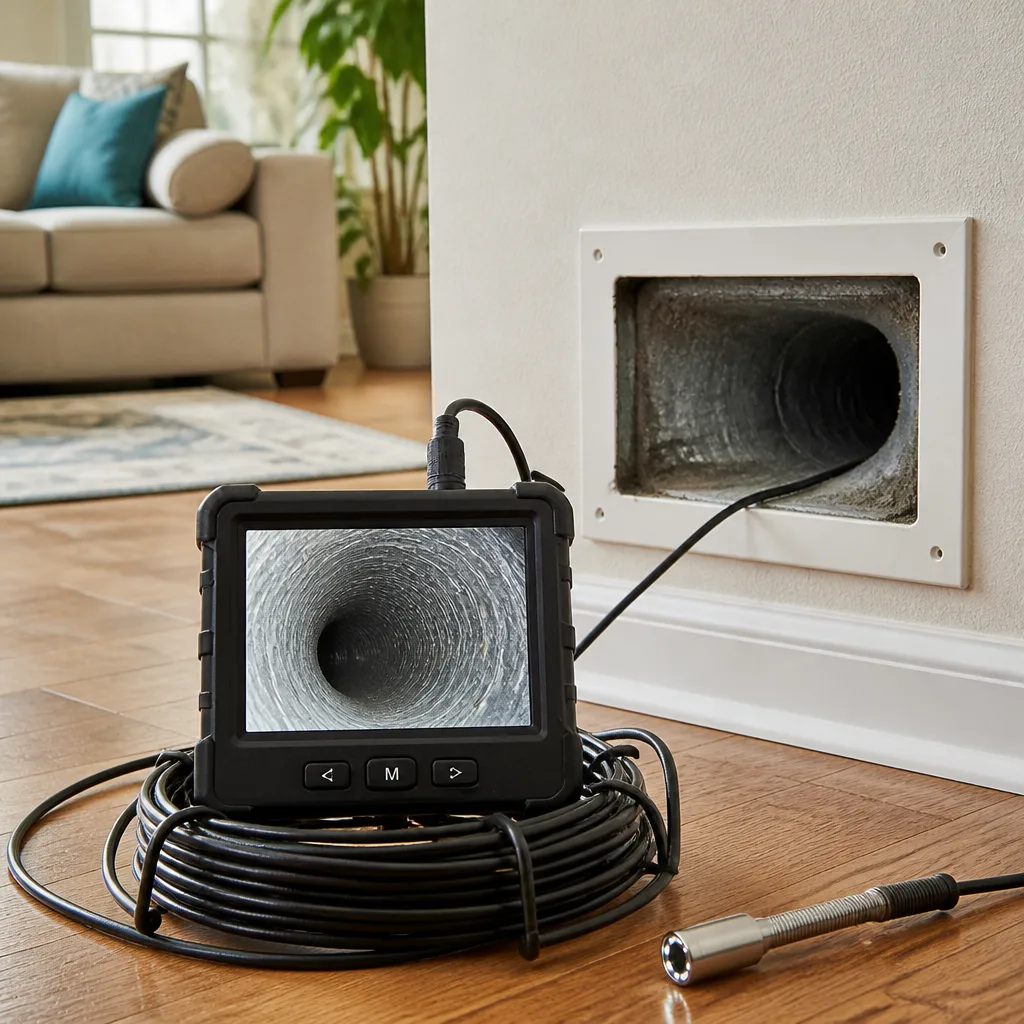 Camera inspection
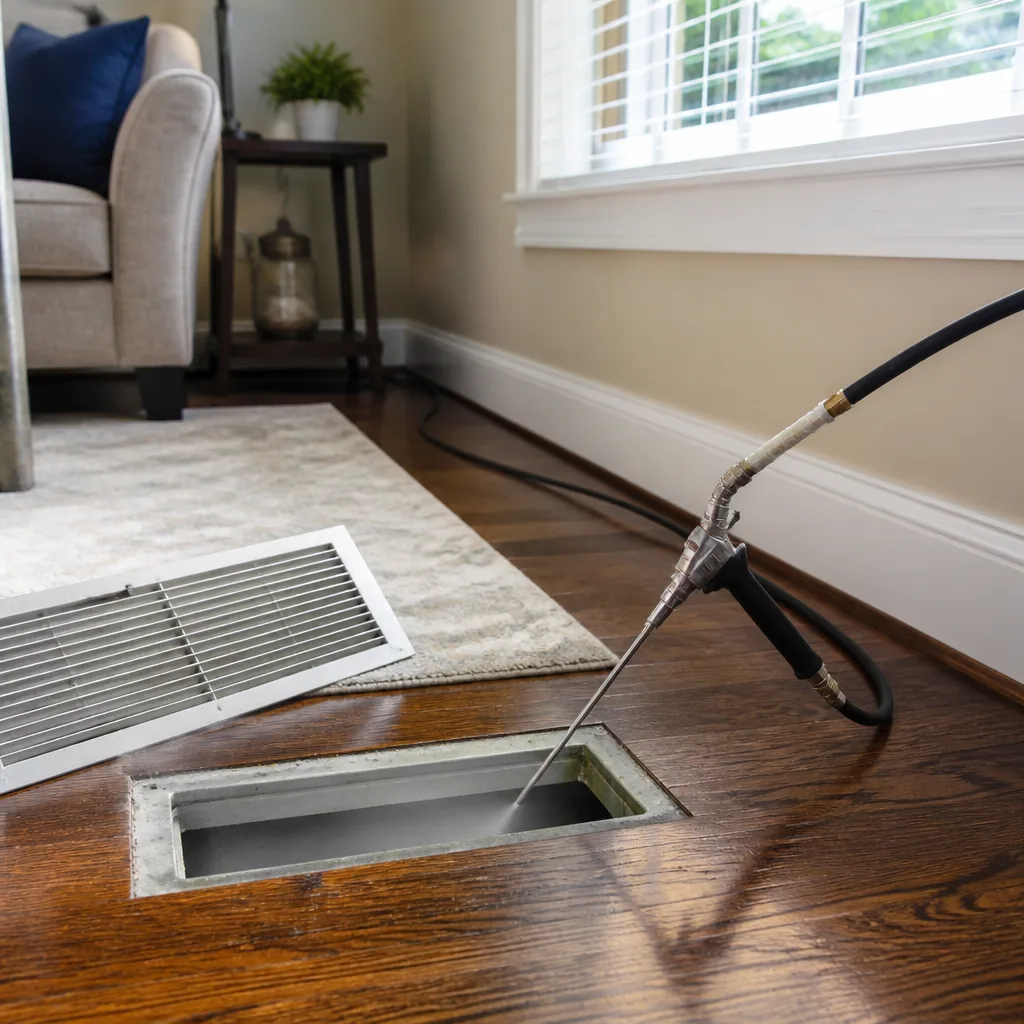 Sanitizing & deodorizing
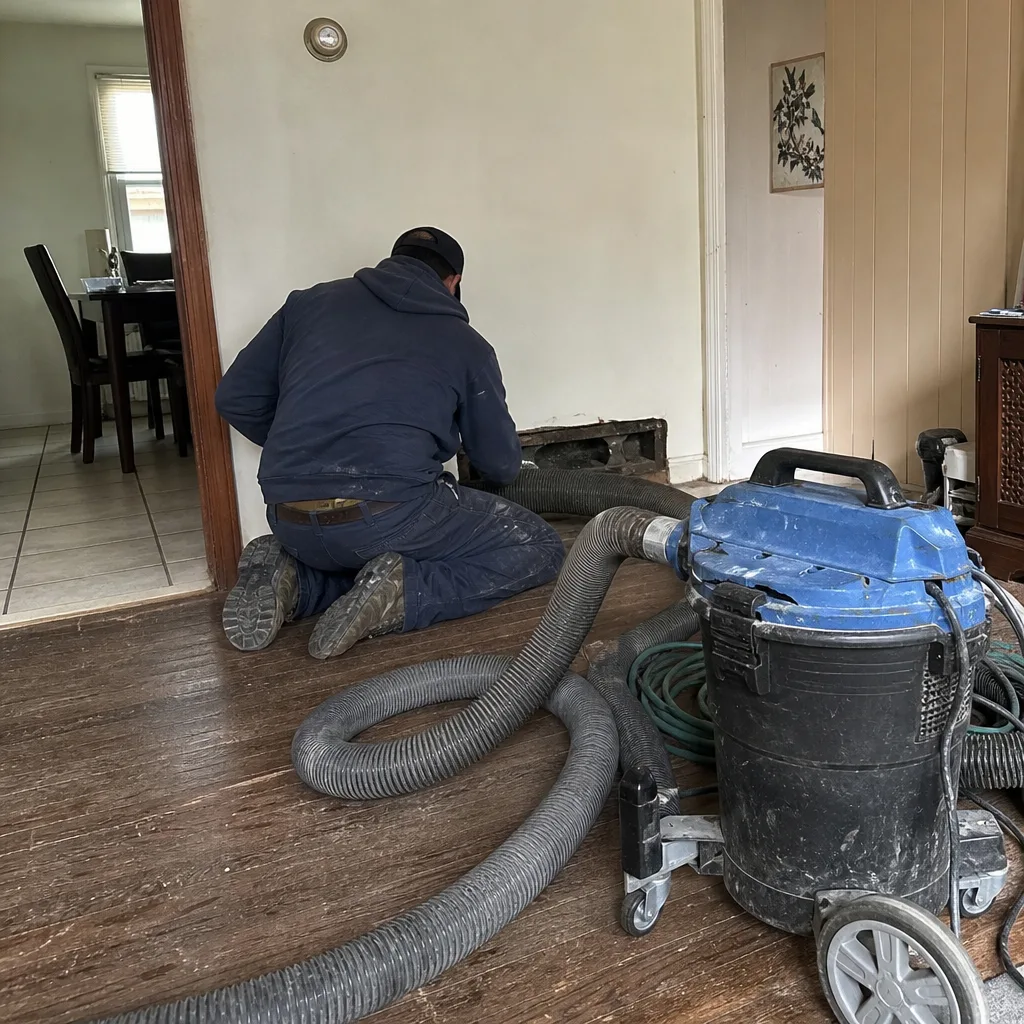
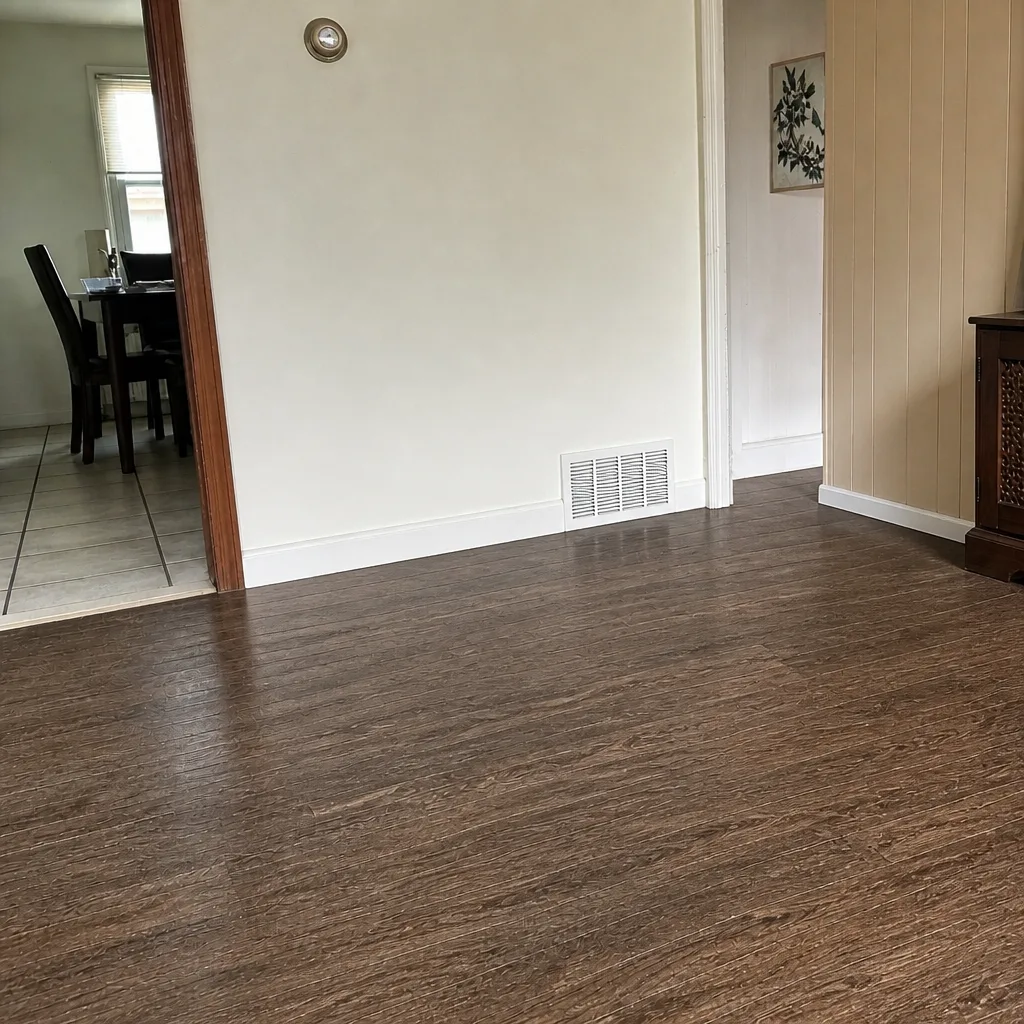
Whole-system duct and dryer vent check with before-and-after photos - you see exactly what came out of your vents
That "$99 whole-house special" is a bait ad - the real number appears once they are in your hallway, or the "clean" is a shop-vac at the register. We photograph the inside of your ducts before and after instead.
The Complete Guide to Air Duct Cleaning in Port Richmond
Two companies can quote you the same price for air duct cleaning in Port Richmond and deliver completely different work. One sends a technician who runs a spinning brush through the main trunk for twenty minutes and leaves. The other sets up containment, pulls the system under negative pressure, and works every branch line from supply to return. The invoice looks the same on paper. The air in your house afterward does not.
That gap exists because most homeowners never see the inside of their ductwork. This guide changes that. We’re going to map the anatomy of a residential duct system piece by piece, explain what each zone collects and why, and show exactly what a proper source-removal cleaning does at each point. By the end you’ll know what a real job looks like, what it should cost, and how to tell the difference before you hand over a deposit.
Quick Answer
Air duct cleaning in Port Richmond means removing accumulated dust, debris, and biological growth from inside the entire duct network using source-removal methods, not just vacuuming what’s visible at the registers. A thorough job takes several hours, uses professional equipment like Rotobrush and HEPA-filtered vacuum systems, and addresses supply ducts, return ducts, and the air handler separately because each collects different contamination. Typical pricing for a whole-system cleaning runs several hundred dollars depending on the number of systems and the condition of the ductwork, with a written estimate setting the final price.
Styles & brands we work with
- Whole-home duct cleaning
- Dryer vent cleaning
- Camera inspection
- Sanitizing & deodorizing
Table of Contents
- The Anatomy of a Port Richmond Duct System
- Supply, Return, and Trunk: Three Zones, Three Problems
- What Source-Removal Cleaning Actually Looks Like
- Older Port Richmond Housing and Duct Age
- What a Post-Cleaning Inspection Should Verify
- When Sanitizing Helps and When It Doesn’t
- What Air Duct Cleaning Costs in Port Richmond
- Common Mistakes to Avoid
The Anatomy of a Port Richmond Duct System
A residential duct system is a network, not a single tube. Understanding its parts is the first step toward understanding why one cleaning method works and another doesn’t. Every forced-air system in Port Richmond has the same basic architecture, though the materials and layout vary by the era the house was built.
Here’s how the pieces fit together:
- The air handler. This is the furnace or air conditioning unit’s blower compartment. It’s where air gets pushed into the supply side and pulled from the return side. The blower wheel, the evaporator coil, and the interior cabinet surfaces collect dust and sometimes biological growth. Cleaning the ducts without cleaning the air handler leaves the source of the contamination untouched.
- The supply trunk. A larger main duct that carries conditioned air away from the air handler before it branches off to individual rooms. In older Port Richmond homes this is often rectangular galvanized sheet metal. In newer construction it may be insulated flex duct.
- Supply branch ducts. The smaller runs that terminate at floor or ceiling registers in each room. These accumulate fine dust and, near kitchens and bathrooms, grease and moisture films.
- The return trunk and return branches. These pull air back to the air handler. Because they draw from living spaces, returns are typically the dirtiest part of the system. A single return in a hallway pulls dust, pet hair, and carpet fibers from every room it serves.
- Registers, grilles, and boots. The visible endpoints. The boots (the sheet metal transition between duct and register) trap debris at the bottom where airflow slows.
That’s the map. What matters is that each segment collects a different type of contamination. Treating the whole system as one uniform tube is where cut-rate cleaning goes wrong.
Supply, Return, and Trunk: Three Zones, Three Problems
This is the part that most homeowners never hear. The supply side and the return side of your ductwork do not collect the same things, and they can’t be cleaned the same way. We’ve seen systems where the supply branches looked reasonably clean while the return trunk was coated in a half-inch of felted dust.
Return ducts: the collection point
Return ducts are where the contamination concentrates. Air moving back to the air handler carries everything airborne in your home: dust, dander, pollen, hair, lint, and whatever’s tracked in from the street. Returns move air at lower velocity than supplies, which lets heavier particles settle out of the airstream and stick to the duct walls. In older homes with centralized returns, the return trunk often acts as a settling chamber. This is the zone that needs aggressive mechanical agitation and heavy vacuum extraction.
Supply ducts: the distribution side
Supply ducts run under positive pressure, so they collect less settled debris, but they aren’t clean. Fine dust still clings to the walls, and in Port Richmond’s older housing stock the galvanized metal ducts show corrosion and flaking in spots where condensate has been a problem. Supply branches near kitchens pick up cooking grease that acts like a magnet for dust. These runs need gentler agitation because flex duct and older metal can be damaged by over-aggressive brushing.
The air handler: the overlooked source
The air handler sits between the two. Dust that enters the return stream passes through the blower compartment, and whatever the filter doesn’t catch coats the blower blades and the coil. A dirty blower wheel is less efficient and moves less air. Cleaning the ducts but leaving the air handler alone means you’ve cleaned the pipes but left the pump clogged. Our HVAC cleaning service addresses this component directly because it’s part of the same air pathway.
What Source-Removal Cleaning Actually Looks Like
Source-removal methodology means capturing dislodged debris at the point where it’s loosened, under controlled conditions, so it leaves the house instead of drifting into your living room. This is the standard the industry defines through NADCA guidance, and it’s the difference between real cleaning and surface brushing.
A proper source-removal job in Port Richmond follows these steps:
- Containment setup. The technician seals registers and work areas and sets up containment equipment, such as Abatement Technologies systems, to prevent debris from escaping into occupied rooms. This is remediation-level practice, not shop-vac practice.
- Negative pressure. A Nikro HEPA-filtered vacuum is connected to the system, pulling the entire duct network into negative pressure. This means every opening in the system draws air inward, so nothing escapes.
- Mechanical agitation. A Rotobrush rotary brush system is fed through the ducts, mechanically loosening caked-on debris from the duct walls. The rotating brush reaches surfaces a vacuum alone cannot move.
- Simultaneous extraction. As the brush agitates, the HEPA vacuum pulls the loosened material out of the system and traps it in the filter. Agitation and extraction happen at the same time, which is what makes source removal work.
- Component cleaning. The air handler, blower, coil, and accessible plenum surfaces are cleaned separately.
- Verification. The technician inspects the duct interiors and confirms the work visually before packing up.
For contrast, surface-only cleaning often means a technician runs a vacuum hose to a few registers and calls it done. Nothing agitates the caked debris on the duct walls, and there’s no containment, so loosened dust can end up in the rooms. If your duct cleaning service takes 45 minutes for an entire house, it’s surface cleaning regardless of what the invoice says. Our air duct cleaning Port Richmond process is built on the source-removal model.
Older Port Richmond Housing and Duct Age
Port Richmond has a significant share of pre-1980 homes, and that matters for how duct cleaning is approached. Older construction brings a specific set of conditions that a technician with modern-equipment experience needs to account for.
- Galvanized sheet metal ducts. Common in mid-century homes. Over decades the interior surfaces develop a fine oxidation layer that traps dust more aggressively than newer metal. Flaking or pitted sections can’t take aggressive brushing without damage, so gentle agitation is required.
- Flex duct retrofits. Many older Port Richmond homes had flex duct added later to replace or extend original metal runs. Flex duct has a corrugated interior that catches debris in its ridges. Rotary brushes must be used carefully because the inner liner can tear if the equipment is forced.
- Duct insulation. Interior insulation lining degrades over time. When the facing fails, fiberglass particles can enter the airstream. A cleaning that doesn’t identify this problem will redistribute rather than remove it.
- Seams and joints. Old ductwork often has loose seams that leak air into wall cavities. Cleaning without sealing leaves the system leaking conditioned air long after the ducts are clean. That’s why our air duct cleaning service includes the option of duct repair and sealing: leaks get located, repaired, and tested, not just noted on a clipboard.
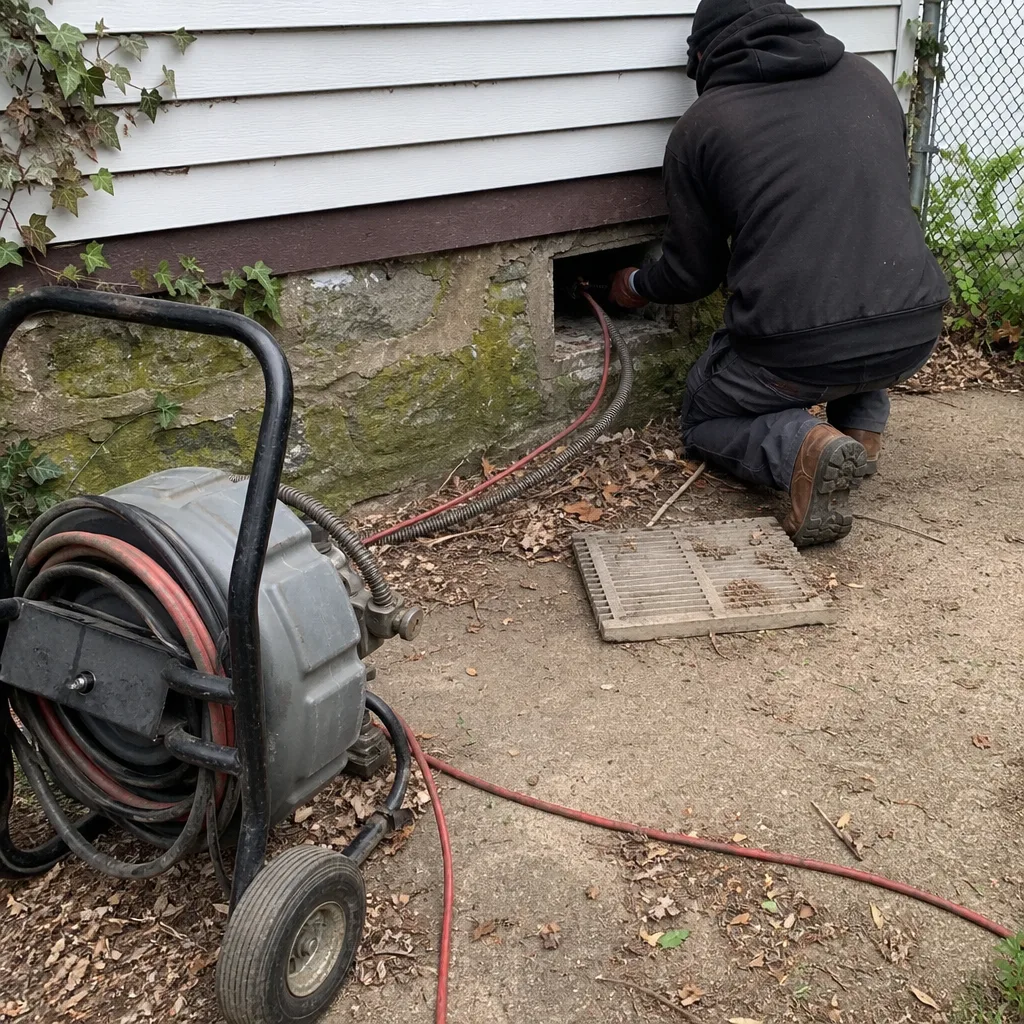
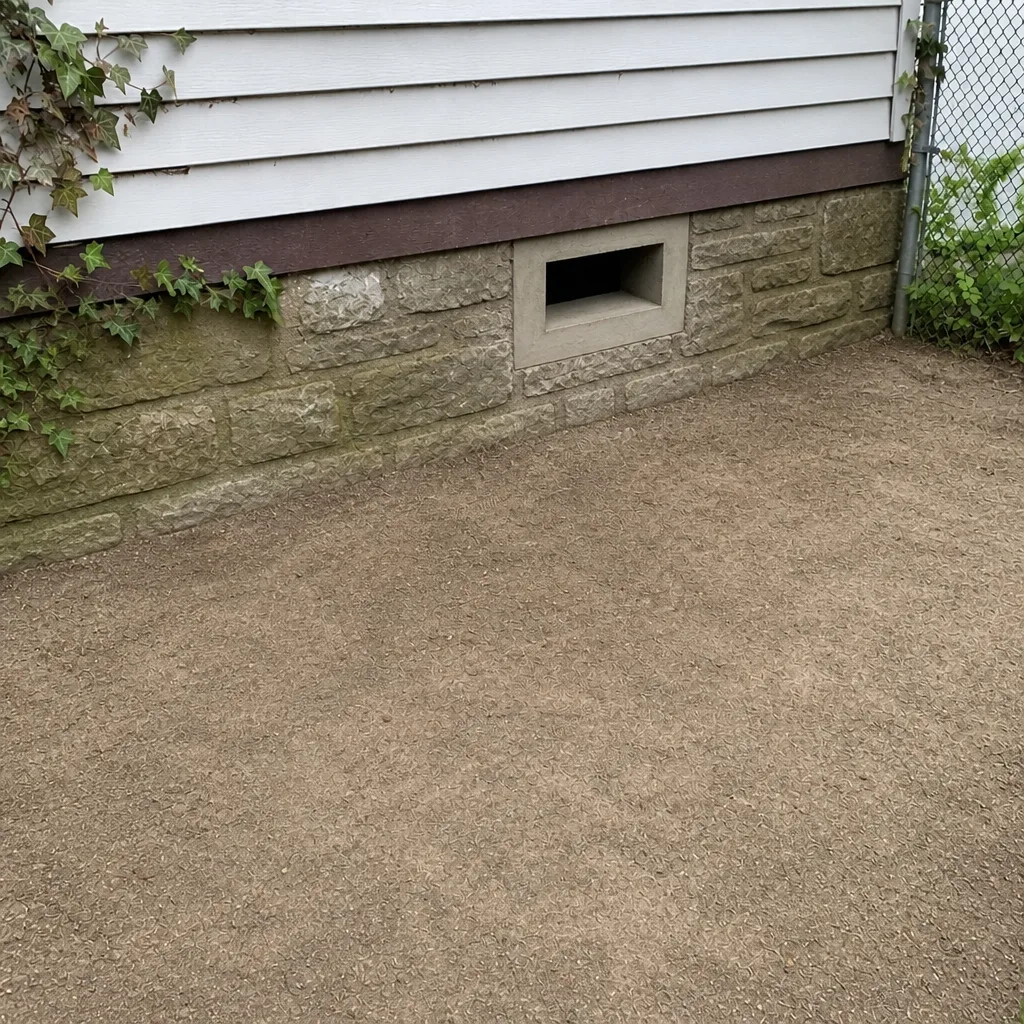
- Dryer vent runs. Older homes often have long, indirect dryer vent paths with multiple elbows. These collect lint in ways that shorter modern runs don’t. dryer vent cleaning is part of the same air pathway and belongs in any complete assessment.
If your Port Richmond home was built before 1980, ask the technician how they handle older metal and flex duct. The answer tells you a lot about the experience behind the equipment.
What a Post-Cleaning Inspection Should Verify
“It looks clean” is not an inspection. A proper post-cleaning check verifies that the work did what it was supposed to do, using both visual confirmation and measurable airflow. Here’s what to expect from a real inspection.
- Visual confirmation inside the ducts. The technician should show you interior photos or video of the cleaned ducts. “Before and after” images of your own system are one of the simplest ways to know the work was actually performed.
- Airflow measurement. Measuring airflow at the registers before and after cleaning tells you whether the system’s performance changed. This is more meaningful than a subjective impression.
- Register and grille check. All supply and return registers should be reinstalled clean, with no residual debris in the boots.
- Air handler verification. The blower and coil should be visibly clean. If the air handling unit was part of the job, the confirmation is part of the inspection.
- Leak check (if sealing was performed). Any duct repair or sealing work should end with a leak check so you know the seams are sealed and tested, not just patched and hoped for.
Before-and-after photos of your own ducts are also the answer to the industry’s bait-and-switch reputation. A company willing to show you the inside of your ducts before and after has nothing to hide. Our technicians have up to 14 years of experience, and the inspection step is treated as a required part of the job, not an optional add-on.
When Sanitizing Helps and When It Doesn’t
Sanitizing isn’t a required part of duct cleaning. It’s a separate service with specific conditions where it adds real value, and plenty of situations where it’s an unnecessary upsell. Here’s how to tell the difference.
Sanitizing makes sense when:
- There’s visible biological growth inside the system, typically accompanied by a persistent musty odor.
- The home has had water intrusion or a moisture event that affected ductwork or the air handler.
- There’s a known pest infestation history in the ducts (rodents, insects) that requires treatment of surfaces after debris is removed.
- Occupants have respiratory sensitivities that make biological residue a genuine concern.
Sanitizing is usually unnecessary when:
- The ducts are dusty but not biologically compromised. Removing debris is enough.
- There’s no odor, no visible growth, and no moisture history.
- A cleaning company offers sanitizing automatically before the ducts have even been inspected. That’s a sales script, not a diagnosis.
When sanitizing is appropriate, the quality of the products matters. Protective treatments, such as the Guardsman line, and integrated air quality products like Honeywell and Aprilaire systems can extend the effect well beyond the cleaning itself, adding filtration or humidity control where the underlying problem is moisture or particle load. Our sanitizing tier includes these options when a real need exists. In our experience, the technician who explains why you don’t need sanitizing is the one you can trust when they say you do.
What Air Duct Cleaning Costs in Port Richmond
Air duct cleaning costs in Port Richmond typically fall in the several-hundred-dollar range for a standard whole-system cleaning, with the exact price depending on the number of HVAC systems, the number of registers, the condition of the ductwork, and whether add-ons like duct repair, sanitizing, or dryer vent cleaning are included. The written estimate sets the final price, and it should be prepared after an assessment of your actual system, not read off a coupon.
Here’s the honest structure of what drives the price:
| Service element | What affects price |
|---|---|
| Whole-system duct cleaning | Number of systems, register count, condition of ducts |
| Air handler / HVAC coil cleaning | Whether the unit is accessible and how soiled it is |
| Duct repair and sealing | Locating leaks, extent of repair, leak testing |
| Dryer vent cleaning | Length and routing of the vent run |
| Sanitizing / air quality treatment | Whether biological growth or odor requires it |
Two things are worth knowing. First, you should not be quoted a per-vent price. Per-vent pricing encourages a technician to run a vacuum over a register and move on; whole-system pricing reflects the actual scope. Second, the cheapest quote you receive is often the one with the fewest steps: no containment, no HEPA vacuum, no air handler, no inspection. The price is lower because the work is smaller, not because you’re getting a deal. You’ll want to know how much air duct cleaning actually costs in Port Richmond for the job you need, so get it in writing and compare scope, not just the number.
Common Mistakes to Avoid
We’ve seen enough Port Richmond duct systems to know where homeowners typically go wrong. These are the patterns that cost money and leave the problem in place.
- Choosing on price alone. The lowest quote usually buys the least thorough job. A company that skips containment, HEPA extraction, and the air handler has fewer costs and lower labor, which is why the price is lower. Compare what’s included in the scope, not the number.
- Assuming the air handler is part of the ducts. They’re separate components. Ask explicitly whether the blower and coil are included. A duct-only cleaning that leaves a dirty blower compartment has fixed part of the problem.
- Skipping the inspection. A job without a post-cleaning inspection and before-and-after photos is unverifiable. You have only the technician’s word that the work happened. Insist on visual proof of your own system.
- Accepting sanitizing without a reason. Sanitizing is a legitimate service but not an automatic add-on. If the technician recommends it, ask what they saw that justifies it. “It’s good practice” isn’t a diagnosis.
- Ignoring loose duct seams in older homes. Leaky seams waste conditioned air and let attic or crawl space dust into the system. Cleaning without sealing leaves the system on a leaky foundation. Ask for a leak check.
- Forgetting the dryer vent. The dryer exhaust is part of the same air pathway and a genuine fire risk, especially on the longer, multi-elbow runs common in older Port Richmond homes. Any complete assessment should include it.
- Believing a 45-minute job is thorough. A full source-removal cleaning takes hours because every branch line, trunk, plenum, and component is addressed in sequence under controlled conditions. Fast by design is a warning, not a feature.
When to Call a Professional
Some duct conditions are clearly a job for a trained technician. If you’ve noticed a persistent musty smell in the house that doesn’t track to a specific room, that’s a common sign of biological growth inside the system. Dust returning to surfaces within days of cleaning is another sign that the source is upstream in the ductwork. Visible debris blowing out of registers, allergy symptoms that worsen when the HVAC runs, and rising energy costs that don’t line up with rate changes are all worth a professional assessment. So is any home that has never had the ducts cleaned and is now showing these patterns, and any home with a dryer that takes longer than it used to. For those situations, call us and we’ll diagnose rather than guess.
Air Duct Cleaning Port Richmond offers free estimates in Port Richmond. Call (877) 792-6601 for a written estimate. Our technicians have up to 14 years of experience, and the local pro we connect you with is licensed and insured as their state requires.
See the difference
 Before
 After
 Before
 After
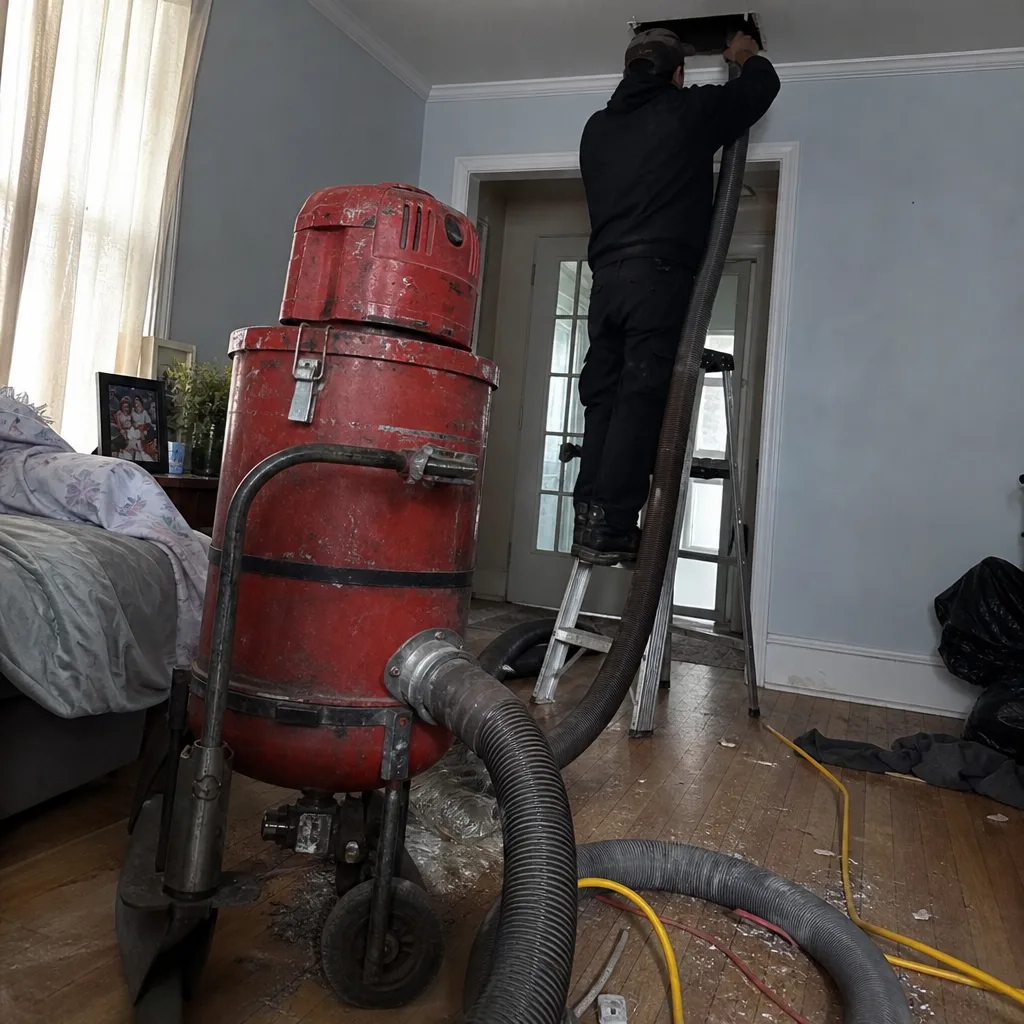 Before
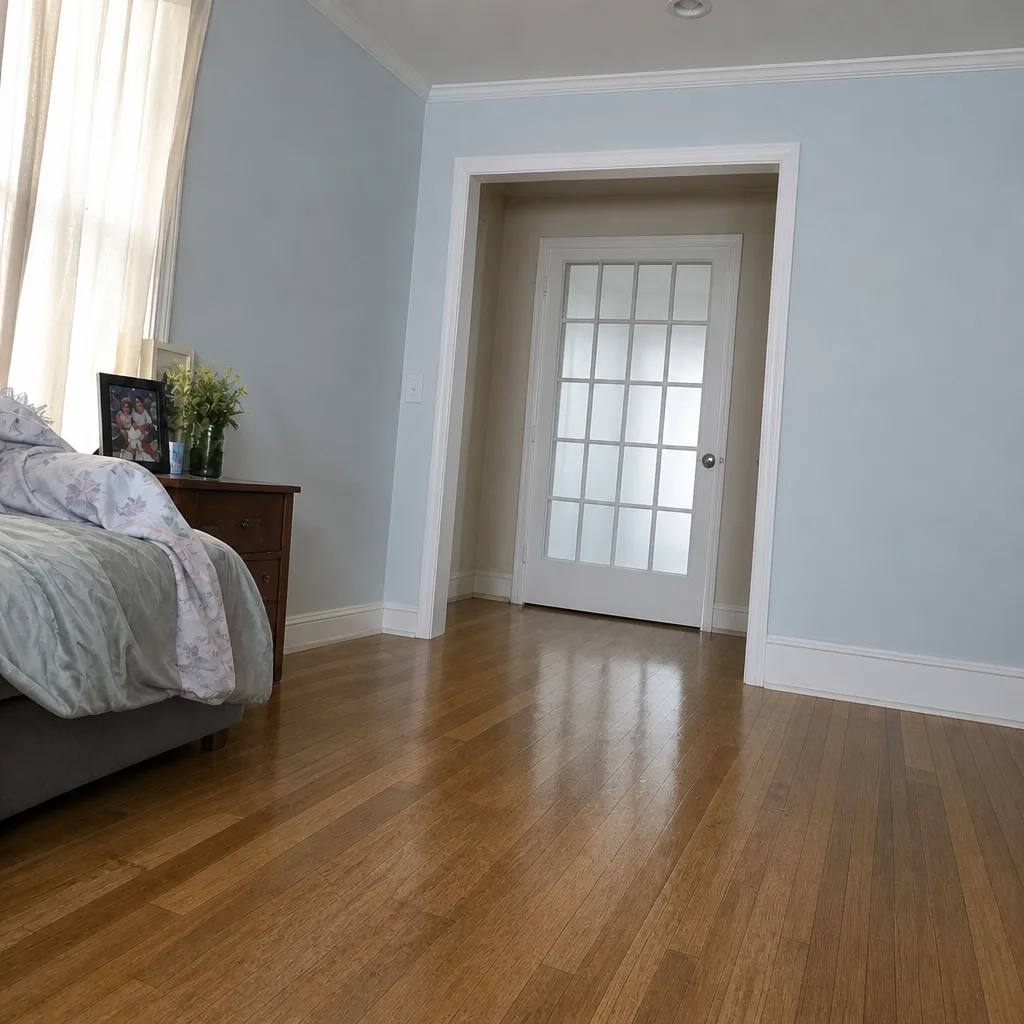 After
Frequently Asked Questions
Whole-system duct cleaning in Port Richmond typically runs several hundred dollars, with the exact price set by a written estimate after an assessment of your systems, register count, and duct condition. Be cautious of any quote that’s far below that range; it usually reflects a shorter, surface-only process. Call (877) 792-6601 for an exact quote – estimates are free.
Cheaper quotes usually buy less work: no containment, no HEPA extraction, no air handler cleaning, and no post-cleaning inspection. The low price is built on a reduced scope. When you compare quotes, ask what equipment and which components are included, not just the dollar figure. Call (877) 792-6601 to talk through a scope-based estimate.
Ask for before-and-after photos of your own ducts and a post-cleaning airflow measurement. A professional job includes a visual verification step, and any technician should be willing to show you the interior condition before and after. If a company can’t or won’t, that’s your answer. Call (877) 792-6601 to book an estimate with a full inspection included.
Most homes don’t need duct cleaning on a fixed schedule. It’s a condition-based service: clean when there’s visible debris accumulation, musty odors, recent renovation or moisture history, or an infrequent maintenance pattern with older ductwork. If your ducts show any of those signs, call (877) 792-6601 for a free assessment.
Yes. Older galvanized metal and flex ducts require gentler agitation than modern rigid ductwork to avoid damaging interior surfaces. In older Port Richmond homes, the technician should assess material condition before starting and adjust equipment accordingly, and should also check seams for leaks that undermine the system after cleaning. Call (877) 792-6601 to schedule an assessment.
Only if there’s evidence of biological growth, odor, moisture history, or pest activity. For a routine dusty-duct cleaning, sanitizing adds cost without added benefit. A technician who recommends it should be able to explain exactly what they observed that justifies it. Call (877) 792-6601 for an honest, condition-based recommendation.
The Bottom Line
Your duct system is a network with three distinct zones, and each one collects a different kind of contamination. Supply branches collect fine dust and grease. Returns collect heavy settled debris and everything the household tracks in. The air handler collects what the filter doesn’t catch. A real cleaning addresses all three using source-removal methods: containment, negative pressure, mechanical agitation with Rotobrush, and HEPA extraction with Nikro equipment. It finishes with an inspection that includes before-and-after photos and a check of airflow. Anything shorter is surface cleaning with a duct-cleaning invoice attached.
If you’ve been putting off an assessment because the quotes have felt like guesswork, that’s a reasonable hesitation. The right response is a written scope and a written estimate. Our team is available for both. If you’ve noticed musty odors or dust returns, that’s your sign to take the next step.
Get a Free Estimate in Port Richmond
Call (877) 792-6601 for a free estimate on air duct cleaning in Port Richmond. We answer 24/7. Fast dispatch from 7am to 7pm, Sunday through Friday. Every job is quoted per system in writing before work begins, so you know the scope and the price up front, and the local pro is licensed and insured as their state requires.
If you’re not sure whether your ducts need cleaning at all, call us anyway. We’d rather tell you the ducts are fine than sell you a service you don’t need. That’s the whole point of writing this guide: information first, estimate second, work only where it earns its keep.
Written by the team at Air Duct Cleaning Port Richmond.