
Last updated November 24, 2026
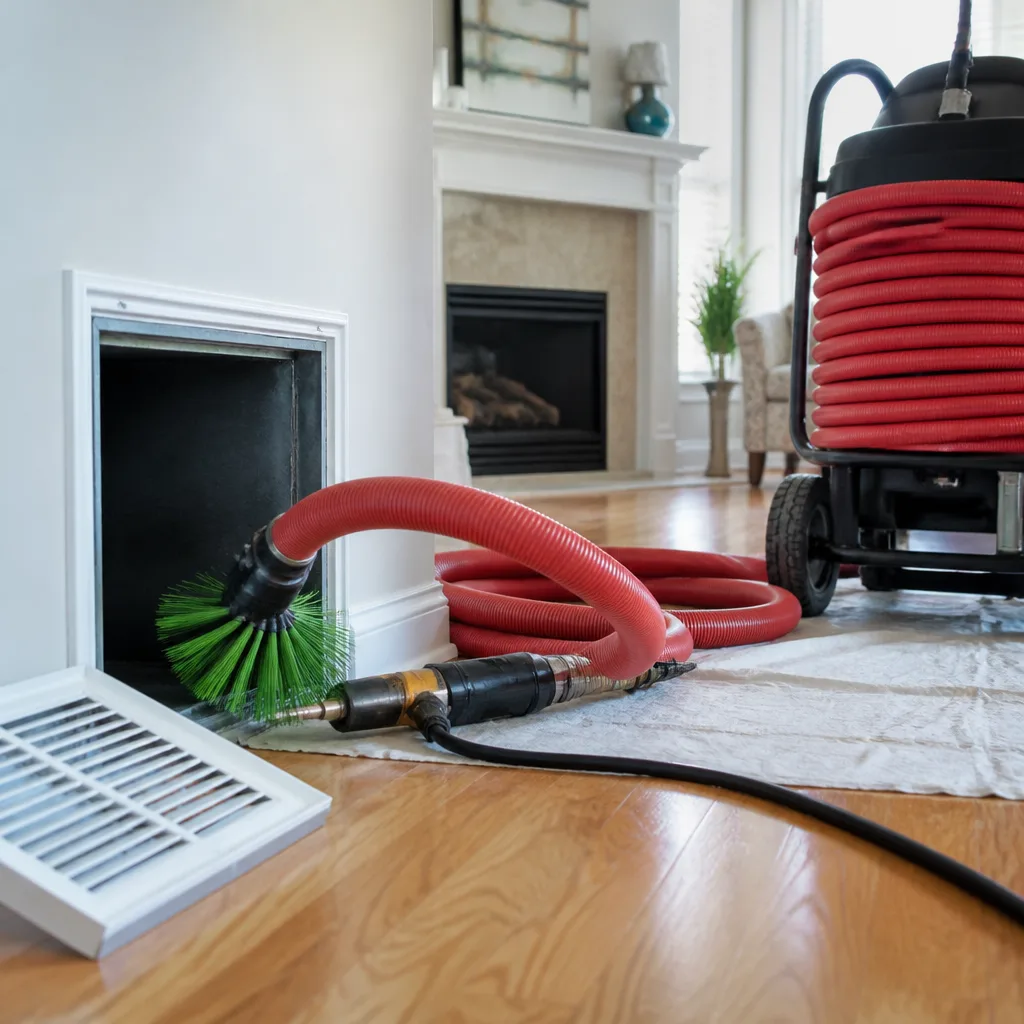 Whole-home duct cleaning
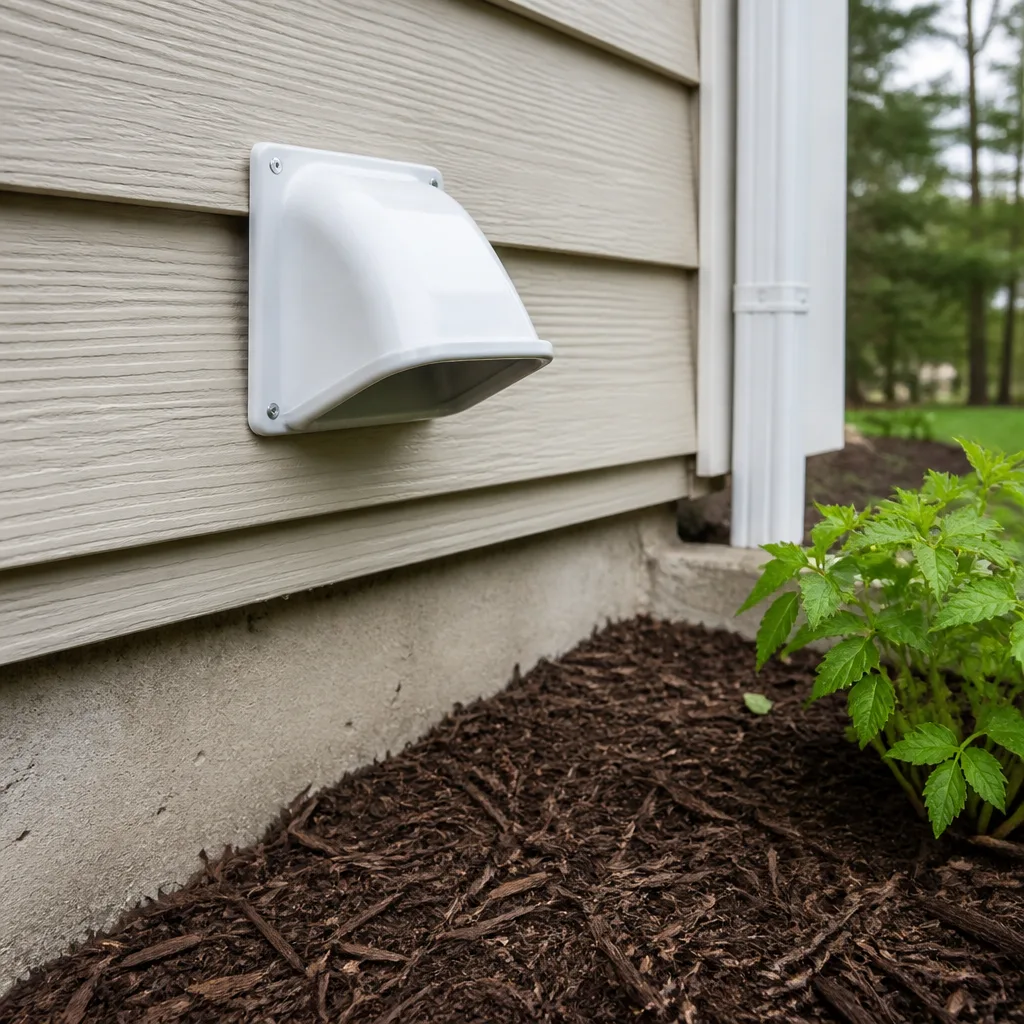 Dryer vent cleaning
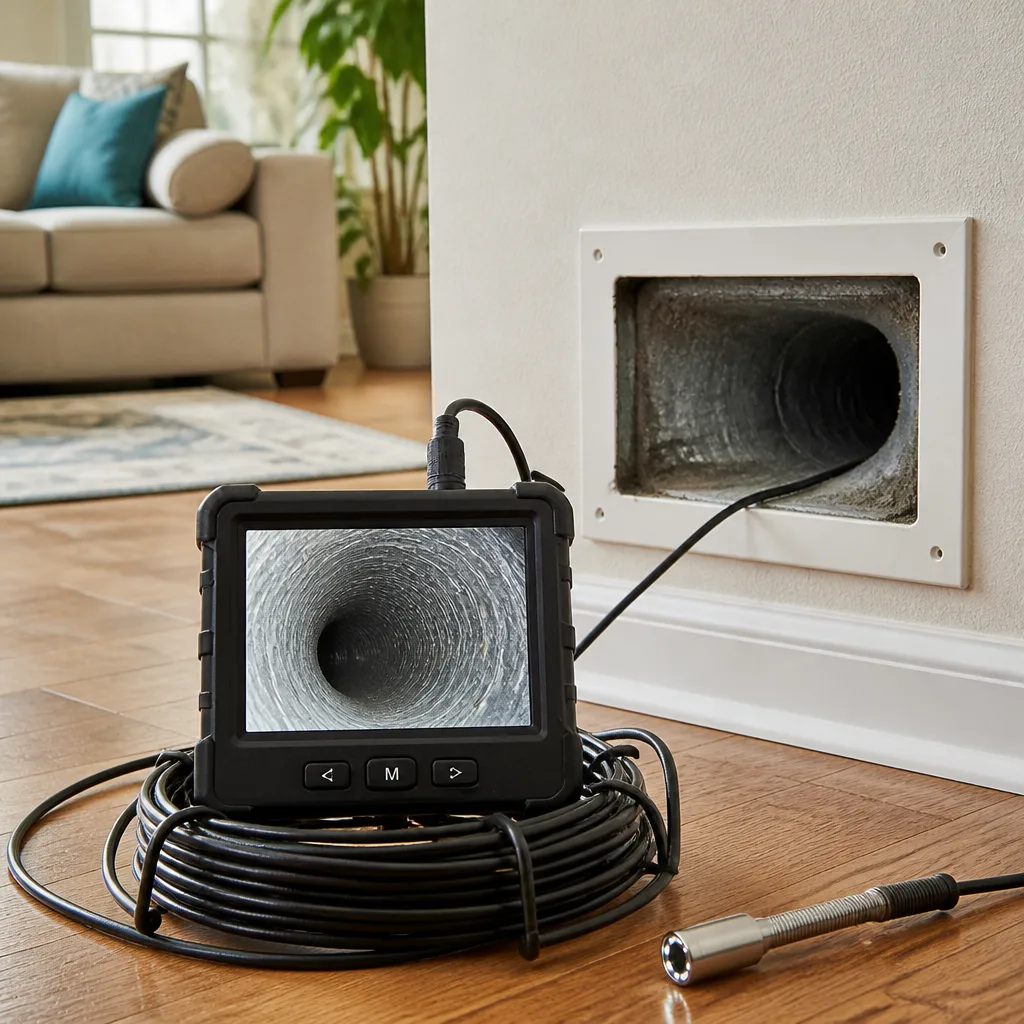 Camera inspection
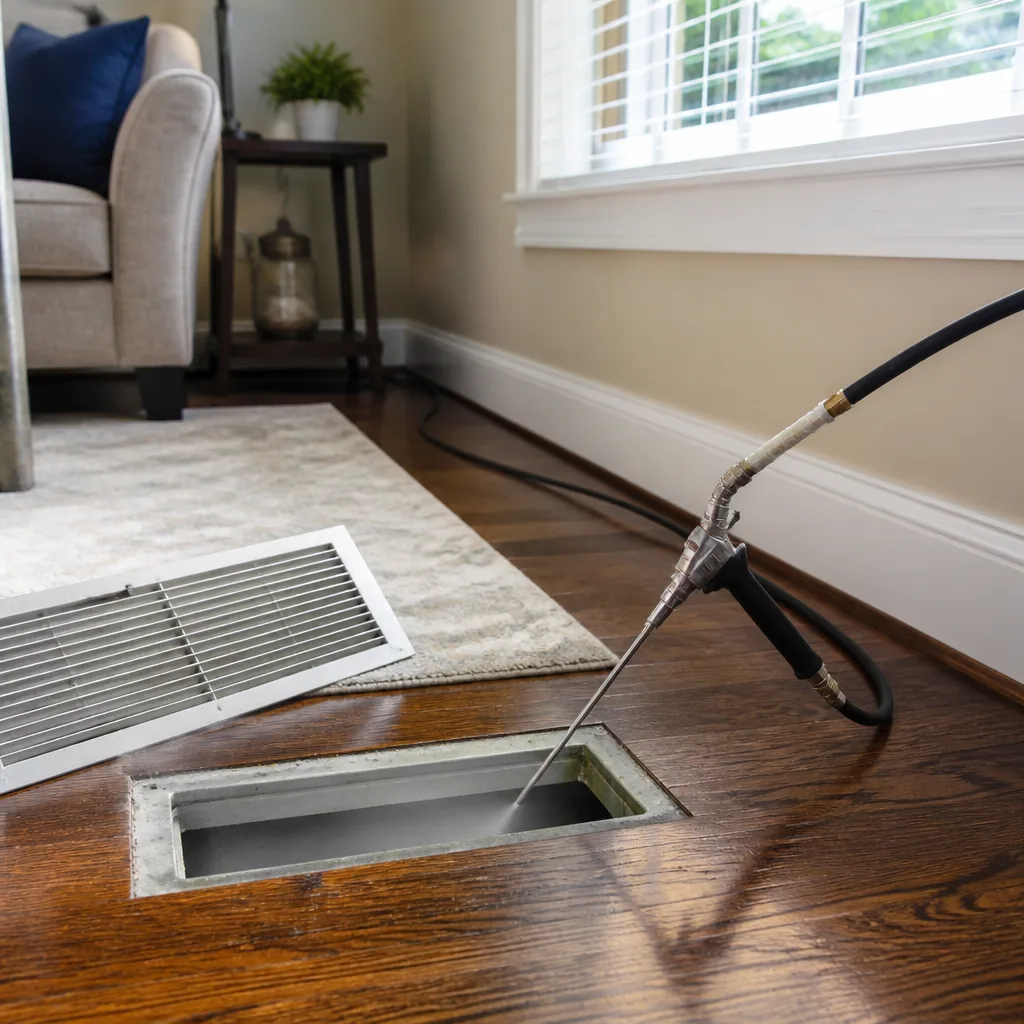 Sanitizing & deodorizing
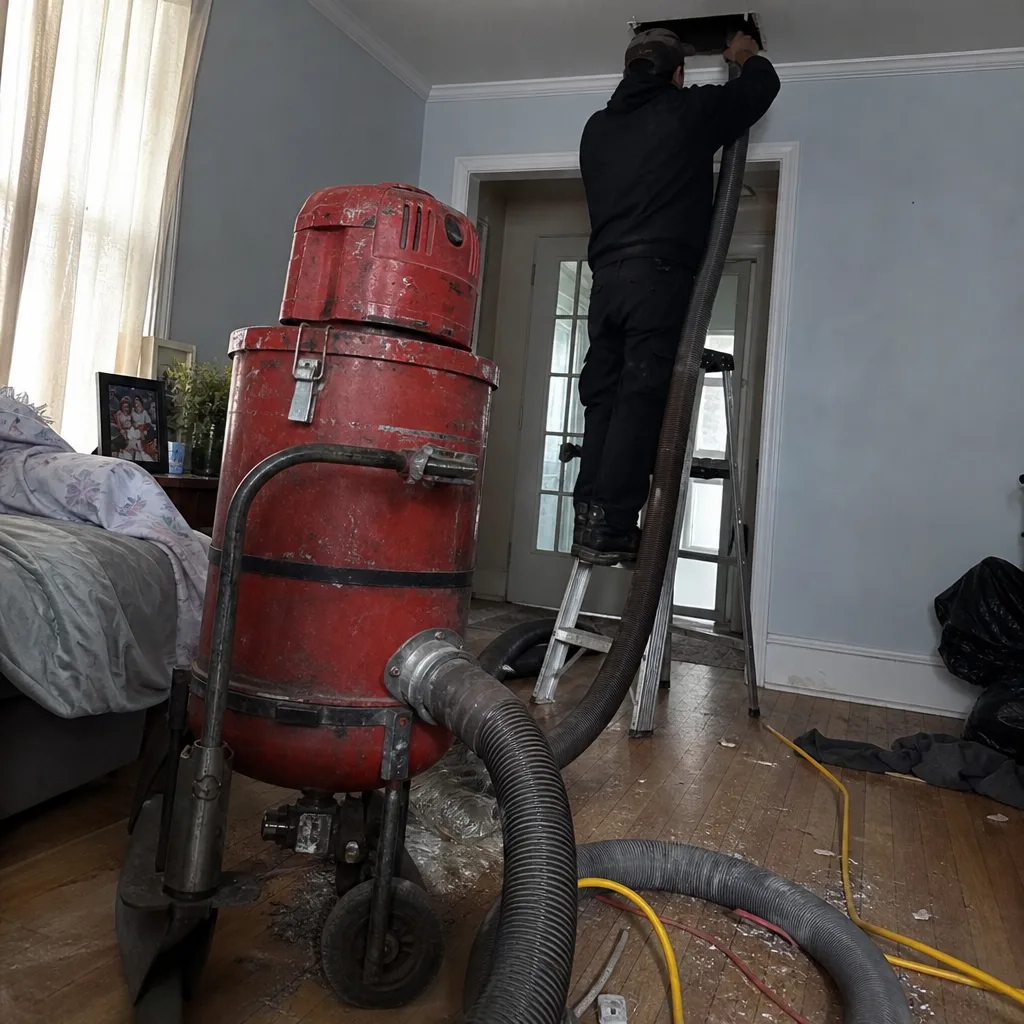
Whole-system duct and dryer vent check with before-and-after photos - you see exactly what came out of your vents
That "$99 whole-house special" is a bait ad - the real number appears once they are in your hallway, or the "clean" is a shop-vac at the register. We photograph the inside of your ducts before and after instead.
Air Duct Cleaning Warning Signs: A Port Richmond Homeowner’s Reference Guide
Your ducts can be full of mold and still smell perfectly neutral at the register. The odor only shows up once the blower kicks on and pushes air past the contamination, and by then it’s already moving through every room in the house. That gap between what a duct system looks like and what it’s actually doing trips up a lot of Port Richmond homeowners. A musty basement gets blamed on the basement. Uneven heat gets blamed on the boiler. Dust gets blamed on housekeeping. This guide walks through the real warning signs, how to tell debris from microbial growth from a mechanical breach, and how to attribute symptoms correctly before you spend money on the wrong fix.
Quick Answer
The main warning signs of a duct problem in Port Richmond are visible dust streaking at register grilles, musty or oily odors that appear only when the HVAC blower runs, uneven room temperatures that the boiler can’t explain, and allergy symptoms that worsen indoors but ease when you leave. Those signs point to debris buildup, microbial growth, duct leakage, or pest intrusion rather than to your housekeeping or heating equipment. The steps below help you tell which one you’re dealing with.
Styles & brands we work with
- Whole-home duct cleaning
- Dryer vent cleaning
- Camera inspection
- Sanitizing & deodorizing
Table of Contents
- The Symptom-to-Cause Table
- Why the Dust Pattern at Your Register Matters
- Allergy and Respiratory Signs That Point to the Ducts
- The Inspection You Can Do Yourself
- Warning Signs in Older Port Richmond Housing
- How Port Richmond’s Climate and Heating Season Play a Role
- Pest Intrusion Signs Most Homeowners Miss
- Common Mistakes to Avoid
- When to Call a Professional
The Symptom-to-Cause Table
Most duct warning signs get misattributed because they share surface symptoms with unrelated household problems. This table is the diagnostic backbone of the guide. Use it to work backward from what you’re noticing to what’s actually generating it. Port Richmond homes tend to run into the same handful of categories, and recognizing which one fits your situation saves a lot of guesswork.
| Symptom | Most Likely Cause | What Distinguishes It |
|---|---|---|
| Musty smell only when the blower runs | Microbial growth inside the duct or on the coil | Odor disappears when the system is off; other rooms smell normal |
| Oily, sooty, or combustion-like smell | Residual soot from an old oil furnace or a gas appliance issue | Sharper and more organic than dust; often follows a heating system conversion |
| Fine dust coating the walls near a register | Duct leakage at a joint or boot | Dust concentrates in a line or halo around a specific spot rather than spreading evenly |
| Even dust on return grilles | Debris buildup inside the return trunk | Uniform accumulation with no localized hotspot |
| Uneven heating room to room | Duct leakage or a crushed flex run | The boiler is fine and radiators or baseboards work; one zone just never gets warm |
| Scratching or rustling at odd hours | Pest intrusion in the duct system | Occurs mainly when the system is idle; possible small openings at the exterior boot |
| Visible rodent droppings at the return | Pest intrusion with contamination | Droppings or nesting material at the register or supply boot |
| Sneezing that starts indoors only | Airborne contamination circulating from ducts | Symptoms improve within hours of leaving the house and return on re-entry |
If you look at nothing else in this guide, look at this table. It lets you narrow the problem before anyone knocks on your door, and it helps you ask better questions when they do. Notice that the first four categories are all fixable in place with proper source removal. The last four often need a diagnostic check before deciding whether cleaning alone is enough.
Why the Dust Pattern at Your Register Matters
Dust alone doesn’t mean anything. Dust concentrated in a specific pattern means a lot. The difference between a duct leak and a normal filter bypass is the shape of the dust footprint, and you can read it at the register with a flashlight and a clean white rag.
Normal filter bypass shows up as a light, even dusting across the face of the return grille. It happens because filter efficiency isn’t perfect, and some air moves around the filter rather than through it. Every system has some. It’s cosmetic.
Duct leakage is different. The dust concentrates along an edge, a joint, or a seam. A leak at a boot will deposit a thin line of debris right where the boot meets the drywall. A leak at a floor register often leaves a halo of darker dust around the perimeter with the center relatively clean.
Here’s the test you can run:
- Wipe the face of one return grille clean with a white cloth.
- Run the system normally for a full day of typical use.
- Wipe the same grille again with a fresh white cloth.
- Look at the pattern, not just the presence of dust.
- If it’s an even light haze, that’s normal. If it’s a specific line or a concentrated spot, suspect leakage.
We’ve seen this test point a homeowner straight to a failed joint under a Port Richmond hallway floor more than once. Dust isn’t the whole story. Where it lands is.
Allergy and Respiratory Signs That Point to the Ducts
Allergy symptoms can come from pollen, pets, mold spores, dust mites, or the ducts. Telling them apart comes down to patterns and timing. Duct contamination tends to produce a specific signature that most other sources don’t.
Look for these signs:
- Symptoms get worse within minutes to hours of arriving home and ease shortly after you leave.
- Your symptoms start suddenly on a day the HVAC runs for the first time after a quiet stretch.
- Family members or frequent guests notice the same pattern without being told what to look for.
- Morning symptoms are noticeable but improve an hour or two after you leave the house.
- No obvious cause in the bedroom itself, such as visible mold, damp bedding, or a pet sleeping on the mattress.
- An increase in symptoms during heating season when the system stirs up accumulated debris.
What points elsewhere: symptoms that flare every spring regardless of indoor conditions, seasonal patterns, or reactions tied clearly to a pet or a particular room with visible water damage. In our experience, duct-related symptoms track the blower cycle, not the calendar.
None of this replaces a medical assessment. It’s diagnostic information, not a diagnosis. If you notice a consistent indoor-only pattern, it’s a reasonable signal to look at the duct system next.
The Inspection You Can Do Yourself
Before calling anyone, do a visual pass at the registers and returns you can reach. It’s a fifteen-minute job and it tells you whether the next step is cleaning, sealing, or a diagnostic check.
- Remove the register cover on one return and one supply per room.
- Snap a clean photo straight up the duct run so you have a baseline.
- Run the edge of a clean white cloth along the inside of the duct throat.
- Look at the color: gray is normal dust, dark brown or black indicates heavy soot or debris, green or powdery indicates possible microbial growth.
- Check for rust streaks, which point to moisture problems or condensate issues.
- Check for debris at the boot where the duct meets the wall or floor.
- Check for loose tape, gaps at joints, or sagging flex duct between the plenum and the boot.
- Do not put your hand or tools past the boot. Never open a furnace cabinet, coil, or plenum yourself.
What you can judge from this: visible contamination, obvious leaks, disconnected runs, and pest activity. What you can’t judge: what’s happening in the main trunk runs, inside the coil cabinet, or along a partially collapsed flex duct behind the wall. Those need a professional scope.
At this point you have enough to make a decision. If the registers look clean, even dust patterns, no rust, no leaks, and no odor, you can probably wait. If anything from the list above turns up, it’s time for air duct cleaning to be assessed by someone who can look at the whole pathway.
Warning Signs in Older Port Richmond Housing
Port Richmond’s housing stock includes a lot of older single-family homes and two-families, many built before modern ductwork standards. That gives you three specific warning signs that newer construction rarely shows.
Oil-to-gas conversion soot residue. A lot of Port Richmond houses made the switch from oil to gas at some point, and the duct systems sometimes carried soot from the old oil-fired equipment. That debris sits in the return trunks and settles into supply runs. You may smell it only during heating season. It looks like a dark, fine powder, not household dust.
Galvanized duct corrosion. Old galvanized sheet-metal runs, especially in basements and crawl spaces, show pitting and rust streaks at the seams. Moisture getting to the metal is the cause, and it usually follows a humid basement or a leaky return. If you see pitting with visible rust, the duct isn’t just dirty. It’s degraded.
Deteriorating flex duct. Flex runs in older Port Richmond homes are often sagging and pinched behind the wall, especially where they were added during a past remodel. Sign of trouble: a run that visibly dips, has a kink, or makes a whistling sound at the boot. Flex that’s lost its support will reduce airflow to that room no matter how clean it is. Duct repair and sealing is often the fix, not cleaning.
If you’re in a house from the mid-twentieth century or older, add these three checks to your self-inspection:
- Look for a soot odor when the heat first comes on for the season.
- Check the basement trunk for rust streaks along the seams.
- Follow the flex run at each boot to see whether it dips or kinks.
These are common enough in Port Richmond that most of our calls in older homes start here.
How Port Richmond’s Climate and Heating Season Play a Role
Port Richmond’s winters are cold enough that the heating system runs hard for months, and that long cycle is what turns a small amount of settled debris into a persistent indoor air problem. The system pulls air from every room, sends it across the coil and through the ducts, and pushes it back out. When it runs five or six months straight, whatever is sitting in the return trunk gets circulated over and over.
The signs that show up specifically during heating season in Port Richmond:
- Odor that appears on the first cold snap and fades in spring.
- Dust on horizontal surfaces that increases noticeably after the system runs overnight.
- Condensation on windowsill duct boots in very cold weather, pointing to a leak.
- Increased static shock and dryness in the house, sometimes linked to poor filtration.
- Family members reporting allergy symptoms that track the heating cycle rather than the pollen calendar.
These are symptoms of a system that needs attention, not just a lot of use. A duct system in a Port Richmond house that runs for months straight benefits from a proper cleaning on a sensible interval and from sealing leaks that let cold attic or basement air into the run. Honeywell and Aprilaire filtration upgrades, which we install as part of our air quality service tier, help keep the system cleaner between cleanings. They don’t replace a proper cleaning, but they lower how quickly debris builds back up.
Pest Intrusion Signs Most Homeowners Miss
Rodents and insects get into duct systems through small openings at exterior boots, crawl-space returns, or the junction between an older duct and a later addition. The signs are easy to mistake for other problems.
Look for:
- Scratching or rustling sounds when the system is off, more than when it’s running.
- Droppings or small nesting material at a supply boot or inside a return throat.
- Chew marks on the outside of a flex run where it enters the boot.
- A urine or ammonia smell that only appears in one room or one duct run.
- Small gnawed openings in the foil facing of a flex duct.
- Pest activity that seems to spike in cold weather, when rodents look for warm spaces.
Pest intrusion usually needs both a cleaning and a duct repair and sealing step. Removing the contamination without closing the opening just invites the next visit. Sanitizing after source removal is also a good idea in these cases, and our Air Duct Cleaning Port Richmond page explains how the process works from start to finish. If you suspect rodents, keep the system off until it’s been inspected. Don’t run the system just to “test” whether the smell goes away.
Common Mistakes to Avoid
- Blaming the basement for a duct smell. If the odor only shows up when the blower runs, the basement is usually the wrong suspect. Check the coil and return trunk first.
- Assuming a boiler issue from uneven room temperatures. In Port Richmond homes with hot-water heat, a cold room is often a duct leak, not a boiler problem. Check the boot and flex run before calling the plumber.
- Buying a cheap cleaning to “see if it helps”. A rushed cleaning with a shop-vac setup can actually disturb debris in the trunk and redistribute it into the supply runs. Look for professional-grade equipment and a proper source-removal method.
- Skipping the before-and-after photos. Ask for photos of your own ducts before and after. It’s the fastest way to confirm the work was actually done.
- Ignoring a small leak at the boot. A gap that looks minor lets attic or basement air into the supply run and can undercut the efficiency of everything downstream.
- Treating sanitizing as a substitute for cleaning. Sanitizing is a step in the process, not a replacement for source removal. Debris has to come out first.
- Assuming a new HVAC filter fixes built-up debris in the ducts. Filters capture what passes through them. They don’t clean what’s already settled in the trunk and return runs.
See the difference
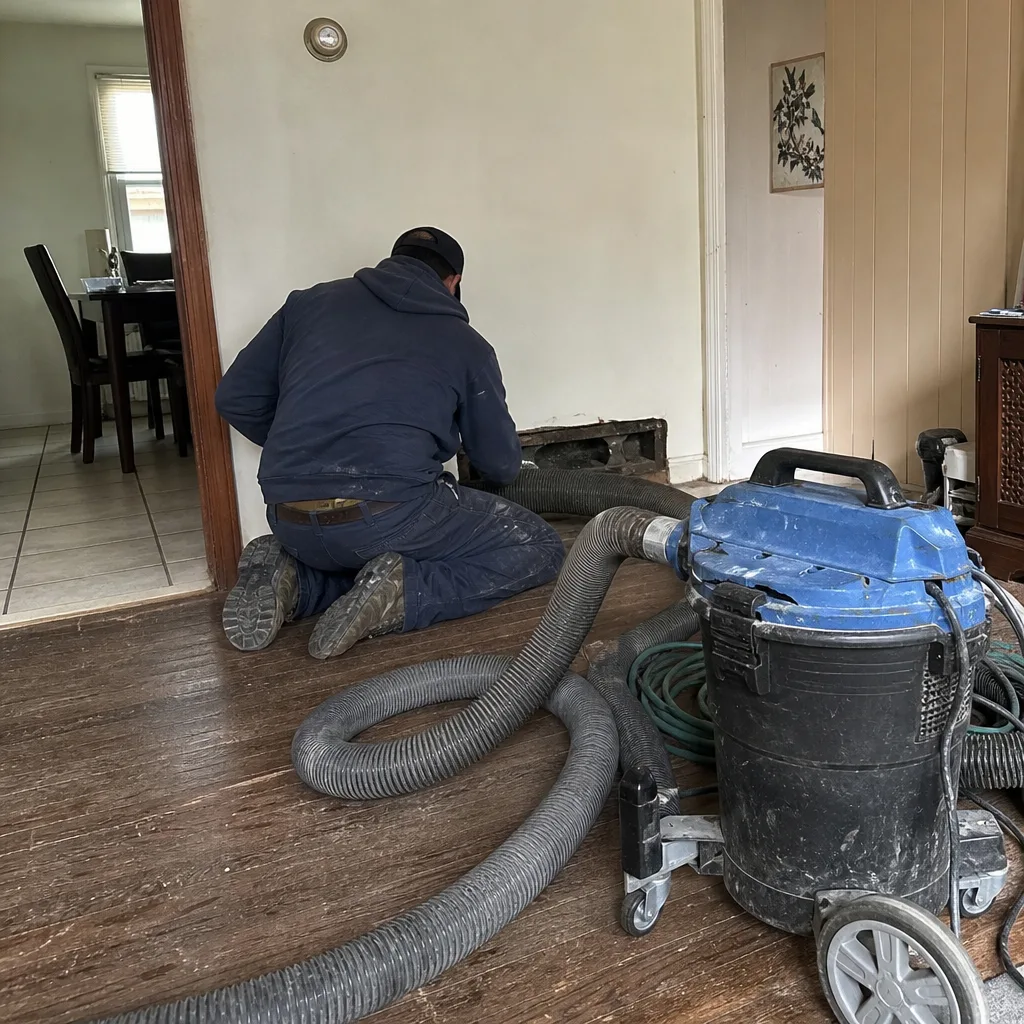 Before
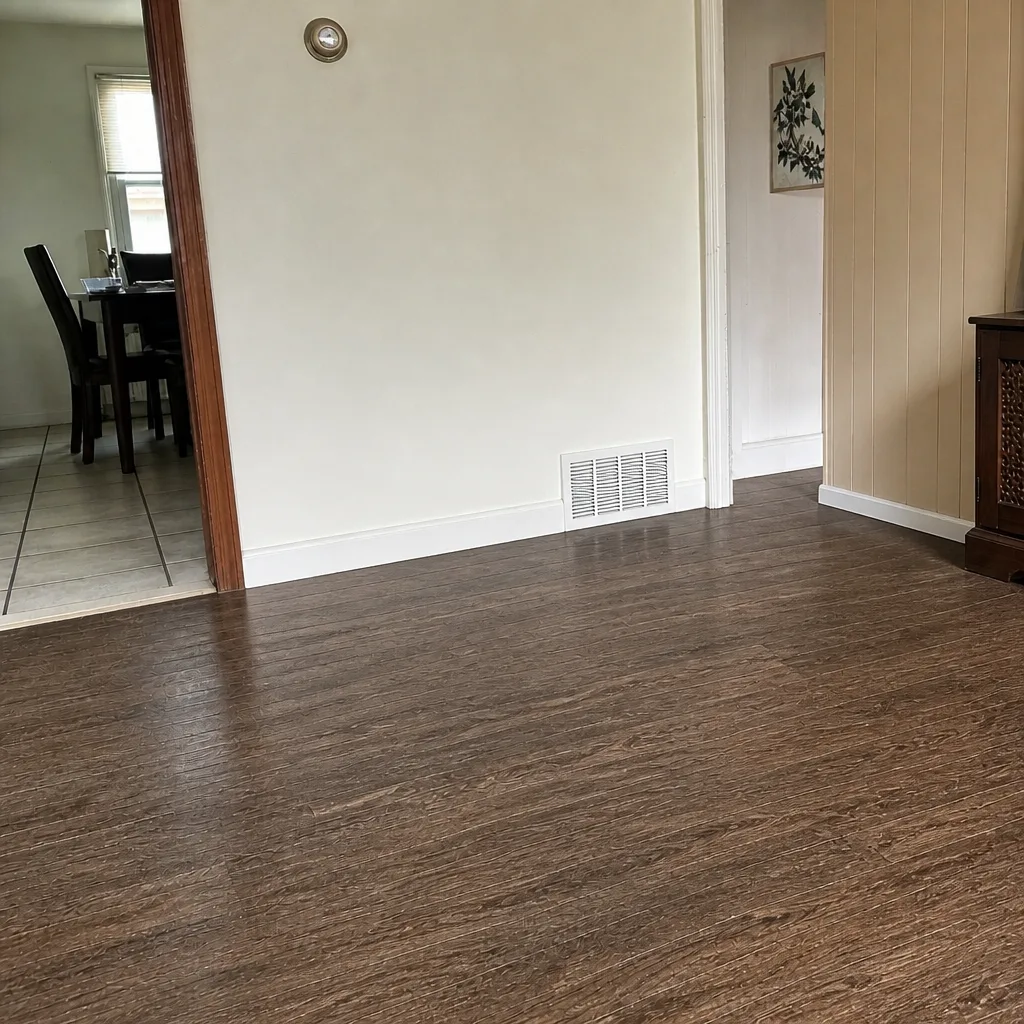 After
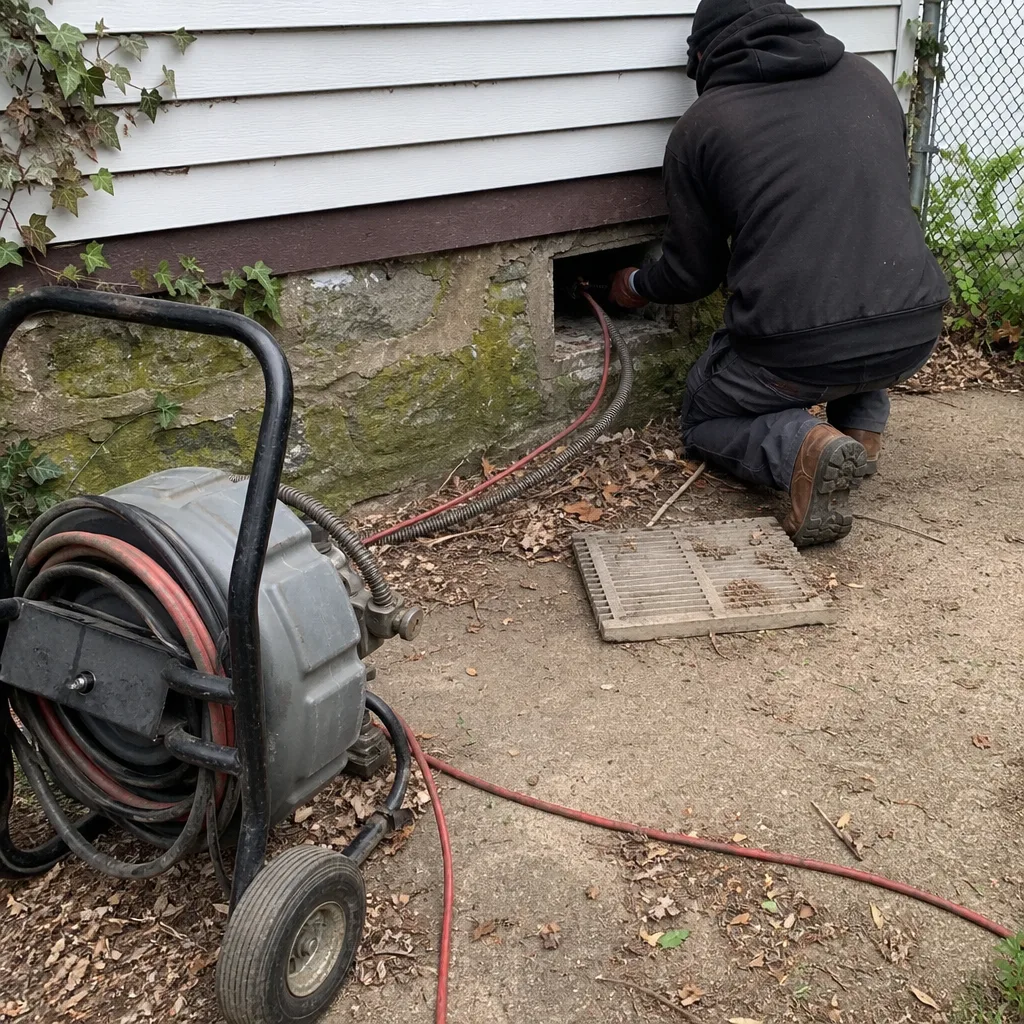 Before
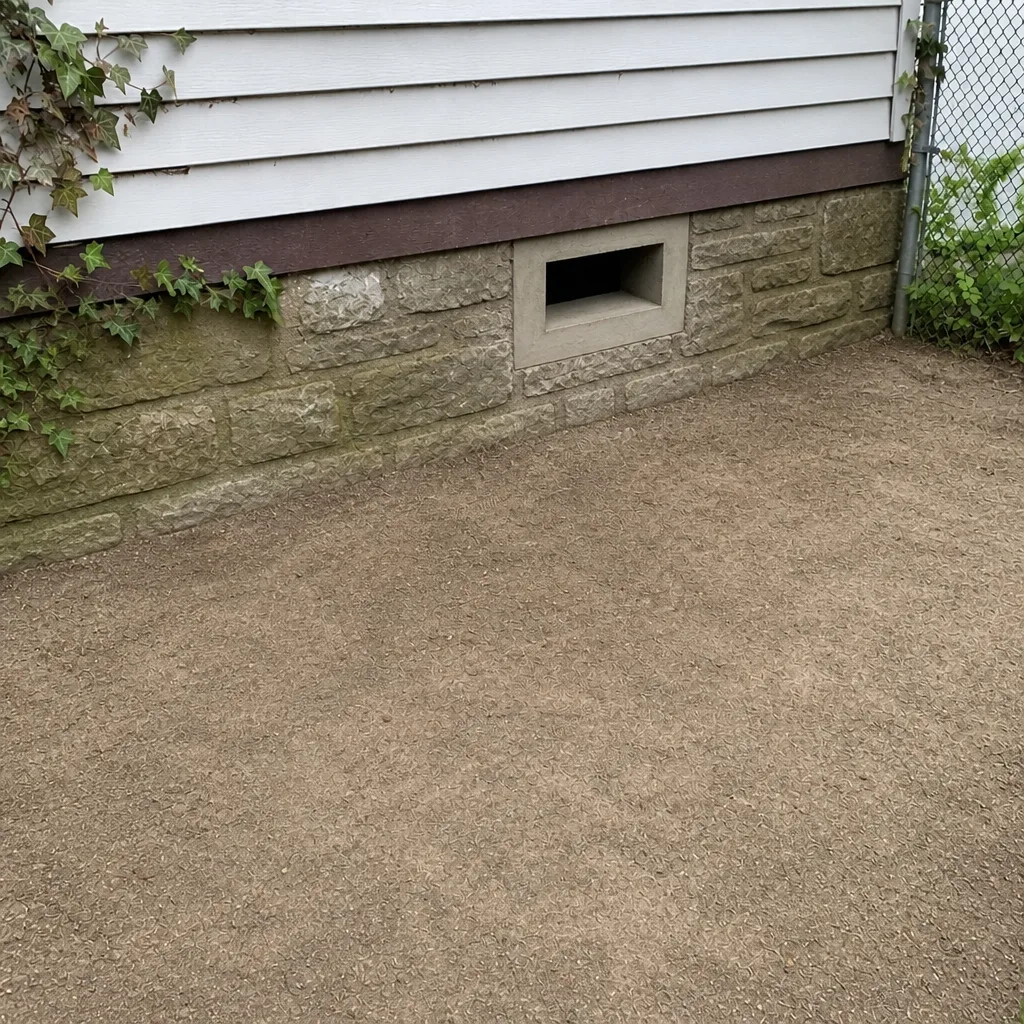 After
 Before
 After
When to Call a Professional
Call a professional when you can confirm one or more of the following: a musty or oily odor that appears only when the blower runs, a visible dust pattern at a specific register, a cold room that the boiler isn’t causing, a smell of soot during heating season, evidence of pest intrusion at a supply boot, or allergy symptoms that start and stop with time spent in the house. Also call if you see visible contamination, corrosion, or sagging flex duct at any register. Our technicians at Air Duct Cleaning Port Richmond use Rotobrush and Nikro equipment along with Abatement Technologies containment, and we work with Honeywell and Aprilaire products as part of our air quality tier. The professional step involves a full pathway inspection, not just a surface cleaning. If the diagnosis points to a mechanical issue, our HVAC cleaning and duct repair service finds and seals the leak before the cleaning cycle can redistribute anything.
Air Duct Cleaning Port Richmond offers free estimates in Port Richmond – call (877) 792-6601. We answer 24/7. Fast dispatch from 7am to 7pm, Sunday through Friday.
Frequently Asked Questions
A new filter handles what’s passing through the system. Cleaning handles what’s already settled in the trunk and return runs. If your dust pattern is even and light, and the registers show no visible debris, a filter change may be enough. If you’re seeing a concentrated dust pattern, musty odors when the blower runs, or visible contamination at the register throat, the problem is inside the duct system. Call (877) 792-6601 for an exact quote – estimates are free.
Not always, but the timing tells you a lot. If the smell only appears when the HVAC runs and disappears when it’s off, the ducts are the likely source, usually the coil or the return trunk. If the smell is constant regardless of the system, look at the basement, crawl space, or any place with moisture. When the pattern points to the ducts, our HVAC cleaning service covers both the coil and the ductwork in a single visit.
Normal dust accumulates evenly across the face of the register and inside the return throat. Duct leakage dust concentrates: it forms a line at a boot, a halo at a floor register, or a stripe along a seam. If you wipe the grille clean, run the system for a day, and then see a defined pattern rather than a light haze, that’s leakage. The fix is duct repair and sealing, not just cleaning.
Yes. In older Port Richmond houses that made the switch from oil to gas at some point, soot residue from the old oil-fired equipment sometimes remains in the return trunk and supply runs. It shows up in heating season, smells distinctly sharper than dust, and looks like a fine dark powder. A proper cleaning with professional-grade equipment removes it, and a diagnostic check confirms the current appliances aren’t contributing. If your house has that history, ask about it when you book.
They’re a useful signal when the pattern is indoor-only and tied to the blower cycle. Symptoms that start on coming home and ease shortly after you leave, or that show up on the first day the heat comes on, point to the ducts. Symptoms that track the outdoor pollen calendar, or that flare only in one room with visible moisture damage, usually point elsewhere. If the pattern is genuinely indoor-tracking, a professional inspection is the right next step.
There’s no single interval that fits every house. Long heating seasons, older housing stock, and pest or moisture history all shorten the useful interval. A common working range is every few years for a home with clean registers and good filtration, sooner if you’ve had pest intrusion, a renovation, water damage, or a history of oil-fired equipment. The most reliable guide is what you see and smell, which is why the self-inspection steps in this guide are worth repeating once a year.
Look for professional-grade equipment, not consumer shop-vac setups. Ask how they contain dislodged debris during the cleaning, and what brand of equipment they use. Ask for before-and-after photos of your own ducts, not stock photos. Ask whether the price is a flat price per system or per-vent, and confirm it in writing before work starts. Our team uses Rotobrush and Nikro equipment with Abatement Technologies containment, and we install and service Honeywell and Aprilaire products when filtration upgrades make sense. If a quote sounds like a teaser that grows on site, walk away. Call (877) 792-6601 for a straight answer on cost – estimates are free.
The Bottom Line
Duct problems are hard to spot because they overlap with other household issues. The dust gets blamed on housekeeping, the uneven heat on the boiler, the smell on the basement. Read the pattern instead. Dust that concentrates in a line or halo means leakage. Odor that appears only when the blower runs means microbial growth or soot residue inside the system. Indoor-only allergy symptoms that track the HVAC cycle mean airborne contamination. Visible rust, soot powder, or sagging flex duct in an older Port Richmond house means it’s time for a real inspection. Run the fifteen-minute register check once a year. If anything turns up, call before it circulates through another heating season.
Contact
If this guide raised a question about your own ducts, the fastest way to an answer is a free estimate. Air Duct Cleaning Port Richmond handles cleaning, HVAC service, dryer vent cleaning, duct repair and sealing, and air sanitizing as one service relationship, so a single visit can cover the whole air pathway. Our technicians have up to 14 years of experience, and we work with Abatement Technologies containment to capture dislodged debris at the source rather than redistribute it through the house. We also install and service Honeywell and Aprilaire air quality products when filtration improvements make sense for your home. Call (877) 792-6601 for a free estimate. We answer 24/7. Fast dispatch from 7am to 7pm, Sunday through Friday.
Written by the team at Air Duct Cleaning Port Richmond.